
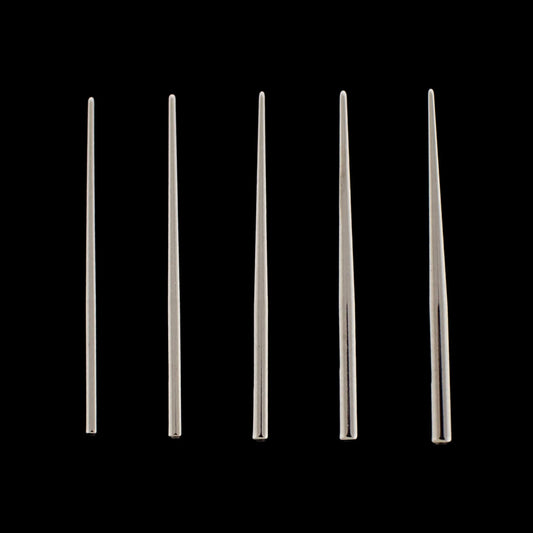
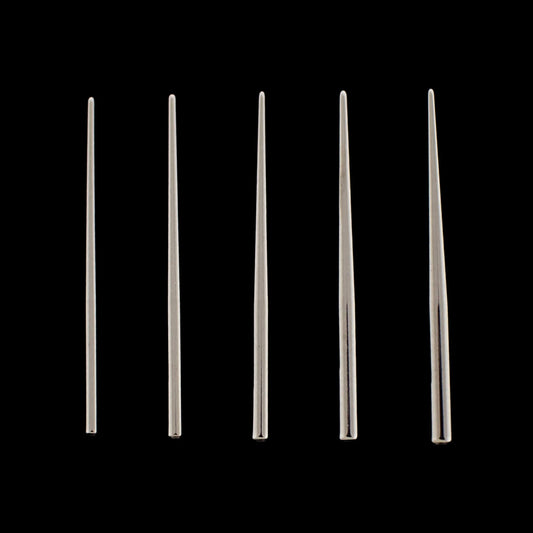
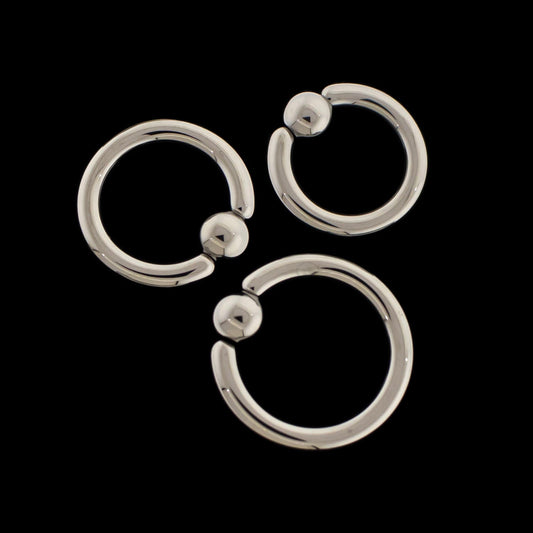
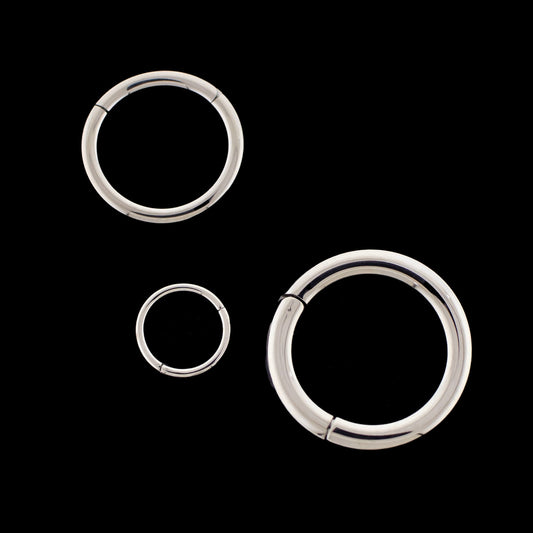
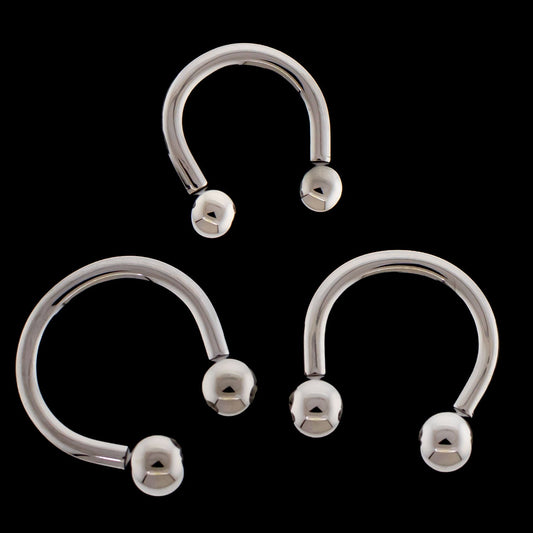
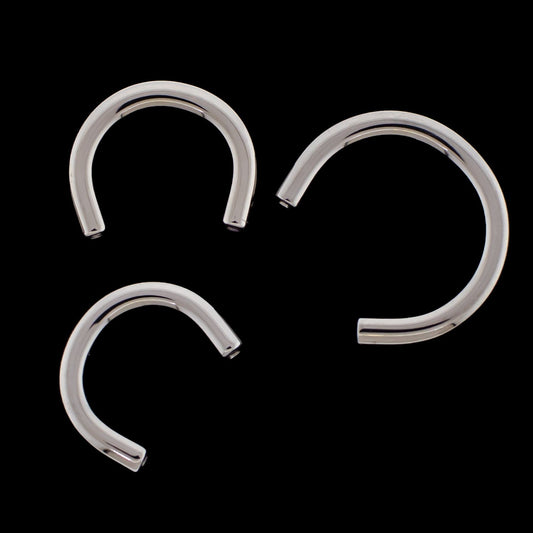
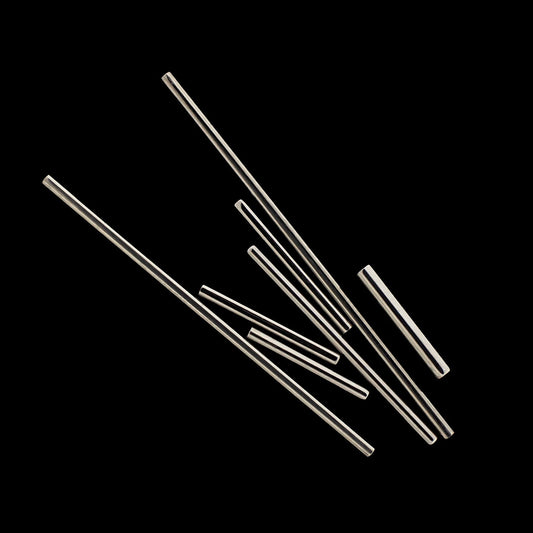
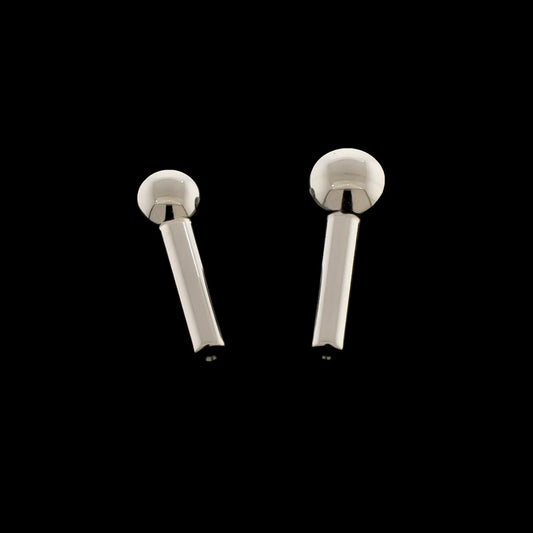
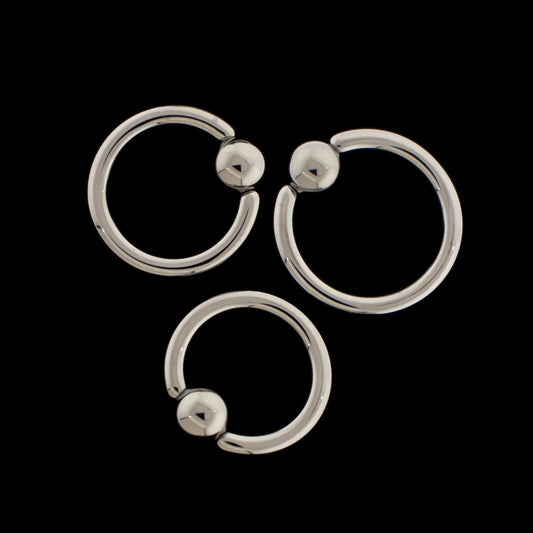
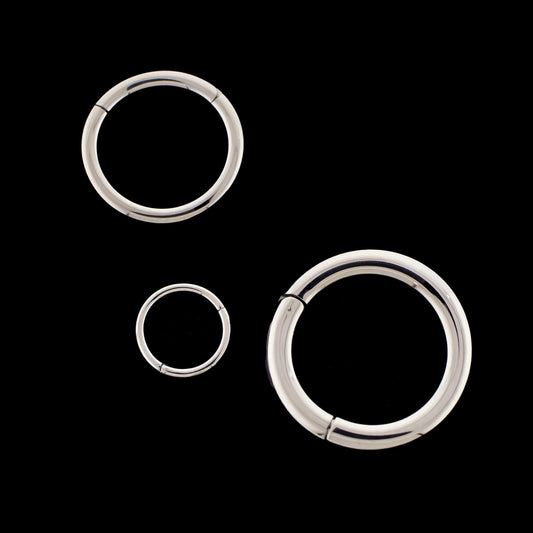
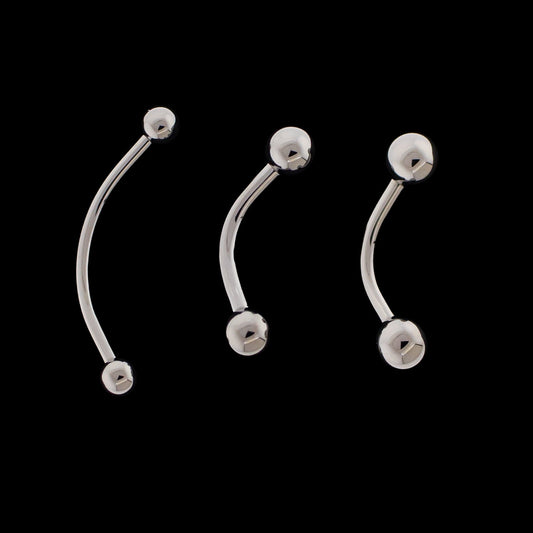
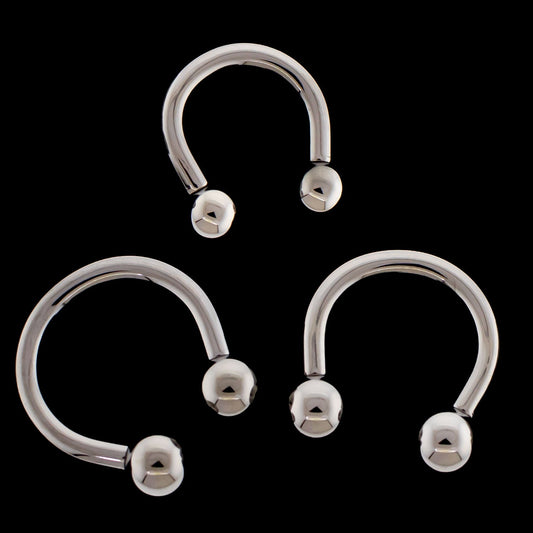
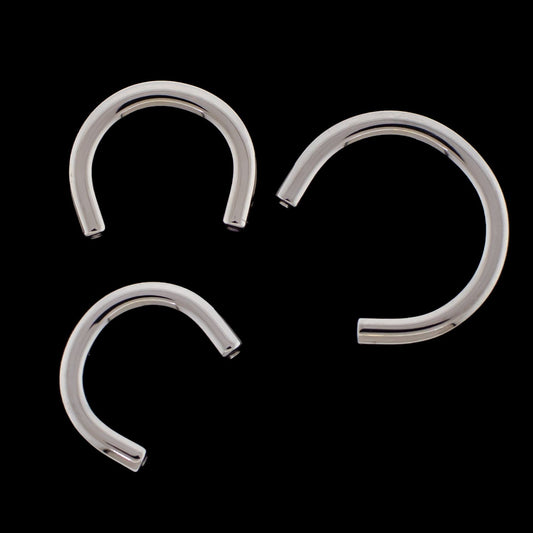
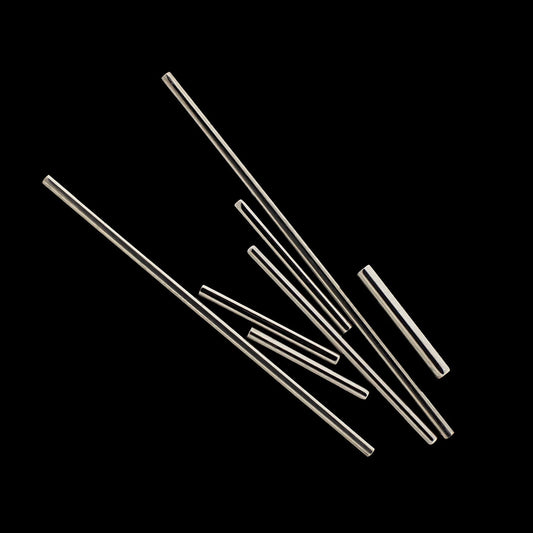
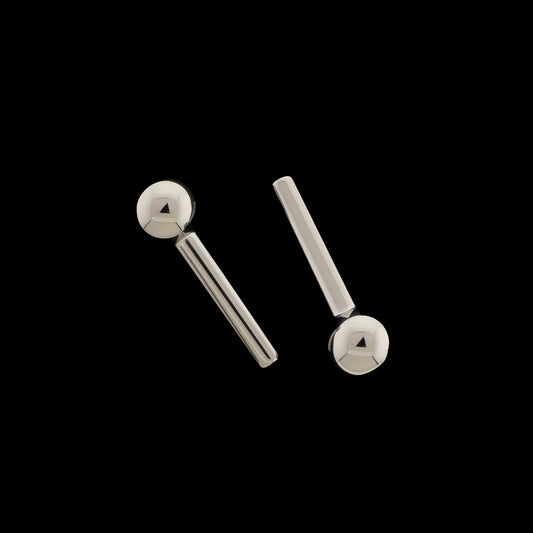
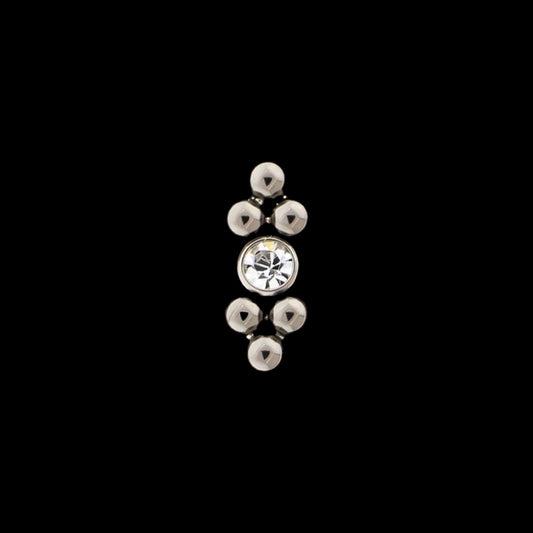
Titanium Piercing Jewelry | ASTM F136 Implant-Grade Titanium for All Placements
This collection covers titanium piercing jewelry across every placement and style category at Pierced Addiction, powered by Khrysos. Every piece is ASTM F136 implant-grade titanium: nickel-free by composition, anodizable for color, and built to the same material standard used in surgical implants. Threadless ends, flat-back labrets, barbells, rings, and septum clickers are available for ear, nose, septum, navel, nipple, and cartilage placements. Free shipping on orders over $25.
Why Titanium is the Professional Standard for Piercing Jewelry
Titanium piercing jewelry has become the material of choice in professional studios across the US because its properties are not marketing claims but measurable material characteristics. The Association of Professional Piercers identifies ASTM F136 implant-grade titanium as one of the few materials appropriate for use in initial piercings, alongside implant-grade steel and solid 14k or higher gold. The reasons are specific and practical.
ASTM F136: What the Specification Actually Means
ASTM F136 is the material standard that defines quality titanium piercing jewelry, specifying the composition required for titanium used in surgical implants. The alloy is Ti-6Al-4V ELI, and its nickel content is zero. Not low. Not trace. Zero.
This matters because nickel is the most common cause of metal sensitivity reactions in body jewelry. Even 316L surgical steel, an implant-grade material safe for healed piercings, releases trace nickel into surrounding tissue. ASTM F136 titanium releases none. The specification also requires a mirror-polished surface with no micro-rough areas where bacteria can accumulate, a biocompatibility requirement, not a cosmetic one.
One important distinction: titanium-plated jewelry is not ASTM F136. Plating applies a thin titanium layer over a base metal core, usually brass or steel. Once that plating wears, the base metal contacts the piercing tissue directly. ASTM F136 titanium is solid titanium from surface to core.
Anodized Titanium: Color Without Coating
Anodization is the most misunderstood property of titanium piercing jewelry and the feature that makes titanium uniquely versatile. When titanium is anodized, an electrical voltage causes an oxide layer to grow on the metal surface. The thickness of that oxide layer determines which wavelengths of light are reflected, producing the visible color.
The key distinction for anyone shopping titanium piercing jewelry is that anodization does not add any substance to the titanium surface. There is no coating, no dye, no paint, and no second material applied over the top. The color is produced by the oxide layer of the titanium itself. This means the color cannot chip, peel, flake, or expose a different material underneath, because there is no underneath. The anodized surface is the titanium surface. For a healing piercing, this means anodized titanium is just as safe as polished silver-tone titanium: the tissue in the piercing channel contacts only ASTM F136 titanium regardless of what color the piece is.
Lightweight and Biocompatible: The Healing Advantages
Titanium piercing jewelry has a density roughly 60 percent lower than steel at the same gauge and length. For a small nose stud the difference is imperceptible. For a 14G nipple barbell or a long industrial barbell spanning two cartilage points, the weight difference is tangible across months of healing.
Lighter titanium piercing jewelry exerts less gravitational pull on the piercing channel throughout the day. In a healing nipple piercing, that reduced load means less tissue stress over the first year. In a healing industrial, it means less leverage at both cartilage exit points. In a healing ear curation with multiple pieces, the aggregate weight of titanium versus steel across four or five placements becomes noticeable by the end of the day. The lightness of titanium is not a luxury feature. It is a mechanical property that has a direct effect on healing outcomes in thick-tissue and multi-piece placements.
ASTM F136 titanium has decades of use in orthopedic and dental implants. The same specification that governs Khrysos titanium piercing jewelry is the one that holds surgical hardware in the human body.
Browse Titanium Piercing Jewelry by Placement
This collection organizes titanium piercing jewelry by placement so you can navigate directly to what fits your piercing. Each placement category has different gauge requirements, different jewelry type options, and different size considerations. Knowing which placement you are shopping for narrows down the right piece before browsing the product grid.
Ear Piercings: Lobe, Cartilage, Helix, Tragus, Daith, Conch and Rook
Ear piercings represent the broadest category of titanium piercing jewelry in this collection. Threadless flat-back labrets are the most widely used style for cartilage placements including helix, tragus, forward helix, flat, and conch. The threadless system allows the decorative top to be changed quickly without tools, which makes it the practical format for anyone building an ear curation with multiple placements. Standard gauge for most ear cartilage piercings in the US is 16G. Lobe piercings typically use 18G or 20G flat-back posts.
Hinged clicker rings and seamless rings cover the ring-style end of the ear jewelry range. Daith piercings particularly suit the clicker format because the hinged closure makes solo insertion and removal manageable in a tight placement. Rook piercings use a curved barbell or a clicker depending on anatomy. Anodized titanium has become especially popular for ear curation projects where multiple placements are worn simultaneously: matching a rose gold flat-back stud in a helix with a rose gold clicker in a daith creates a coordinated look across the ear that plated jewelry cannot replicate safely.
Browse the full range of threadless ends, flat-back posts, and cartilage styles in the Titanium Flat-Back Labrets collection.
Nose Piercings: Nostril and Septum
Titanium piercing jewelry is the preferred material for both nostril and septum placements, particularly for new piercings. Nostril piercings use 20G as the US professional standard, with 18G as a less common alternative. Threadless flat-back nostril studs are the professional recommendation for fresh nostril piercings because the smooth post has no thread ridges contacting the healing channel. For healed nostrils, L-shape and screw styles in titanium are also available. Seamless hoops and segment rings in 18G or 20G at 6mm to 8mm diameter provide the ring look for healed nostril piercings.
Septum piercings use 16G as the standard, with 8mm inner diameter covering most anatomies. Titanium septum clickers are the most user-friendly format for everyday wear: the hinged closure opens and closes without threading or twisting, making solo changes straightforward. Horseshoe barbells in titanium are the traditional septum style and can be flipped inside the nostrils to conceal the piercing when needed. Anodized colors in septum titanium piercing jewelry are particularly popular: gold and rose gold tones work well for all skin tones, while black and rainbow options suit alternative aesthetics.
Body Piercings: Navel, Nipple and Industrial
Titanium vs Surgical Steel: A Practical Comparison
Both ASTM F136 titanium and 316L surgical steel are implant-grade materials recognized by the Association of Professional Piercers. The choice between them comes down to four variables: nickel content, weight, color options, and price. For people with healed piercings and no active nickel sensitivity, 316L steel is a safe and practical choice. For anyone with a new or healing piercing, a history of metal reactions, or a need for absolute certainty about nickel contact, ASTM F136 titanium is the answer.
- Nickel content: titanium = zero; 316L steel = low-release but present by composition
- Weight: titanium is approximately 60% lighter than steel at the same gauge; matters most for nipple, industrial, and multi-piece ear curations
- Color options: titanium can be anodized to rose gold, gold, blue, purple, teal, green, and rainbow without any coating; steel is polished silver or PVD-coated only
- Price: 316L steel is consistently less expensive than ASTM F136 titanium for the same jewelry type and gauge
For 316L steel options across the same placement range, the Steel Internally Threaded Barbells collection covers every gauge and length in implant-grade steel.
Why Shop Titanium Piercing Jewelry at Pierced Addiction?
Every piece of titanium piercing jewelry in this collection is produced exclusively by Khrysos, the in-house ASTM F136 titanium brand at Pierced Addiction. Every Khrysos piece is manufactured to the full implant-grade specification, not just marketed with the titanium name. The material is certified, the surface finish meets the APP standard, and each piece carries a lifetime workmanship guarantee covering manufacturing defects.
- ASTM F136 certified titanium: zero nickel, full implant-grade specification from material to finish
- Anodized color options: rose gold, gold, blue, purple, teal, green, rainbow, and black available in multiple styles
- Threadless and internally threaded: both systems available, covering all jewelry types and placements
- Lifetime workmanship guarantee: every Khrysos piece backed against manufacturing defects
- Full placement coverage: lobe, cartilage, nose, septum, navel, nipple, and industrial
- Free USPS economy shipping on all orders over $25, all orders fully insured
- Same-day processing for domestic orders received before 1PM
Frequently Asked Questions
What is ASTM F136 titanium and why does it matter for piercings?
ASTM F136 is the medical-grade specification that defines implant-quality titanium piercing jewelry. It contains zero nickel, meets strict biocompatibility requirements, and is one of the few materials the Association of Professional Piercers recommends for initial piercings.
Is anodized titanium safe for healing piercings?
Yes. Anodization grows an oxide layer on the titanium surface through an electrochemical process without adding any coating or dye. The result is still ASTM F136 titanium and fully safe for healing piercings.
How is ASTM F136 titanium different from titanium-plated jewelry?
ASTM F136 titanium is solid titanium through the entire piece. Titanium-plated jewelry applies a thin titanium coating over a base metal core, usually brass or steel. When the plating wears, the base metal contacts the piercing tissue directly.
Is titanium better than surgical steel for a fresh piercing?
Titanium is the stronger recommendation for fresh piercings because it contains zero nickel. 316L surgical steel is implant-grade and safe for healed piercings, but it releases trace nickel at low levels. For new piercings, zero-nickel titanium is the safer choice.
What colors does titanium piercing jewelry come in?
Anodized titanium comes in rose gold, gold, blue, purple, teal, green, and rainbow. Black uses PVD coating instead of anodization. All standard anodized colors are safe for healing piercings and do not chip or fade.
Does titanium tarnish or lose its color over time?
Polished titanium does not tarnish or corrode. Anodized colors are part of the oxide layer of the metal, not a coating, so they do not fade or chip with normal wear and cleaning.
Shop Titanium Piercing Jewelry
Titanium piercing jewelry at Pierced Addiction covers every placement in ASTM F136 implant-grade titanium by Khrysos: nickel-free, lightweight, anodized colors, and backed by a lifetime workmanship guarantee. Threadless ends, flat-back labrets, barbells, rings, and clickers are all available above. For ring-style titanium options across all placements, see the Titanium Captive Bead Rings collection.