
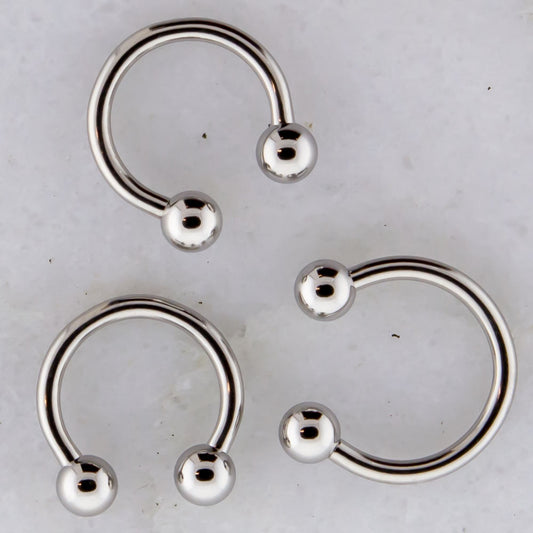

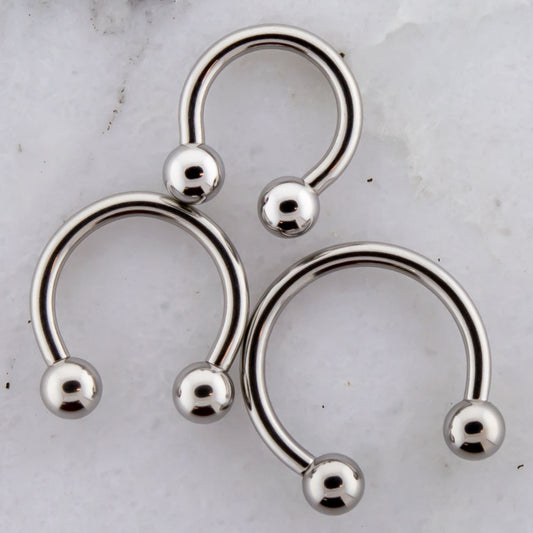

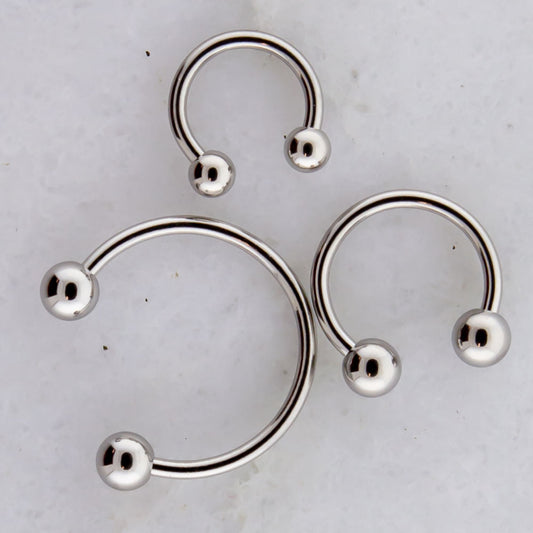

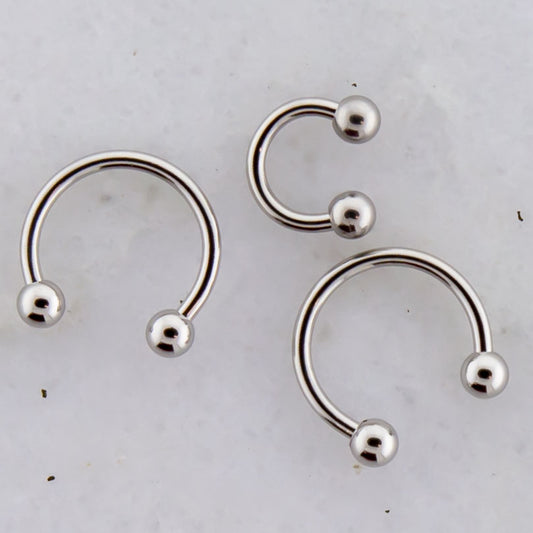
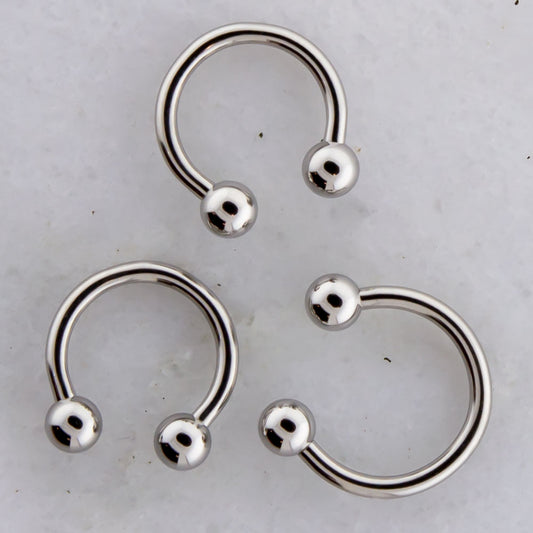
Steel Externally Threaded Horseshoes: Septum, Nipple & Cartilage Rings in 316L Steel
Steel externally threaded horseshoes cover the widest range of piercing placements in a single jewelry style. From a 16G septum ring to a 10G stretched nipple horseshoe, this collection of steel externally threaded horseshoes brings 316L implant-grade steel across plain polish, PVD black, PVD gold, and spiked finishes. Every steel externally threaded horseshoe here is built to precise gauge tolerances for clean threading and dependable daily wear.
What Are Steel Externally Threaded Horseshoes?
A horseshoe in body piercing is a circular barbell with an open arc, closed on each side by a removable ball or decorative end. The externally threaded design places the screw threads on the outside of the pin that extends from each end piece. Those threaded pins screw into the open tips at each end of the barbell arc, securing the end balls in place. The result is a complete ring with a small gap at the top that distinguishes it visually from a captive ring or a seamless hoop.
Steel externally threaded horseshoes are appropriate for fully healed piercings. On a healed placement, the bar does not move through tissue during normal wear, which means the externally threaded end system functions reliably without the tissue contact concerns that apply to healing piercings.
Externally Threaded vs. Internally Threaded Horseshoes
The threading system affects how end pieces attach, how they interact with tissue during jewelry changes, and which posts they are compatible with.
Externally Threaded:
- Screw threads sit on the outside of the ball end pin
- Threaded pin screws into the open tip of the barbell
- Compatible with externally threaded horseshoe bars only
- Appropriate for healed piercings; not recommended for fresh or healing placements
- Generally more affordable than internally threaded alternatives
Internally Threaded:
- Threading is recessed inside the end piece, bar tips remain smooth
- No exposed thread ridges contact tissue during end changes
- Compatible with internally threaded bars only
- APP-recommended for both initial and healed piercings
- Preferred by professional piercers for tissue safety
The two systems are not interchangeable. An externally threaded end will not seat correctly on an internally threaded bar. If your current horseshoe bar is externally threaded, all replacement ends and new horseshoe purchases must match that threading system at the same gauge.
Finish and Style Options in This Collection
Steel externally threaded horseshoes in this collection are all made from 316L implant-grade stainless steel. The distinction between options comes down to surface finish and end style, both of which significantly change the look of the final piece.
Plain High-Polish Steel
Mirror-polished steel is the baseline finish and the most versatile option in the collection. It pairs with every aesthetic, requires minimal maintenance, and maintains its appearance reliably under daily wear conditions including sweat, water, and general handling. High-polish steel externally threaded horseshoes are the default choice for anyone who wants a clean, understated ring that does not draw attention to itself beyond the piercing.
Black PVD Coated Horseshoes
Physical vapor deposition coating deposits a black finish directly onto the 316L steel surface through a molecular bonding process. The result is significantly more durable than standard plating or paint. Black PVD steel externally threaded horseshoes are consistently among the most popular options in this collection for wearers who prefer a darker, more industrial look. The black finish reads particularly well on septum and nipple placements where contrast against skin tone is high.
Gold PVD Coated Horseshoes
Gold PVD uses 24-karat gold applied through the same physical vapor deposition process, creating a warm tone finish that holds up significantly better than traditional gold-plated jewelry. Steel externally threaded horseshoes with gold PVD finish are a strong choice for septum piercings where the ring is prominently displayed and for anyone building a cohesive gold-tone look across multiple placements.
Spiked and Cone End Horseshoes
Replacing standard ball ends with tapered spike or cone ends changes the entire visual profile of the horseshoe from rounded and classic to angular and deliberate. Spiked steel externally threaded horseshoes are popular for septum, nipple, and cartilage placements where a more aggressive or structured aesthetic is the goal. Both plain steel and black PVD spiked versions appear in this collection, covering the two most requested finish combinations for this end style.
See more: Steel Externally Threaded Ends
Sizing Guide: Gauge and Diameter by Piercing Type
Getting gauge and diameter right before ordering steel externally threaded horseshoes eliminates the most common source of frustration with horseshoe jewelry. Gauge determines thread compatibility and bar thickness. Diameter determines how the horseshoe sits against the body, how much of the arc is visible, and whether the piece sits snugly or hangs loosely.
Septum:
- Standard gauge: 16G or 14G; heavier gauges (12G, 10G) for stretched septums
- Common diameter: 8mm to 10mm for most adult anatomies
- A 8mm horseshoe sits closer to the nose; 10mm hangs slightly lower
Nipple:
- Standard gauge: 14G
- Common diameter: 10mm to 14mm depending on nipple and areola size
- Allow adequate room for movement; a horseshoe that sits too tight causes pressure and irritation
Daith:
- Standard gauge: 16G
- Common diameter: 8mm to 10mm; anatomy varies significantly here
- Measure your current jewelry or have your piercer confirm before ordering
Cartilage and Helix:
- Standard gauge: 16G
- Common diameter: 8mm to 10mm
- Lower diameter keeps the horseshoe from extending past the ear edge
Lip and Labret:
- Standard gauge: 16G or 14G
- Common diameter: 8mm to 10mm
- Match gauge and diameter exactly to original piercing jewelry
Always purchase the horseshoe that matches your current confirmed gauge and diameter. Wearing a horseshoe that is too small or too large for the placement affects both comfort and healing tissue health.
Ball End Size Reference
Ball end diameter affects both the look and the security of the horseshoe. Undersized balls can slip through the bar tip under pressure; oversized balls look disproportionate on smaller gauges.
- 16G bars: 3mm to 4mm ball ends are standard; 3mm for minimal look, 4mm for better grip
- 14G bars: 4mm to 5mm ball ends are standard; 5mm for nipple placements
- 12G and 10G bars: 5mm to 6mm ball ends; heavier gauge needs proportionally larger ends
See more: Steel Externally Threaded Barbells
Best Horseshoe Picks by Piercing
Different placements call for different steel externally threaded horseshoe specs, and matching finish to placement is just as important as matching size.
For Septum Piercings
The septum is the highest-visibility placement for a horseshoe ring. Plain high-polish steel and gold PVD horseshoes at 8mm to 10mm diameter are the two most requested options because both sit symmetrically below the nose tip and catch light naturally. Spiked ends on a septum horseshoe create a more theatrical statement look. Black PVD is consistently popular for wearers who prefer an edgier aesthetic over a traditional metal tone. For septums that have been stretched beyond 14G, the 12G and 10G options in this collection address that segment directly.
For Nipple Piercings
Nipple horseshoes benefit from a slightly larger diameter (10mm to 14mm) and a thicker gauge (14G) to distribute weight evenly and avoid pressure on the piercing channel. Plain steel ball ends are the most practical choice for everyday nipple wear. Spiked ends are also widely worn on nipple piercings and are available in both plain steel and black PVD finishes in this collection. Avoid horseshoes with very large or heavy decorative ends on nipple piercings that have not been healed for at least twelve months.
For Daith and Cartilage Piercings
Steel externally threaded horseshoes at 16G and 8mm to 10mm diameter are a versatile option for daith, helix, and outer cartilage placements. The open arc of the horseshoe creates a different visual effect than a captive ring in the same location, with the gap at the top giving the jewelry a lighter, more open appearance. Plain and black PVD finishes both read well in cartilage placements, and the spike end version adds an angular contrast to the curved arc of the horseshoe itself.
Why Choose 316L Steel for Horseshoe Jewelry?
A horseshoe sits against the body around the clock, and the material in contact with the piercing channel and surrounding tissue matters for long-term comfort, skin health, and the longevity of the jewelry itself.
316L Implant-Grade Steel vs. Fashion Steel
Not all steel body jewelry is produced to the same material standard. Fashion-grade stainless steel items, common on general marketplace platforms, may carry elevated nickel content that leaches into surrounding tissue over time. Nickel is one of the most common contact allergens, and extended exposure through jewelry in a piercing channel is a well-documented source of persistent irritation and allergic contact dermatitis. Implant-grade 316L stainless steel is formulated to minimize nickel ion migration, making it the material specification that professional piercing studios use for healed jewelry. Every steel externally threaded horseshoe in this collection is manufactured to that standard.
PVD Coating: Durability and Color Options
PVD (physical vapor deposition) is a vacuum-based coating process that bonds a metal or compound finish to the steel surface at a molecular level. Unlike electroplating, where a thin metal layer sits on top of the base material and can chip or peel under mechanical stress, PVD coating becomes part of the surface structure. This gives PVD-coated steel externally threaded horseshoes a substantially longer color life than plated alternatives. Under normal daily wear and regular soap-and-water cleaning, a quality PVD finish resists fading and scratching for years rather than months.
When to Consider Internally Threaded Instead
If you are setting up a new piercing or dealing with persistent irritation on a healed placement, internally threaded jewelry removes the externally threaded friction point entirely. The
Steel Internally Threaded Horseshoes collection covers the same gauge range and finish options with a smooth-surface bar that APP recommends for all piercing stages.
Why Shop Steel Externally Threaded Horseshoes at Pierced Addiction?
Pierced Addiction sources steel externally threaded horseshoes through Metal Mafia, a supplier with over two decades of experience serving professional piercing studios across the United States. Every steel externally threaded horseshoe in this collection is machined from 316L implant-grade steel, finished consistently, and threaded to tolerances that allow clean end changes without cross-threading or excessive force.
The gauge range here extends from standard 16G facial piercings through heavier 10G gauges that are difficult to source through general retail. PVD finishes are applied through physical vapor deposition rather than electroplating, which directly impacts the lifespan of the color finish. Free domestic shipping applies to all orders over $25, same-day processing is available on domestic orders placed before 1pm, and customer support can help confirm sizing or compatibility questions before you order.
Frequently Asked Questions
Find quick answers to the most common questions about steel externally threaded horseshoes, sizing, finishes, and care.
Are externally threaded horseshoes safe for healed piercings?
Yes. Externally threaded horseshoes are appropriate for fully healed piercings. The threading system poses no tissue contact risk on a stable, healed placement where the bar does not pass through tissue regularly.
What diameter horseshoe fits a standard septum piercing?
Most adult septum piercings fit comfortably at 8mm to 10mm inner diameter. An 8mm horseshoe sits closer to the nose; a 10mm hangs slightly lower. Measure your current ring if unsure.
Can I swap the ball ends on these horseshoes?
Yes. Ball ends and spike ends on externally threaded horseshoes unscrew counterclockwise. Replacement ends must be externally threaded and match the gauge of the bar exactly.
Are these sold individually or in pairs?
Check the individual product listing for quantity details. Many horseshoes in this collection are sold individually, which allows buying one for a single piercing or two for bilateral placements like nipples.
How long does PVD coating last on steel horseshoes?
With regular mild soap cleaning and normal daily wear, PVD coating on quality 316L steel horseshoes maintains its finish for years. Harsh chemical cleaners and abrasive scrubbing are the primary causes of premature coating wear.
What is the difference between a horseshoe and a circular barbell?
The terms are interchangeable in body piercing. Both refer to a curved open arc barbell with removable ends at each side. Horseshoe is the colloquial term; circular barbell is the more technical description used in professional contexts.
Steel externally threaded horseshoes in 316L implant-grade steel, spanning 16G through 10G and four distinct finishes, cover the full range of healed piercing setups from a simple septum ring to a bold spiked nipple horseshoe. Shop the complete collection of steel externally threaded horseshoes above to find your gauge, diameter, and finish.