
Stainless Steel Ear Weights | 316L Steel Ear Hangers for Stretched Lobes
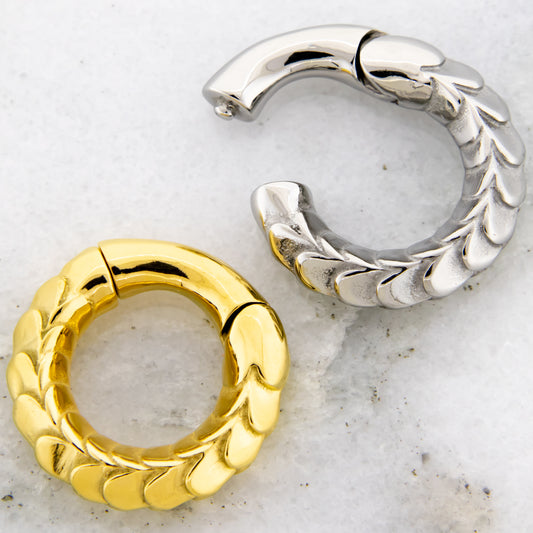
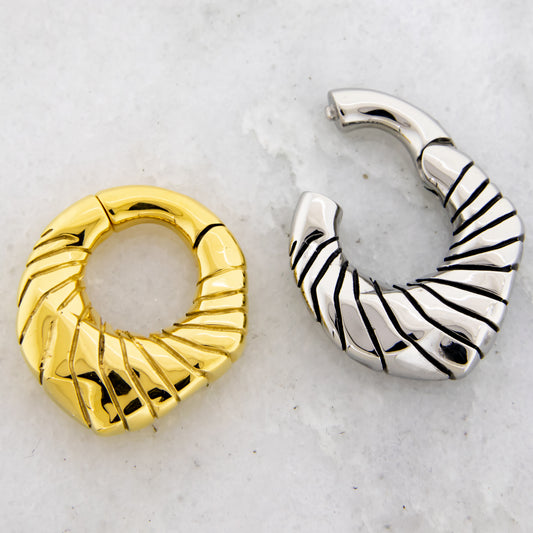
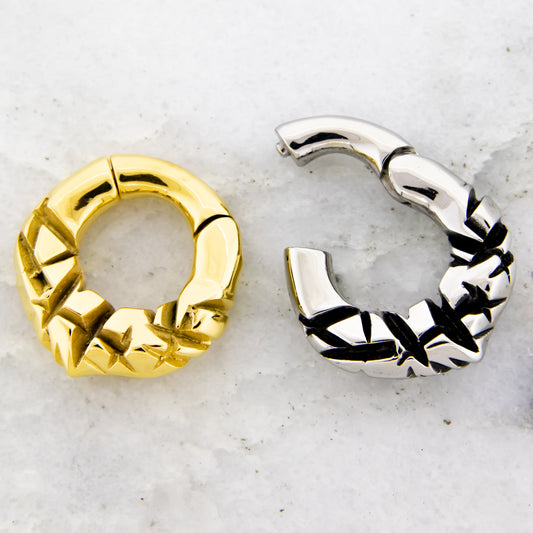
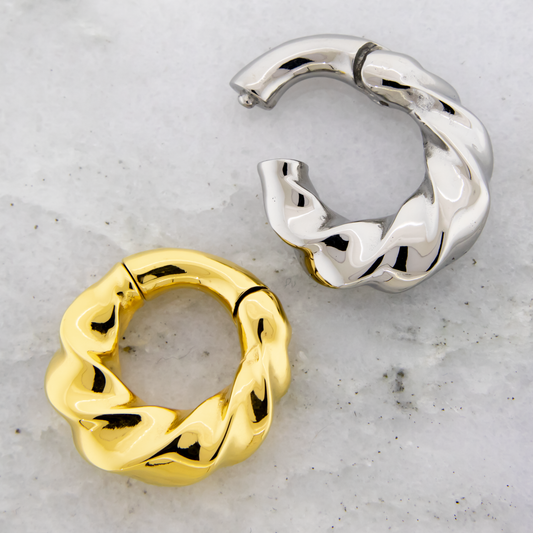
This collection brings together stainless steel ear weights made from 316L surgical steel, mirror-polished and available in hoop, keyhole, and shield styles. Designed for healed stretched lobes at 0G (8mm) and larger, these pieces hang from the lobe to create a downward visual effect that plugs and tunnels cannot replicate. All stainless steel ear weights are sold as pairs. PVD finishes are available across select styles. Free shipping on orders over $25.
What Are Stainless Steel Ear Weights?
Stainless steel ear weights are jewelry pieces designed for healed stretched lobes. Unlike plugs and tunnels that sit within the lobe opening, ear weights hook through the lobe and hang downward, using gravity to create an elongating visual effect below the ear. The weight applies a downward pull that gives the lobe a distinctive silhouette no standard earring or plug can replicate.
The term ear weight is accurate: these pieces are deliberately heavier than standard body jewelry. That mass is what creates the characteristic hanging effect. Stainless steel makes this weight more pronounced than organic materials like wood or stone at the same design dimensions, which is part of why 316L steel ear weights have a particularly defined visual presence when worn.
Ear Weights vs Ear Hangers: The Key Difference
The two terms are often used interchangeably, but there is a meaningful distinction. The main difference between ear hangers and ear weights is the actual weight of the piece. Ear hangers are typically lighter and do not add significant pull to the bottom of your stretched lobe. They dangle for aesthetic effect but the load on the lobe tissue is minimal. Ear weights are specifically heavier pieces where the mass itself is part of the design intention. The downward pull is more substantial, and that pull is what makes ear weights both more visually dramatic and more important to wear with care in terms of duration.
Both styles hang from stretched lobes rather than filling the lobe opening the way a plug or tunnel does. Both can be worn through eyelets and earskins. The practical difference is that heavier stainless steel ear weights require more attention to wear time because the sustained load on the lower lobe tissue is greater than with lighter hanger styles.
Stainless Steel Ear Weight Styles
This collection covers five main style categories for stainless steel ear weights. Each creates a different visual effect and sits differently against the lobe and shoulder.
- Hoop and ring weights: a circular ring that passes through the stretched lobe and hangs below. The simplest format, ranging from minimal polished hoops to decorative styles with textured finishes
- Keyhole weights: a keyhole-shaped body where the circular top sits within the stretched lobe opening and the elongated lower section hangs below. The weight is distributed across both the in-lobe section and the hanging portion
- Shield and spade weights: a flat decorative front piece with a hook or bar that passes through the lobe. The shield faces outward and creates significant visual presence. Most dramatic style in the collection
- Coil weights: a spiral wrap that winds around the lower lobe. Creates a distinctive wrapped look and the weight is spread across the coil contact points rather than concentrated at a single hook point
- Clicker weights: a hinged ring format where the closure clicks shut. Easier to insert and remove than open-hoop styles, particularly at larger gauges
What Gauge Do You Need for Stainless Steel Ear Weights?
Gauge is the most critical variable before purchasing stainless steel ear weights, and it is the variable most often overlooked by first-time buyers in this category. The hook or opening of an ear weight must pass through the lobe cleanly without force. If your lobe is not stretched to the minimum size required for a given weight, the piece will not fit, and attempting to force it risks tearing the lobe tissue.
Stainless steel ear weights typically start at 0G (8mm). Some styles are available from 2G (6mm) for finer hook designs, but the majority of ear weight styles in this collection require a minimum lobe stretch of 0G. At smaller stretches, the lobe does not have enough surface area to support the hanging weight without the jewelry pressing against the top of the stretched opening and creating discomfort or tissue stress.
- 0G (8mm): minimum gauge for most hook-style and hoop stainless steel ear weights; the opening is wide enough to accept the hook without pressure on the upper lobe tissue
- 00G (10mm): the most common starting gauge for ear weights; more styles are available and the lobe has more structural stability to support the hanging mass of a steel piece
- 12mm and larger: the full range of styles is available; heavier shield and keyhole weights are most comfortable and visually proportionate at this size and above
The nature of ear weights is that they can also be worn in lobes stretched beyond the minimum size. An 8mm ear weight worn in a 12mm lobe will hang with a visible gap between the top of the opening and the jewelry. This gap-wear look is a deliberate aesthetic choice for many wearers and is entirely safe in a healed, stable lobe.
How Long Can You Safely Wear Stainless Steel Ear Weights?
This is the most important piece of information for anyone new to ear weights, and it is the question that almost no collection page addresses directly. The honest answer is that stainless steel ear weights are best treated as occasional or event wear rather than everyday all-day jewelry.
The weight of steel pieces focuses a sustained downward load on the bottom of the lobe channel. In a fully healed and stable stretched lobe, short periods of wear are comfortable and safe. Over extended daily wear, that sustained load concentrates pressure on the lower lobe tissue in a way that a well-fitting plug or tunnel does not. Prolonged ear weight wear can cause uneven stretching where the bottom of the lobe elongates while the upper portion remains at the original gauge size. This creates an asymmetric shape that is difficult to reverse.
The practical guidance from experienced body modification practitioners is consistent: wear stainless steel ear weights for a few hours at a time for special occasions or styled looks, then return to a plug or tunnel for daily wear. After a few hours of use with ear weights, going back to a round plug lets the lobe tissue redistribute and maintain its shape. If you notice the lower lobe feeling sore, tender, or unusually stretched after wearing ear weights, remove them and return to your regular plug until the tissue has rested fully.
For everyday stretched lobe jewelry that maintains gauge shape and lobe health over long-term wear, see our Ear Plugs and Tunnels collection for 316L steel options in your gauge size.
Will Stainless Steel Ear Weights Stretch Your Ears Further?
This is the second most common question about ear weights, and the answer requires some nuance. Stainless steel ear weights can cause gradual additional stretch over time through sustained downward pressure, but this stretch is uneven and not recommended as a stretching method.
The conclusion from body modification practitioners is consistent: use stainless steel ear weights for adding style and flair to already stretched lobes, not as a stretching tool. If you want to increase your gauge size, conventional stretching methods with implant-grade tapers and plugs produce a safer and more even result. Ear weights are accessories for healed, stable lobes, not a substitute for the stretching process.
Why 316L Stainless Steel for Ear Weights?
Metal ear weights are popular for their smooth, minimalist look, and 316L surgical steel is the most practical metal choice for this category. It is heavier than wood, acrylic, or organic materials at the same design dimensions, which means a 316L steel ear weight delivers more of the characteristic hanging effect than a lighter-material alternative of the same size. That weight is the point. The steel construction also means the finish holds up to repeated wear and cleaning without degrading, which matters for pieces that are put on and taken off regularly.
316L surgical steel is an implant-grade specification with low nickel release. For stretched lobes, which present more tissue surface area in contact with jewelry than a standard piercing, that low nickel formulation matters. PVD finishes on select styles are a durable surface treatment rather than standard plating, giving a colored look that holds up significantly better over repeated wear and cleaning.
Why Shop Stainless Steel Ear Weights at Pierced Addiction?
Every stainless steel ear weight in this collection is made from 316L implant-grade surgical steel with a mirror-polished or PVD-finished surface. Pairs are sold together so both lobes are matched in finish, gauge, and dimensions.
- 316L implant-grade steel: solid construction, no plating over base metal, mirror-polished or PVD finish
- Multiple style formats: hoop, keyhole, shield, coil, and clicker weights in the same material
- Sold as pairs: both pieces matched in finish and dimensions for symmetrical wear
- PVD color finishes: available on select styles for a non-silver look with a durable surface treatment
- Free USPS economy shipping on all orders over $25, all orders fully insured
- Same-day processing for domestic orders received before 1PM
- 7-day quality guarantee on all items in original sealed packaging
For ring-style steel jewelry that can also be worn in stretched lobes, the Steel Captive Bead Rings collection covers 316L CBRs in gauges from 20G through 00G.
Browse the full range of body piercing jewelry collections at Pierced Addiction including plugs, tunnels, titanium jewelry, and aftercare products.
Frequently Asked Questions
What is the minimum gauge for stainless steel ear weights?
Most stainless steel ear weights start at 0G (8mm). Some finer hook styles are available from 2G (6mm). At smaller gauges, the lobe does not have enough surface area to support the weight without pressure on the upper tissue.
How long can I wear ear weights each day?
A few hours at a time is safe for occasional wear. Extended daily use concentrates pressure on the lower lobe and can cause uneven tissue elongation. Return to a plug or tunnel after each wear session.
Will stainless steel ear weights stretch my ears further?
They can cause gradual stretch, but only at the lower margin of the lobe, not evenly around the opening. This creates an asymmetric teardrop shape rather than an even gauge increase. Ear weights are not recommended as a stretching method.
What is the difference between ear weights and ear hangers?
Ear weights are heavier and create more sustained downward pull. Ear hangers are lighter and are primarily decorative without significant lobe load. Both hang from stretched lobes rather than sitting inside the opening.
Are stainless steel ear weights sold as pairs?
Yes. All stainless steel ear weights in this collection are sold as pairs so both lobes are matched in size, finish, and design.
Can I wear stainless steel ear weights through tunnels or eyelets?
Yes. Ear weights can be worn through a naked stretched lobe, through eyelets, or through earskins. The hook or bar of the weight passes through the tunnel opening in the same way it passes through a bare stretched lobe.
Shop Stainless Steel Ear Weights
Stainless steel ear weights at Pierced Addiction cover hoop, keyhole, shield, coil, and clicker styles in 316L surgical steel, starting from 0G for healed stretched lobes. All pieces are sold as pairs with a mirror-polished or PVD finish. Designed for occasional styled wear rather than extended daily use. Browse the collection above and find your size. Free shipping on orders over $25.