


Nose Piercing Jewelry | Implant-Grade Titanium and Steel Studs, Hoops and Rings
This collection covers nose piercing jewelry across nostril, septum, and bridge placements at Pierced Addiction. ASTM F136 titanium by Khrysos and 316L surgical steel by Metal Mafia are available across every jewelry type: flat-back studs, L-shapes, nose screws, seamless hoops, and septum clickers. Gauges cover 20G, 18G, and 16G to match the full range of professional nose piercing standards. Free shipping on orders over $25.
Browse Nose Piercing Jewelry by Placement
Placement is the first variable to confirm when selecting nose piercing jewelry for any nose placement. Nostril, septum, and bridge piercings each require a different jewelry type, a different gauge, and different sizing dimensions. Choosing the wrong type for your placement is the most common source of fit issues and discomfort when buying nose jewelry online.
Nostril Piercing Jewelry
Nostril piercings are the most common nose placement in the US and use the widest variety of nose piercing jewelry types. The standard gauge for nostril piercings in US professional studios is 20G (0.8mm). Some piercers use 18G (1.0mm) depending on the specific anatomy and intended jewelry style, but 20G is the starting point for most people. If you are not certain which gauge your nostril was pierced at, check the original packaging from your studio or ask your piercer before ordering.
The five main jewelry types for nostril piercings each sit and behave differently in the nostril:
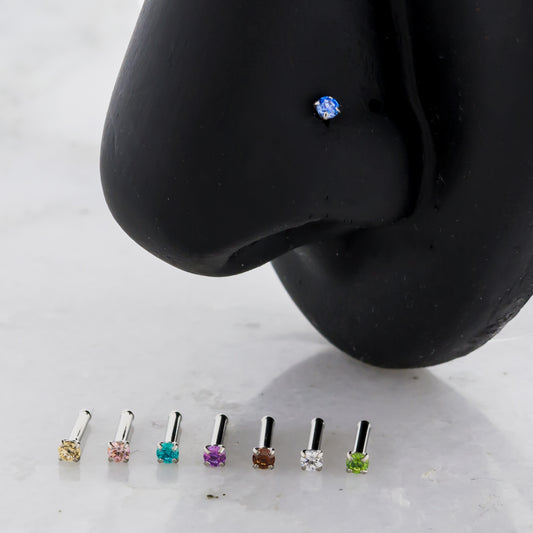
- Flat-back labret stud (threadless): a straight post with a flat disc inside the nostril and a push-fit decorative top on the outside. Smooth post insertion makes this the best choice for fresh and healing piercings. The decorative top swaps without tools
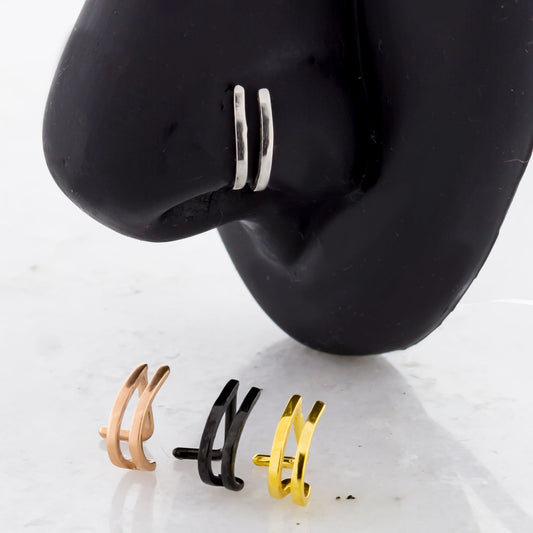
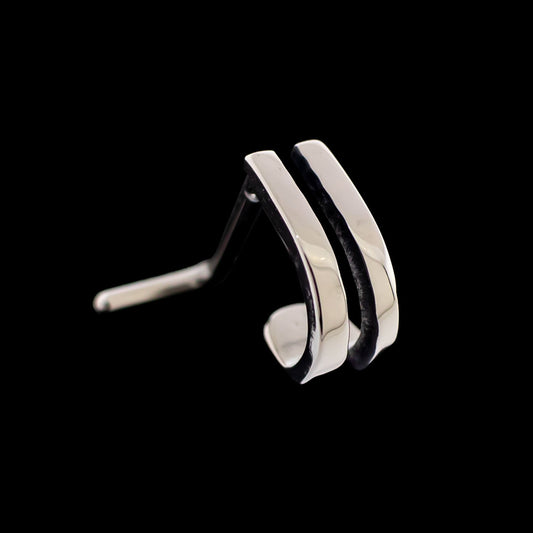
- L-shape nose stud: a post with a 90-degree bend that hooks inside the nostril to hold the jewelry in place. Easy to insert and remove. Secure for everyday wear and active lifestyles
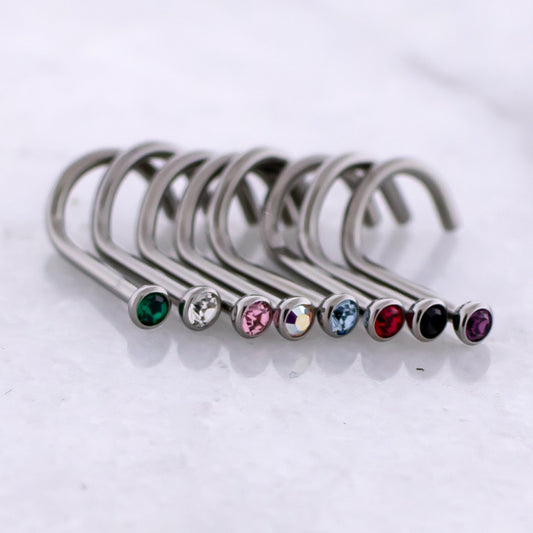
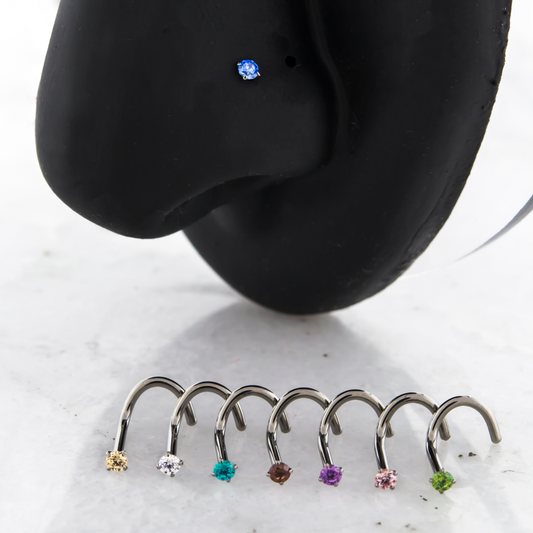
- Nose screw (corkscrew): a post with a spiral twist that sits inside the nostril channel. The most secure hold of any nostril stud style, but slightly more technique required on insertion and removal
- Nose bone: a straight post with a small ball on the inside end. Low-profile and simple. Not appropriate for fresh piercings because the ball must pass through the channel
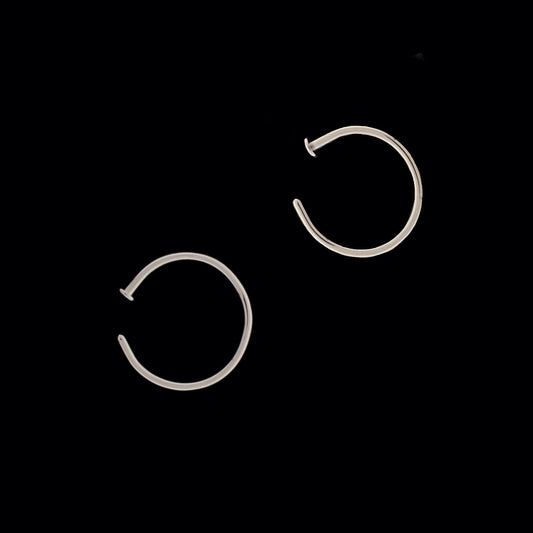
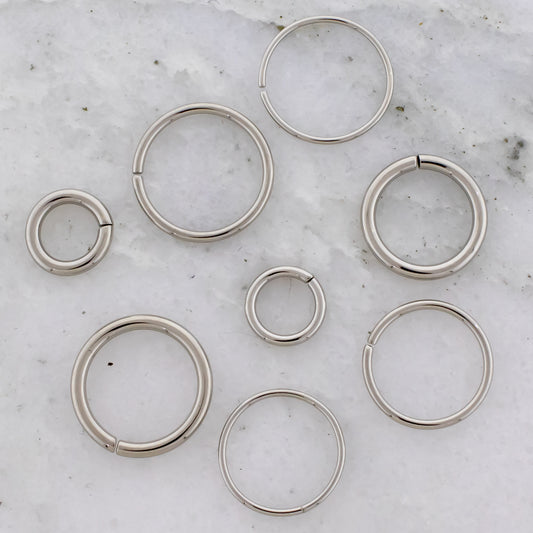
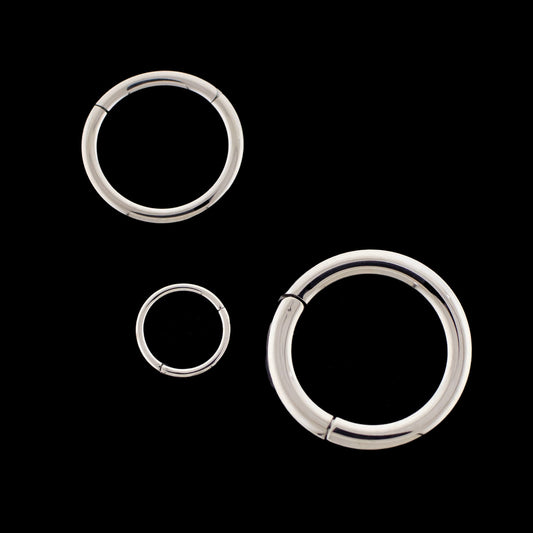
- Seamless hoop or segment ring: gives a ring look at the nostril. 18G or 20G at 6mm to 8mm diameter for most nostril anatomies
For the full range of nostril styles in ASTM F136 titanium, see the Titanium Nose Jewelry collection.
Septum Piercing Jewelry
Septum piercings pass through the columella, the thin strip of soft tissue between the nostrils just below the cartilage wall. The standard gauge for septum nose piercing jewelry is 16G (1.6mm). Inner diameter is the key sizing variable: 8mm fits most anatomies as a standard starting size, with 10mm used for wider septums. The three main styles for septum nose piercing jewelry are:
- Horseshoe barbell (circular barbell): a curved U-shaped bar with two ball ends. Can be flipped upward into the nostrils to hide the piercing completely. The most discreet option for professional settings
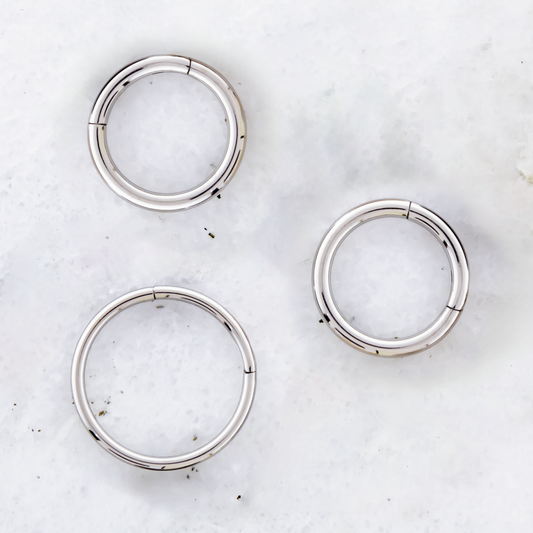
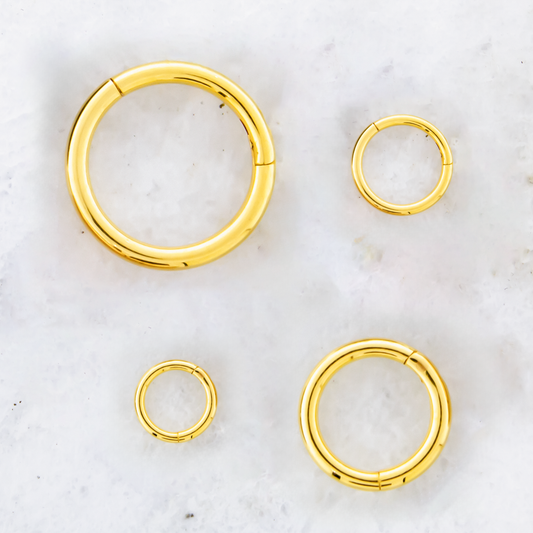
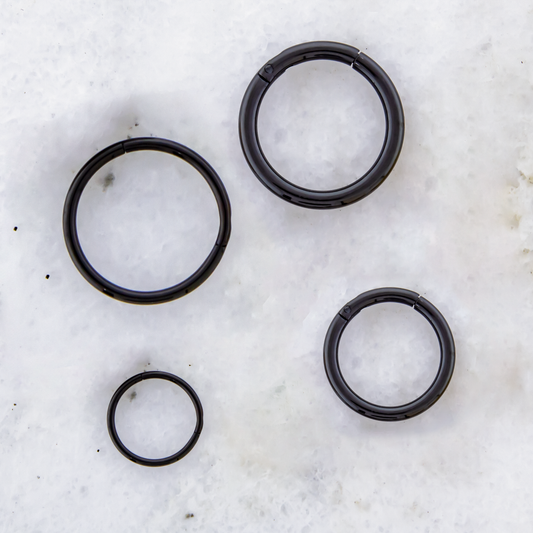
- Septum clicker: a hinged ring that opens and closes with a click mechanism. Easier to insert and remove solo than a horseshoe. Available in plain and gem-set styles
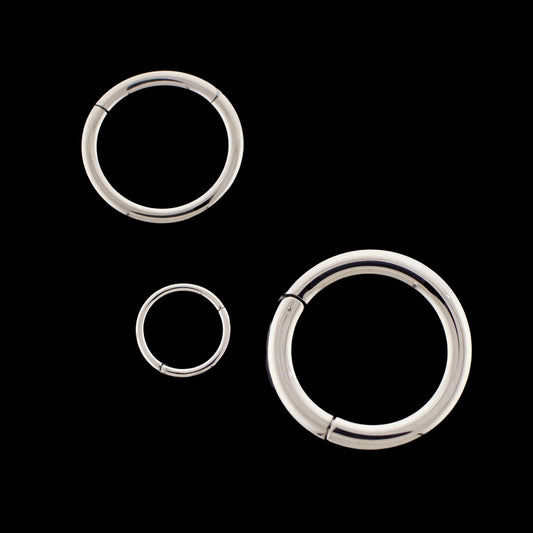
- Seamless ring: a continuous ring that twists open for insertion. Clean, minimal look with no visible closure
Bridge Piercing Jewelry
Bridge piercings use a straight barbell as their nose piercing jewelry, passing horizontally across the nose bridge between the eyes. They use a straight barbell at 14G or 16G, with a length typically between 8mm and 12mm depending on nose bridge width. Bridge piercings have a longer healing timeline than nostril piercings and are more prone to migration if the jewelry gauge or length is not matched precisely to the anatomy.
This placement benefits from implant-grade titanium as the starting material because of titaniums lighter weight and superior biocompatibility with surface piercings in delicate tissue.
Nose Jewelry Types Explained
The variety of nose piercing jewelry types reflects the different anatomies, healing stages, and lifestyles they serve. Understanding what makes each type different helps match the right piece to your specific situation rather than buying by appearance alone.
Flat-Back Labret Studs: Best for Fresh Piercings
Flat-back labret studs are the most versatile type of nose piercing jewelry for fresh piercings, consisting of a straight post with a flat disc on the inside end and a push-fit decorative top on the outside. The post sits smooth and straight inside the nostril channel with no bends or spirals to navigate. The threadless system means the decorative top presses onto a slightly bent pin rather than screwing on, so changes are tool-free and quick.
Flat-back studs are the professional recommendation for fresh nostril piercings because the smooth post causes no friction against healing tissue during insertion and removal. They are also the most practical option for anyone who changes nose piercing jewelry frequently, since the decorative top swaps independently of the post without disturbing the piercing channel. The limitation is that flat-back studs require the correct post length to sit flush, so measuring carefully before ordering matters more with this type than with L-shapes or screws.
L-Shape and Screw Nose Studs: Best for Healed Piercings
L-shape and screw nose studs are the most widely owned nose piercing jewelry types for nostril piercings in the US. Both styles hold in place through the physical shape of the post rather than a flat disc. An L-shape has a single 90-degree bend that sits around the inside of the nostril wall. A screw has a corkscrew-style spiral that locks inside the channel with a rotating insertion motion.
L-shapes are generally easier to insert and remove than screws, making them the preferred everyday style for most wearers. Screws provide a more secure hold because the spiral prevents the jewelry from shifting even under pressure, making them the practical choice for active lifestyles, sports, or jobs where the nose is in frequent contact with hands or equipment. Both styles are appropriate for fully healed nostril piercings only. The bending motion required to insert them creates lateral movement in the channel that is too much for healing tissue.
Nose Bones: Simple and Low-Profile
A nose bone is one of the most straightforward types of nose piercing jewelry: a straight post with a tiny ball or disc on the inside end that prevents the jewelry from sliding through the nostril. The outside end carries the decorative element, typically a small gem, ball, or flat top. Nose bones sit very low-profile in the nostril and are popular for workplaces or situations where minimal jewelry visibility is important.
The tradeoff is insertion. Because the inside ball must pass through the piercing channel to seat the jewelry, nose bones require a slightly forced push to insert and remove. This is fine in a healed, established piercing but not appropriate for a fresh or still-healing nostril, where forcing a ball through the channel can cause tearing and irritation. Nose bones are best reserved for healed piercings with well-established channels.
Seamless Hoops and Segment Rings: For a Ring Look
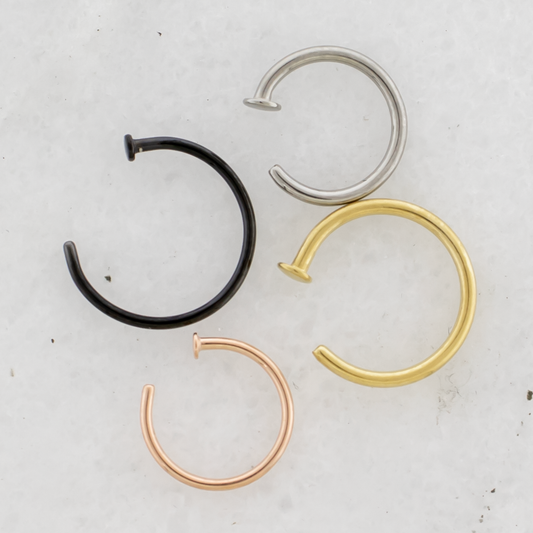
Seamless hoops and segment rings are the ring-style category of nose piercing jewelry, giving nostril piercings a ring aesthetic rather than a stud appearance. A seamless ring is a continuous circle of metal that twists open at a single point for insertion. A segment ring has a removable section that lifts out to create the opening. Both sit against the curve of the nostril, with the ring passing through the piercing and curving around the outside of the nostril.
Sizing for nostril hoops involves two variables: gauge and diameter. Most nostril piercings use 18G or 20G hoops at a diameter of 6mm to 8mm. A 6mm hoop sits close to the nostril skin with minimal space showing. An 8mm hoop sits slightly away from the nostril and creates a more visible ring look. If you are unsure which diameter fits your anatomy, a 7mm ring is a practical middle point that works for most nostril piercings.
Septum Clickers: The Most User-Friendly Septum Style
Septum clickers have become the most popular septum nose piercing jewelry because the hinged closure makes solo insertion and removal straightforward compared to the twist-open mechanism of seamless rings or the ball-end threading of horseshoe barbells. The hinge opens at the bottom of the ring, the jewelry passes through the septum, and the hinge clicks closed under light pressure. No threading, no twisting, no separate parts to manage.
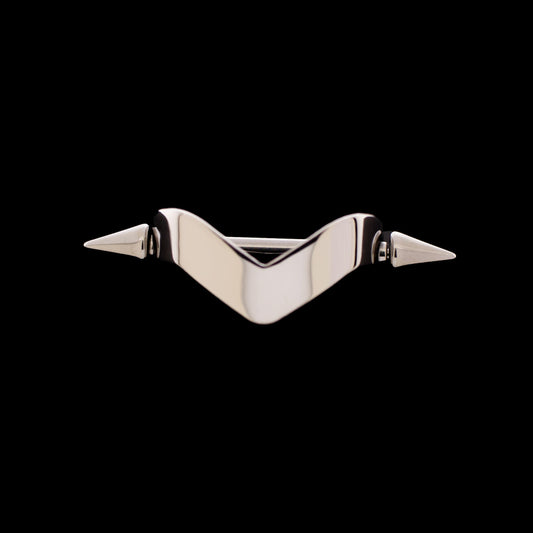
Septum clickers are available in plain polished styles, gem-set designs, and shaped clicker bars. The standard gauge is 16G with an 8mm inner diameter for most septum anatomies. If you have been wearing a horseshoe barbell in your septum and want an easier everyday piece, a septum clicker is the nose piercing jewelry upgrade most often recommended for healed septum piercings.
Material Guide for Nose Piercing Jewelry
Nose piercings sit in sensitive facial tissue in constant contact with nose piercing jewelry around the clock. The nose also experiences more mechanical interaction than most other piercing placements: facial movements, blowing the nose, touching the face, and seasonal dryness all affect the tissue around the piercing. Material choice for nose piercing jewelry determines whether that continuous contact is neutral or progressively irritating over months and years of wear.
ASTM F136 Titanium: Best for All Nose Piercings
ASTM F136 implant-grade titanium is the material the Association of Professional Piercers recommends for all nose piercing jewelry, fresh and healed alike. It is 100% nickel-free by composition, not just low-release, which matters for nasal tissue that can be sensitive to even trace nickel migration. Titanium is also significantly lighter than steel, which reduces the pull on the piercing channel over long-term wear.
- Nickel-free by composition: no nickel content, not just low-release formulation
- Lightweight: reduces mechanical stress on the nostril channel during long-term wear
- Anodizable: color can be added to the surface through anodization, with no plating or coating
- Recommended for: fresh piercings, healing piercings, and anyone with metal sensitivity
316L Surgical Steel: For Fully Healed Nose Piercings
For fully healed piercings without nickel sensitivity, 316L surgical steel nose piercing jewelry is a reliable implant-grade option. It is formulated for low nickel release, takes a mirror polish that holds up to cleaning and daily wear, and is available at a lower price point than titanium. It is not the professional recommendation for fresh piercings. For a nose piercing that is still healing or has been slow to establish, titanium is the correct material choice.
The most important specification to confirm when purchasing any nose piercing jewelry described as steel is the material grade. 316L is an implant-grade specification defined by composition and nickel release thresholds. Generic terms like surgical steel, hypoallergenic steel, or medical grade are unregulated and frequently applied to lower-grade alloys that do not meet the same standard. Always confirm the material is specifically 316L before purchasing.
Nose Piercing Jewelry Sizing Guide
Gauge and physical dimensions in all nose piercing jewelry must match your existing piercing exactly. Ordering the wrong gauge is the most common reason nose jewelry does not fit on arrival. Ordering the wrong length or diameter is the most common reason a piece looks or sits incorrectly after insertion. A general rule that applies across all nose piercing jewelry: do not use standard earring posts in a nose piercing. Earring posts are typically 22G, which is thinner than the 20G or 18G standard for nostril piercings. The thinner post sits loosely in the channel, does not hold securely, and can cause the piercing to migrate or tear over time.
- Nostril gauge: 20G (most common in US studios), 18G (less common, check original packaging)
- Nostril hoop diameter: 6mm to 8mm for most anatomies; 7mm is the most versatile starting size
- Septum gauge: 16G is the professional standard for septum piercings
- Septum inner diameter: 8mm fits most anatomies; 10mm for wider septums
- Bridge gauge: 16G standard, post length 8mm to 12mm depending on bridge width
Why Shop Nose Piercing Jewelry at Pierced Addiction?
Pierced Addiction sources nose piercing jewelry exclusively from two suppliers: Khrysos for implant-grade titanium and Metal Mafia for 316L surgical steel. Both produce to professional piercing industry tolerances. Every piece of nose piercing jewelry in this collection is the material it is described as, with no plating over base metal and no generic steel that does not meet the implant-grade specification.
- ASTM F136 titanium by Khrysos: nickel-free, anodizable, backed by a lifetime workmanship guarantee
- 316L steel by Metal Mafia: solid implant-grade steel, no plating, mirror-polished finish
- Full placement coverage: nostril, septum, and bridge jewelry in all standard gauges
- All jewelry types available: flat-back studs, L-shapes, screws, nose bones, hoops, and clickers
- Free USPS economy shipping on all orders over $25, all orders fully insured
- Same-day processing for domestic orders received before 1PM
- 7-day quality guarantee on all items in original sealed packaging
For dedicated septum styles across titanium and steel, the Septum Jewelry collection covers horseshoe barbells, clickers, and seamless rings in one place.
Frequently Asked Questions
What gauge is standard for nose piercing jewelry?
20G is the most common gauge for nostril piercings in US professional studios. 18G is used by some piercers. Septum piercings use 16G as the standard. Always match the gauge your piercer originally used.
Can I use a regular earring as nose jewelry?
No. Earring posts are typically 22G, thinner than the 20G or 18G standard for nostril piercings. A 22G post sits loosely in the channel and increases the risk of migration and tearing over time.
What is the difference between a threadless nose stud and an L-shape?
A threadless stud has a straight post, flat disc inside the nostril, and push-fit top. An L-shape has a bent post that hooks inside the nostril wall. Threadless suits fresh piercings; L-shapes are easy and practical for healed piercings.
What material is best for nose piercing jewelry?
ASTM F136 implant-grade titanium is the professional recommendation for both fresh and healed nose piercings. It is nickel-free and the lightest option. For fully healed piercings without metal sensitivity, 316L surgical steel is a safe and more affordable alternative.
How do I know what size hoop to buy for my nostril?
Most nostril piercings use a 6mm to 8mm hoop. A 7mm hoop is the most versatile starting size. Go with 6mm for a snug fit or 8mm for more visible ring below the nostril.
Is it safe to flip up septum jewelry at work?
Yes, for fully healed septum piercings. A horseshoe barbell or retainer can be flipped up inside the nostrils, making the piercing invisible. Do not flip jewelry in a fresh or still-healing septum piercing, as repeated movement slows healing.
Shop Nose Piercing Jewelry
Nose piercing jewelry at Pierced Addiction covers nostril, septum, and bridge placements in implant-grade titanium by Khrysos and 316L steel by Metal Mafia. From flat-back studs and L-shapes to septum clickers and seamless hoops, all gauges and types are available. For bridge-specific styles, see the Nose Bridge Barbells collection.