
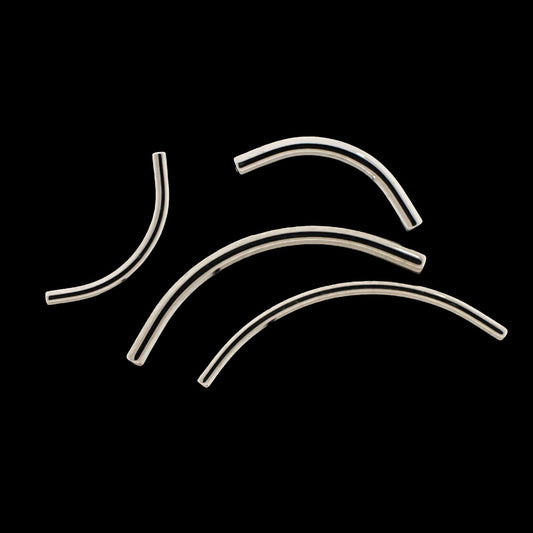
Threadless Curved Barbells: Implant-Grade Titanium Curved Barbell Piercing Jewelry
Browse our collection of threadless curved barbells crafted from ASTM F136 implant-grade titanium. Whether you are shopping for an eyebrow piercing, navel, rook, or vertical labret, every piece here uses the push-fit threadless system recommended by the Association of Professional Piercers. Safe for healing and healed placements alike, hypoallergenic, and available with interchangeable ends in a range of anodized finishes.
What Is a Threadless Curved Barbell?
If you have had a rough experience with threaded jewelry scratching or snagging during a change, the threadless system exists to fix exactly that. A threadless curved barbell is a two-piece setup: a curved implant-grade titanium post paired with a decorative end that has a slightly bent pin. That pin presses firmly into the hollow post without any threads, which means nothing abrasive ever contacts your piercing channel on insertion or removal.
How the Push-Fit System Works on a Curved Post
The mechanism behind a threadless curved barbell is straightforward. The decorative end has a thin pin with a gentle bend built into it. When you push that pin into the hollow end of the curved post, the pin wants to straighten itself out, and that tension is what holds everything securely in place. The more you bend the pin, the tighter the hold. No tools, no twisting, no threads dragging through tissue. To remove the jewelry, you simply grip both pieces and pull them apart with steady, even pressure.
This is meaningfully different from internally threaded curved barbells, where a screw mechanism connects the end to the post. Both systems are smooth on the post exterior and both are APP-approved, but the threadless push-fit design gives you broader end interchangeability across brands, provided the gauge matches. For anyone who likes changing up their look without changing the post, a threadless curved barbell is the more versatile starting point. If you prefer the internally threaded system for a more rigid connection, you can browse our internally threaded curved barbells collection for a direct comparison.
Which Piercings Use a Threadless Curved Barbell?
The curved barbell is one of the most versatile post shapes in body jewelry because the arc of the post follows the natural curve of the body at several different placement sites. A threadless curved barbell works particularly well anywhere tissue depth or anatomy prevents a straight post from sitting comfortably. Below are the placements where this style performs best.
Eyebrow Piercings
The eyebrow is the most well-known placement for a curved barbell piercing. The gentle curve of the post follows the brow line and allows both ends of the jewelry to sit flush against the skin, reducing the leverage and pull that a straight post would create across the same placement. For anyone managing a healing eyebrow, the threadless system makes cleaning easier: there is no ball to unscrew over a fresh wound, and the push-fit end can be changed without disturbing the post inside the piercing. Most eyebrow piercings are done at 16g, with barbell lengths typically ranging from 6mm to 10mm depending on anatomy. Your piercer will advise on the correct downsize length once swelling has settled.
Navel and Floating Navel Piercings
The navel is the highest-traffic placement for a curved barbell globally, and for good reason. The arc of the post follows the natural fold of the belly button, and the decorative top end sits at the opening where it is visible. Standard navel piercings are pierced at 14g and typically use a 10mm (3/8 inch) post with two decorative ends. A floating navel variation uses a shorter post with a single decorative top, giving a cleaner, more minimalist look against the skin. If you have a navel piercing and are exploring the threadless system for the first time, the internally threaded navel rings collection is also worth reviewing if you prefer a fixed-end setup on the bottom ball.
Rook Piercings
The rook sits in the upper cartilage fold inside the ear, and the anatomy of that fold responds better to a curved post than a straight one. A threadless curved barbell at 16g follows the ridge of the antihelix naturally, reducing the pressure and migration risk that a poorly shaped post can create in cartilage. Rook piercings are among the slower cartilage piercings to heal, often taking nine to fourteen months, which makes the tissue-safe profile of ASTM F136 titanium especially relevant here. Threadless ends can be swapped once the piercing is fully healed without removing or reseating the post.
Vertical Labret Piercings
The vertical labret enters through the center of the lower lip and exits at the lip's edge, with both ends of the jewelry visible on the face. A curved post follows the lip's natural profile better than a straight bar and keeps both ends positioned symmetrically. For this placement the threadless system is particularly useful: the decorative top end is the visible element, and being able to swap it without disturbing the post inside the healing channel is a genuine practical advantage. If you are building a complementary lip or facial piercing alongside a vertical labret, our threadless labrets collection covers the flat-back labret posts commonly used for adjacent placements.
Why Implant-Grade Titanium Is the Right Material for a Curved Barbell Piercing
The material your jewelry is made from has a direct effect on how your piercing heals, how long it stays healthy, and how your skin reacts over time. This matters most for placements like the eyebrow and rook, where cartilage and surface tissue are unforgiving of reactive metals and where healing timelines are long enough that a bad material choice can cause sustained irritation for months.
ASTM F136 Titanium vs. Other Curved Barbell Materials
ASTM F136 is the titanium specification used in orthopedic and dental implants. In body jewelry terms, it is completely nickel-free, which removes the most common trigger for contact dermatitis in piercing jewelry. It is also roughly half the weight of surgical steel, which is significant for placements like the eyebrow and navel where gravity and daily movement create constant low-level stress on the piercing site. The surface can be anodized through a heat-based process to produce stable, vivid colors without any dyes, coatings, or platings that could flake off into healing tissue.
For comparison, implant-grade steel is a solid second option for healed piercings and contains alloys that are trapped within the metal structure rather than sitting on the surface. Gold at 14k or above is a premium choice with excellent biocompatibility. What to avoid entirely: mystery alloy posts, plated metals that present well in product photos but expose base metals at the wear points, and acrylic or BioFlex for any placement that is still actively healing. For this collection, every threadless curved barbell post is ASTM F136 implant-grade titanium with no exceptions.
It is also worth noting that implant-grade titanium is autoclavable, meaning a professional piercer can sterilize your new jewelry in a clinical autoclave before insertion if you prefer. This is a meaningful advantage over materials that degrade under high-heat sterilization.
How to Choose the Right Threadless Curved Barbell
Choosing the right threadless curved barbell comes down to three variables: gauge, post length, and the decorative end. Getting all three right means your jewelry fits the anatomy of your specific piercing, stays comfortable during healing, and looks the way you want once it is fully healed.
Gauge: Matching Your Piercing
Gauge is the thickness of the post and must match exactly what your piercer used for your initial piercing. The most common gauges for curved barbell placements are 16g (1.2mm) and 14g (1.6mm). Eyebrow and rook piercings are typically done at 16g because the tissue is finer and a lighter post creates less pressure.
Navel and VCH piercings are generally 14g because the tissue is thicker and a sturdier post holds the weight of the decorative end more effectively. Mixing gauges between post and end, or between your piercing and the jewelry, will prevent proper fit and can traumatize the channel.
Length and Curve Angle
Post length is measured along the inside of the curve, from end to end. For eyebrow piercings, 6mm to 8mm is standard for a healed placement, with slightly longer jewelry used during initial healing to accommodate swelling. For navel piercings, 10mm is the most common starting point. Floating navel styles often use 8mm or 9mm for a tighter, more skin-hugging fit. The curve angle on a titanium post is fixed at manufacture, so selecting a post from a reputable piercing-grade supplier matters: correctly calibrated curvature sits parallel to the skin surface without pressing inward or lifting outward at the ends. If your current jewelry is a longer healing barbell and the piercing is fully healed, ask your piercer about a downsize to a shorter post for a cleaner, more flattering fit.
Choosing Your Threadless End
One of the main advantages of the threadless system is that ends are interchangeable across brands at the same gauge. Once the curved post is in place, changing the decorative end is a seconds-long process with no tools required. For a healing piercing, flat disc ends or simple bezel-set gems are the safest starting point because they sit flush, snag nothing, and present no moving parts near tissue that is still repairing itself. For a fully healed piercing, the full range of threadless ends opens up: CZ clusters, opal cabochons, spike ends, shaped charms, and more. If you also have straight-post piercings you want to style alongside your curved barbell, our threadless straight barbells use the same push-fit end system, so your ends library works across both post shapes.
Shop Threadless Curved Barbell Jewelry by Style
Every threadless curved barbell in this collection ships with an ASTM F136 implant-grade titanium post and an APP-approved end. Whether you need something low-profile for a healing rook or a full gem-set piece for a healed navel, here is what is available.
CZ Threadless Curved Barbells
Cubic zirconia ends on a threadless curved barbell are the most requested style for eyebrow and navel piercings. CZ stones are set in secure bezel or prong settings on implant-grade titanium bases, meaning no glue contacts the skin and no setting loosens during cleaning routines. Available in round, teardrop, and cluster configurations in clear, blue, aurora, and multi-tone finishes. A CZ curved barbell photographs cleanly, transitions from everyday wear to a dressed-up look without switching jewelry, and holds up to daily saline spray during the healing phase without any stone degradation.
Opal Threadless Curved Barbells
Synthetic opal ends deliver an iridescent, color-shifting effect that is hard to replicate with any other stone type at this price point. Unlike natural opal, synthetic opal is non-porous, so it does not absorb moisture or bacteria during the cleaning process and maintains its appearance indefinitely with normal care. Opal threadless curved barbells are especially popular for rook and navel placements where the color-shift catches light at different angles throughout the day. In a curated ear stack, an opal curved barbell at the rook can anchor a color theme carried across multiple other piercings.
Plain Anodized Titanium Curved Barbells
A plain anodized titanium threadless curved barbell with a flat disc or ball end is the most universally recommended starting configuration for any new piercing. Flat disc ends in particular sit flush against the skin with no protruding edges, which means no snag risk against hair, pillowcases, clothing, or towels during the months it takes for a fresh eyebrow or navel to fully establish. Anodized color finishes are applied through a heat process that alters the titanium surface itself rather than coating it, so rose gold, black, gold, and purple finishes are stable, skin-safe, and will not chip or flake during healing. This is the correct starting point before you move into styled end options once the piercing matures.
Why Shop Threadless Curved Barbells at Pierced Addiction
Not all body jewelry sold online is sourced to the same standard. Knowing the difference matters most when you are putting metal into healing tissue for months at a time.
- All threadless curved barbell posts are ASTM F136 implant-grade titanium, sourced from Khrysos Jewelry and verified against APP material guidelines
- Anodized finishes are heat-treated at the titanium surface level, not painted or electroplated over a reactive base metal
- Gauge, post length, and end size are listed clearly per product so you can match your existing piercing without guesswork
- Every piece is autoclave-compatible for professional piercer use or for clients who prefer sterilized jewelry on insertion
- Free USPS shipping on all US orders of $25 or more
If your piercer has recommended switching to a threadless push-fit system or specifically mentioned implant-grade titanium in their aftercare instructions, the pieces in this collection meet that standard exactly.
Frequently Asked Questions About Threadless Curved Barbells
New to the threadless system or still working out which size fits your piercing? These are the questions we hear most before a first order.
What is a threadless curved barbell?
A threadless curved barbell is a two-piece body jewelry system where a decorative end with a bent pin presses into a hollow curved post, creating a secure tension hold without any screw threads. Nothing abrasive contacts the piercing fistula on insertion, making it one of the most tissue-safe barbell styles for eyebrow, navel, and cartilage placements.
Which piercings use a threadless curved barbell?
The most common placements for a curved barbell piercing are eyebrow, navel, floating navel, rook, and vertical labret. The curved post follows the natural arc of the body at each of these sites, creating a better fit and less pressure on the piercing channel than a straight post would in the same location.
What gauge do I need for a threadless curved barbell?
Eyebrow and rook piercings are most commonly done at 16g (1.2mm). Navel and VCH piercings are typically 14g (1.6mm). Always match the gauge of your new jewelry to the gauge your piercer used when the piercing was made. Using the wrong gauge causes pressure, enlargement, or poor fit and can slow the healing process.
Can I use any threadless end with a curved barbell post?
Yes, in most cases. Threadless ends are broadly universal across brands that use the push-fit pin system, as long as the gauge matches between the end and the post. Pin tension can vary slightly between manufacturers, so a quick fit check before extended wear is good practice when mixing brands for the first time.
Is a threadless curved barbell safe for a healing eyebrow or navel?
Yes. The push-fit design means no threads contact the fistula during insertion, which is the most common cause of irritation with threaded jewelry. Combined with an ASTM F136 titanium post that is nickel-free and biocompatible, a threadless curved barbell in plain titanium with a flat disc end is among the most piercer-approved configurations available for a fresh eyebrow or navel placement.
What is the difference between threadless and internally threaded curved barbells?
Both are APP-approved and keep the post exterior smooth so nothing abrasive contacts the tissue channel. The difference is in how the end connects: threadless curved barbells use a push-fit bent pin that is broadly interchangeable across brands at the same gauge. Internally threaded curved barbells use a small screw recessed inside the post; ends are typically brand-specific and offer a slightly more rigid connection. Neither is superior in terms of tissue safety; the choice comes down to preference and how often you plan to change ends.
From healing-safe plain titanium styles to gem-set threadless curved barbells for a fully healed eyebrow or navel, every piece in this collection is implant-grade, APP-aligned, and built for the kind of daily wear that body jewelry actually has to survive. Browse the full range above and find the curved barbell that fits your piercing, your gauge, and your look.