
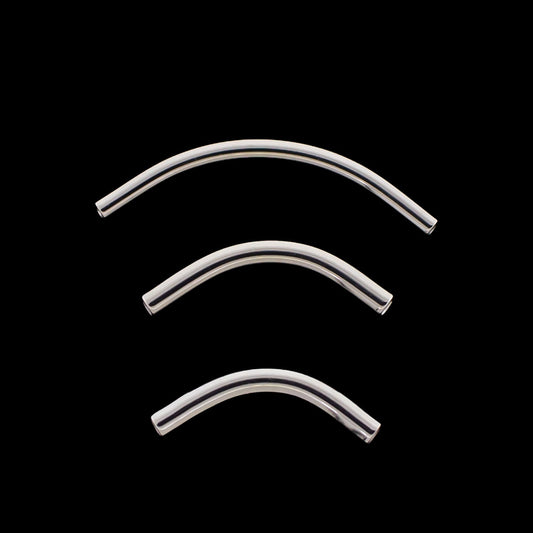
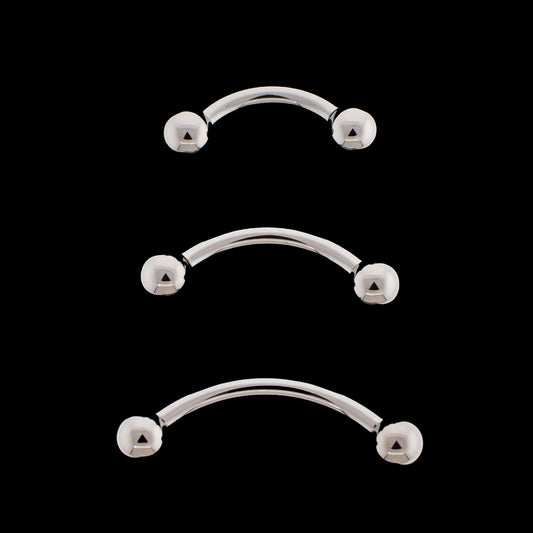
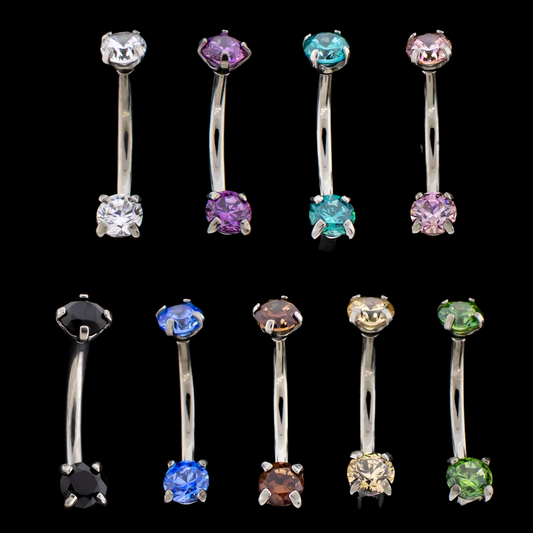
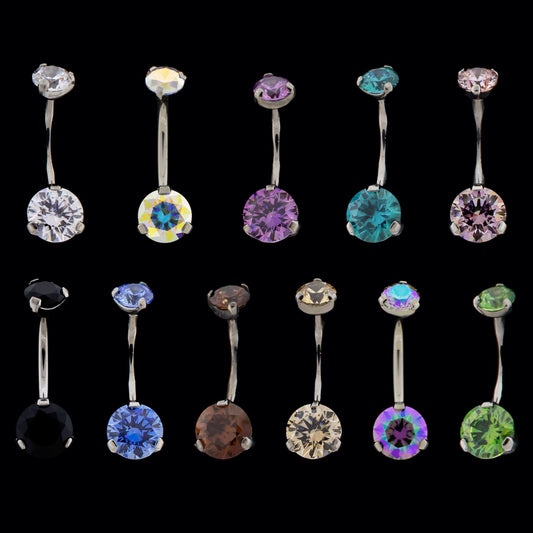
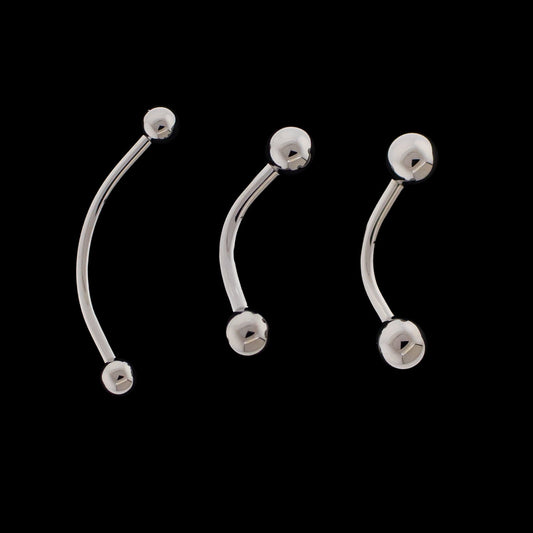
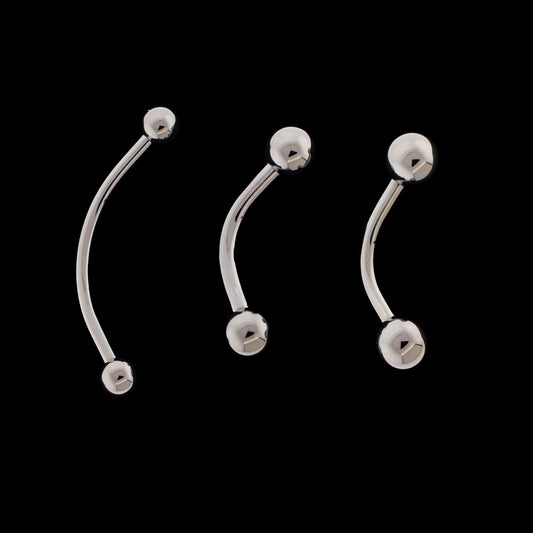
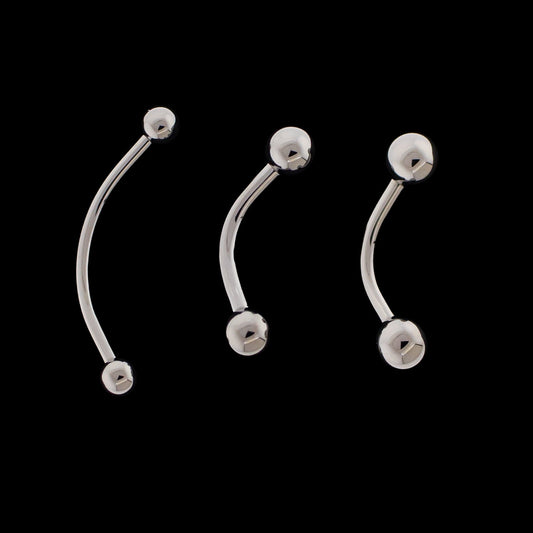
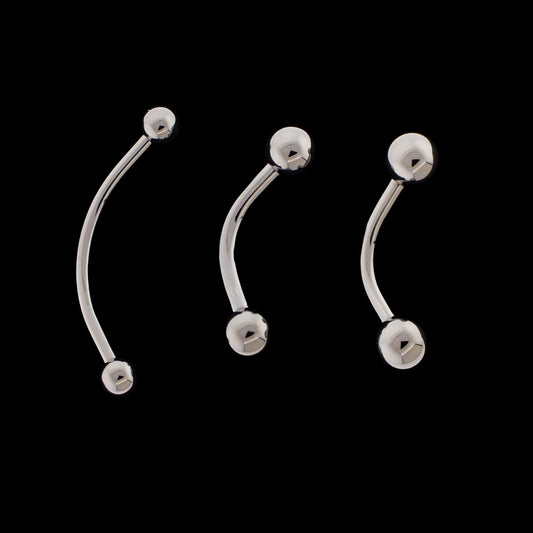
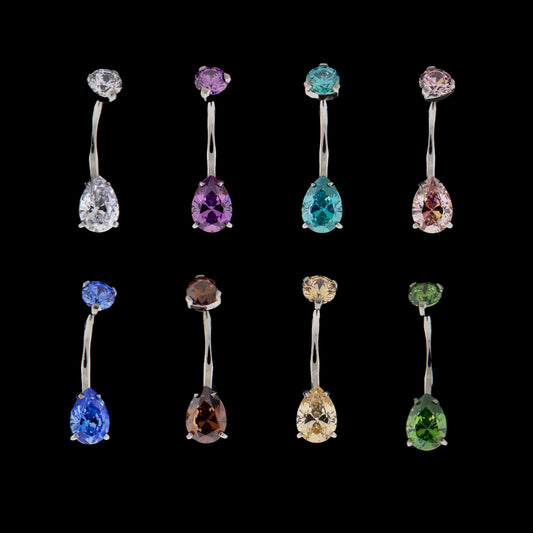

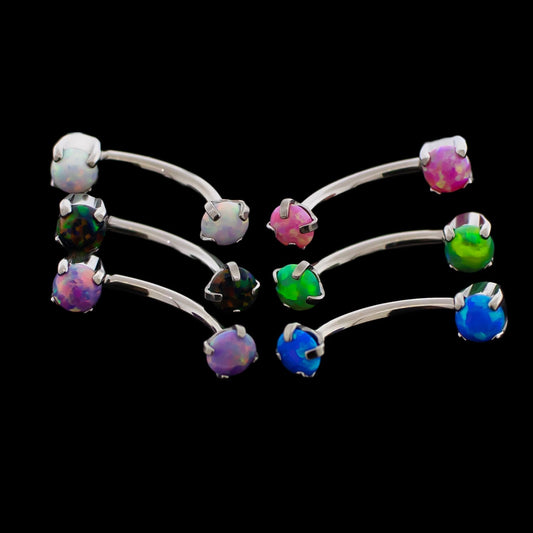
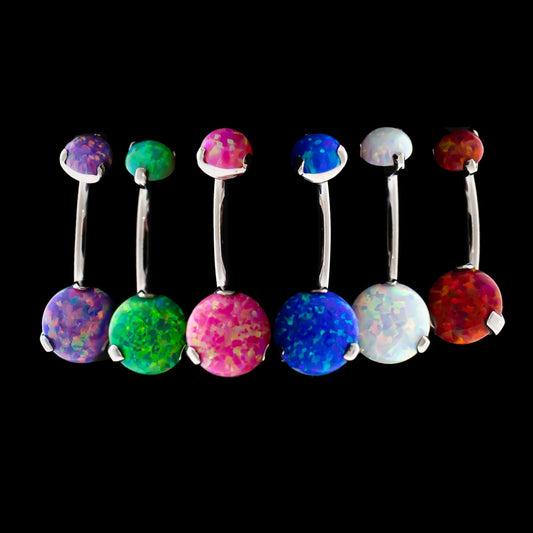
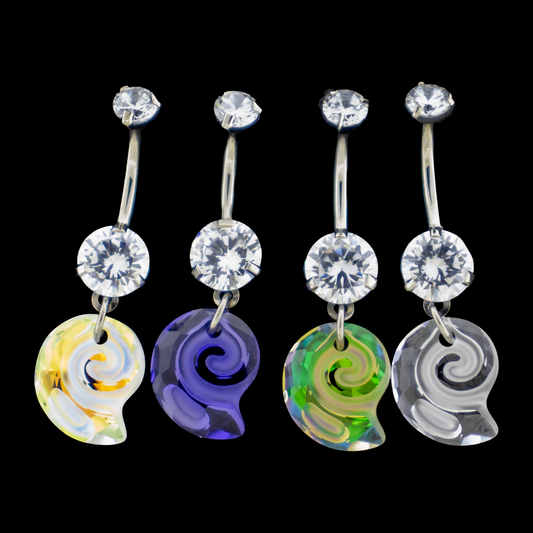
Internally Threaded Titanium Curved Barbells - Titanium by Khrysos
Khrysos ASTM F-136 titanium internally threaded curved barbells are built for eyebrow, rook, daith, vertical labret, and navel piercings. Available in 14G and 16G with multiple lengths, smooth hollow shaft construction, and zero nickel throughout. Compatible with Khrysos internally threaded ends and backed by a lifetime workmanship guarantee.
Why a Curved Barbell, and Why Threading Matters
Not every piercing sits in a straight line. The curve of an internally threaded curved barbell is designed to follow the natural angle of specific anatomical placements, reducing pressure on tissue from both ends of the jewelry simultaneously.
A straight barbell distributes exit pressure linearly. In placements where the piercing channel follows a natural arc, including the eyebrow ridge, rook fold, daith cartilage curve, vertical labret lip curve, and navel rim, a straight bar applies uneven pressure against tissue at both holes at once. A curved barbell matches that arc, letting both ends sit flush against the skin without pressing inward.
For eyebrow piercings specifically, using a straight barbell instead of a curved barbell is one of the documented contributors to premature rejection. The bar fights the anatomy rather than following it, creating constant lateral pressure that tissue responds to by pushing the jewelry out over time.
Placements for Internally Threaded Titanium Curved Barbells
The internally threaded curved barbell covers a wider range of placements than any other single barbell form factor. Here is how each placement uses the curve differently and what sizing applies to each.
Eyebrow Piercing
The eyebrow is the most common placement for an internally threaded curved barbell. The brow ridge creates a natural arc that the curved barbell matches, letting both ends rest flush on the brow surface without pressing into tissue. Standard gauge is 16G, and the most common length is 6mm for tighter brow anatomy and 8mm for wider brow profiles. A 3mm ball end creates a low profile that minimizes snagging risk and is the most widely used professional choice for this placement.
Because eyebrow piercings are surface piercings, they carry a higher rejection risk than cartilage or lobe piercings. ASTM F-136 titanium significantly reduces this risk by eliminating nickel, which is a documented driver of irritation and accelerated rejection in surface placements. Switching from steel to an internally threaded titanium curved barbell is often the first recommendation a piercer makes when an eyebrow piercing shows early irritation signs.
For users considering the cross-placement options, the internally threaded straight barbell collection covers placements where a straight profile is required.
Rook Piercing
The rook is a fold of cartilage in the upper inner ear. Its anatomy specifically requires a piece of jewelry that curves over the fold from both sides, which is why the curved barbell is the standard non-ring option for rook piercings. An internally threaded titanium curved barbell at 16G is the most common starting jewelry for a fresh rook. Length is typically 8mm for standard anatomy, with 10mm needed for thicker rook folds. The rook heals over 6 to 12 months, making ASTM F-136 titanium the correct material for the full healing period.
Daith Piercing
Daith piercings pass through the innermost fold of the ear cartilage. While many daith wearers choose rings, an internally threaded curved barbell at 16G works well for daith placements where a hoop would create too much movement against the cartilage during healing. Standard length for daith curved barbells is 8mm to 10mm depending on individual anatomy. Internally threaded construction is particularly relevant here because the tight anatomical location of the daith makes insertion more physically demanding, and a smooth shaft reduces tissue friction throughout.
Vertical Labret and Navel Piercing
Vertical labret piercings use a curved barbell where the top ball is visible above the center of the lip and the bottom ball exits below the lip. 16G is the standard gauge, and length is typically 8mm to 10mm depending on lip thickness. Navel piercings use a slightly longer internally threaded curved barbell at 14G, with lengths from 10mm to 12mm for most anatomies. Ball sizes for navel piercings are typically 4mm to 5mm to prevent the ends from sitting too close to the navel rim and to provide adequate visual presence as decorative elements.
Sizing Guide for Internally Threaded Curved Barbells
Gauge, length, and ball size are the three variables to confirm before purchasing an internally threaded curved barbell. Getting the length wrong is the most common ordering mistake, particularly for eyebrow and rook placements where anatomy varies considerably between individuals.
Gauge Selection
16G (1.2mm) is the standard gauge for eyebrow, rook, daith, and vertical labret piercings. This is the gauge most professional piercers use for initial jewelry in all of these placements.
14G (1.6mm) is the standard for navel piercings, where deeper tissue and the navel rim require a sturdier bar. Always match the gauge your piercer originally used for your placement.
Sizing down without professional guidance causes the channel to narrow, and future jewelry changes become increasingly difficult.
Length by Placement
Length refers to the inner wearable span of the curved bar, measured as a straight-line distance between the two ends, not along the arc of the curve. Standard references by placement:
- Eyebrow: 6mm for tighter brow anatomy, 8mm for most standard profiles
- Rook: 8mm standard, 10mm for thicker cartilage folds
- Daith: 8–10mm depending on the anatomy of the inner ear fold
- Vertical labret: 8–10mm depending on lip thickness
- Navel: 10–12mm for most anatomies
Fresh piercings are typically sized 1–2mm longer than the healed measurement to accommodate initial swelling. Confirm the correct length with your piercer before ordering replacement jewelry, as brow width and cartilage fold depth vary considerably between individuals.
Ball Size Selection
Ball diameter affects both the visual profile and how the ends sit against tissue at the exit holes.
For eyebrow piercings, 3mm balls create the lowest profile and are the professional standard for this placement.
For rook and daith, 3mm or 4mm balls both work well depending on how visible the wearer wants the ends to be.
For navel piercings, 4mm to 5mm balls are preferred because they distribute pressure across a wider area at the rim and read as decorative elements rather than disappearing into the skin.
For vertical labret, 3mm to 4mm balls keep the profile proportionate to the lip surface.
Why Khrysos Internally Threaded Titanium Curved Barbells at Pierced Addiction
Not all titanium curved barbells are built to the same standard. For surface placements like eyebrow where rejection risk is real, and cartilage placements like rook and daith where healing timelines stretch to 12 months, material quality and machining precision make a measurable difference. Here is what sets these apart:
- ASTM F-136 titanium, Ti6Al4V ELI, zero nickel by composition. Not a coating, not a plating, not a vague surgical grade claim. This is the specific standard the APP requires for initial and healing jewelry. In surface placements where nickel is a documented driver of rejection-speed irritation, nickel-free by composition is a meaningful distinction from plated steel alternatives.
- Smooth internally threaded shaft throughout. No external threads, no ridges on the bar surface. Thread tolerances are machined to engage cleanly with Khrysos internally threaded ends, eliminating the cross-threading and stripping common in mass-produced alternatives.
- True anodization, not PVD coating. Khrysos color options, including high-polish silver, gold, rose gold, black, purple, teal, and blue, are produced by electrochemically modifying the titanium surface oxide layer. The color cannot peel, chip, or react with healing tissue. Many competitors use PVD coating, which is a surface film applied on top of the metal and does not share the same biocompatibility profile.
- Lifetime workmanship guarantee and fast shipping. All Khrysos ASTM F-136 titanium pieces carry a lifetime guarantee with replacement on return of the defective piece. Free USPS economy shipping on orders over $25, same-day domestic processing before 1pm.
To pair your curved barbells with decorative tops, the internally threaded ends collection covers gem sets, opals, flat discs, and shaped ends compatible with the same gauge. For the full Khrysos lineup across all internally threaded jewelry types, browse the titanium internally threaded collection.
Frequently Asked Questions About Internally Threaded Curved Barbells
The questions below address the most common concerns before purchasing from this collection.
What is an internally threaded curved barbell?
A curved barbell with a smooth shaft where thread grooves sit inside the bar ends. The ball screws in via a small pin, so no threads contact tissue during wear.
What placements use a curved barbell?
Eyebrow, rook, daith, vertical labret, and navel are the most common. Each uses the curve to follow the natural arc of the placement's anatomy rather than pressing straight through tissue.
What length curved barbell do I need for my eyebrow?
8mm is the standard starting length for most eyebrow anatomies. 6mm suits tighter brow profiles. Confirm with your piercer before ordering, as brow width varies.
What gauge is standard for an eyebrow curved barbell?
16G (1.2mm) is the standard gauge for eyebrow piercings. Match the gauge your piercer originally used.
Will titanium reduce my eyebrow rejection risk?
Nickel is a documented driver of irritation that accelerates rejection in surface piercings. ASTM F-136 titanium is completely nickel-free, removing that specific risk factor compared to steel jewelry.
Can I use Khrysos internally threaded ends with these curved barbells?
Yes. Khrysos curved barbells and internally threaded ends are machined to matching thread tolerances at the same gauge. Any same-gauge Khrysos end fits without modification.
Khrysos internally threaded titanium curved barbells cover eyebrow, rook, daith, vertical labret, and navel placements in 14G and 16G with multiple lengths. ASTM F-136 construction, true anodization, and a lifetime guarantee make these the right choice for fresh and healed piercings alike. Confirm your gauge and length from the sizing guide above and browse the full collection.