



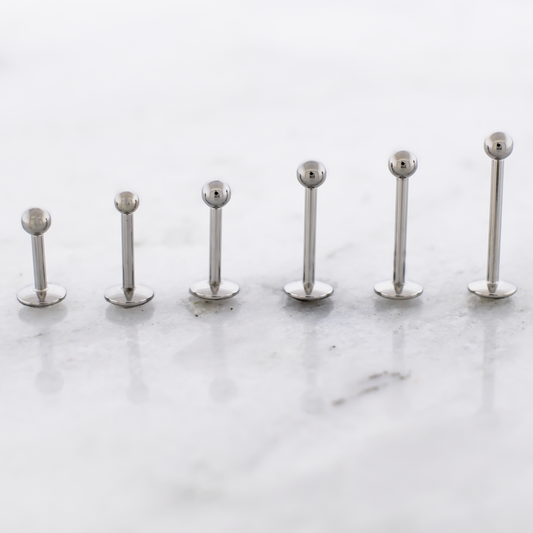
Steel Internally Threaded Labrets: Flat Back Studs for Lip, Ear & Facial Piercings
Steel internally threaded labrets are the most versatile post in body piercing. A flat disc back, a straight steel post, and a removable internally threaded end combine into one piece that works across more placements than almost any other jewelry style. This collection of steel internally threaded labrets covers the gauges, post lengths, and end styles you need, all in implant-grade 316L steel.
What Is a Steel Internally Threaded Labret?
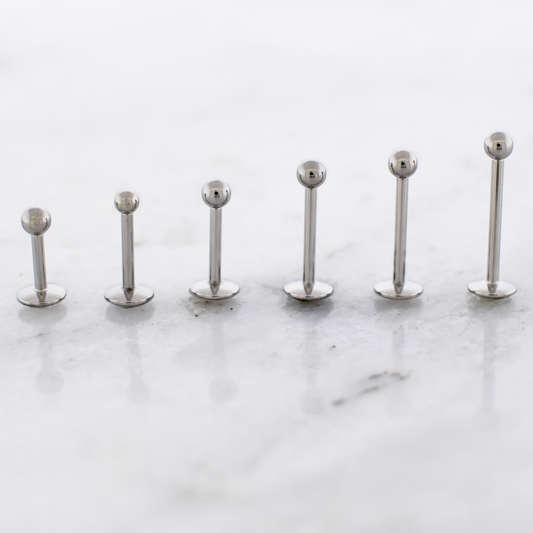
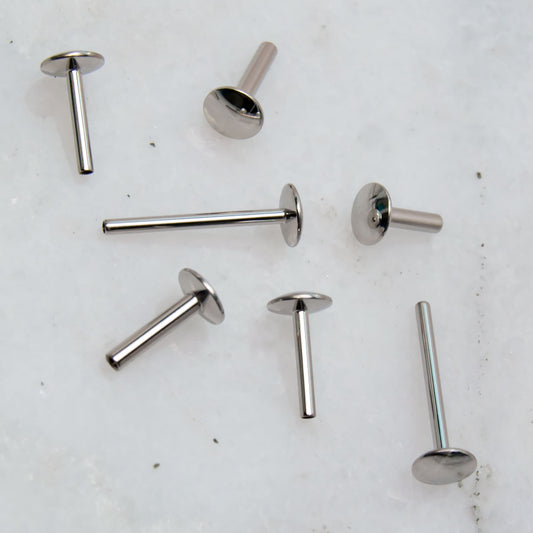
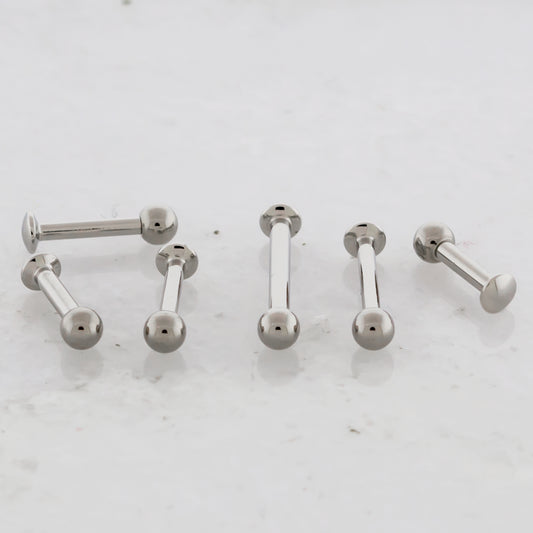
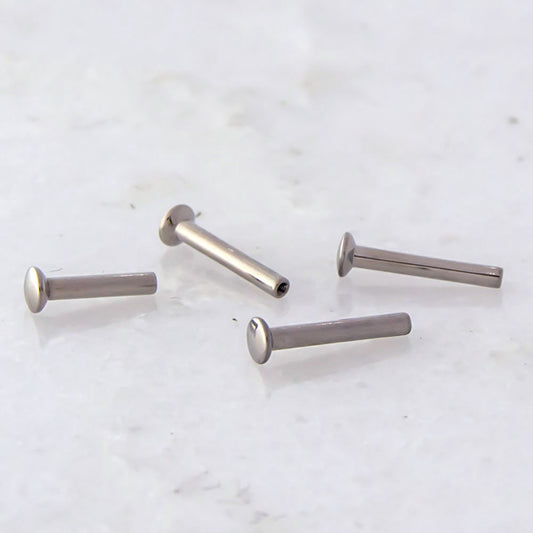
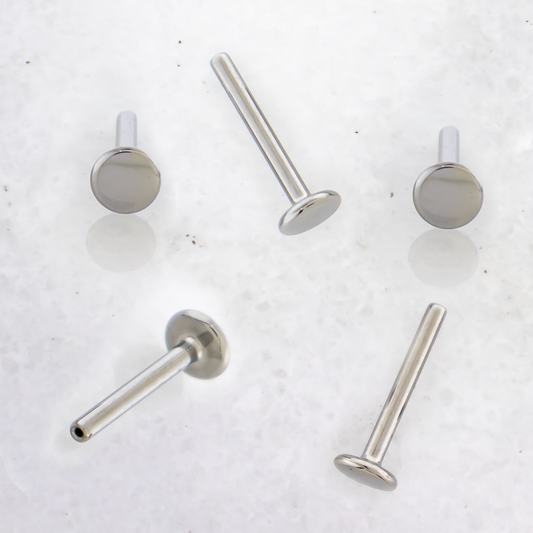
A steel internally threaded labret consists of three parts: a flat disc that rests flush against the inside of the piercing, a straight post, and a decorative end that screws onto the front. The threading is cut into the inside of the decorative end itself, which means the post surface stays completely smooth. No exposed threads pass through the piercing channel during insertion or removal.
Labret vs. Flat Back: Is There a Difference?
The terms labret and flat back stud are used interchangeably in most piercing contexts. Technically, "labret" refers to the jewelry style originally designed for lip placements below the lower lip, while "flat back stud" is the broader term used across all placements. Both describe the same post-and-disc construction, and both use the same internally threaded ends. If your piercer recommends a flat back stud, a labret post is the same piece of jewelry.
Internally Threaded vs. Externally Threaded vs. Threadless
The threading system determines how the end attaches to the post and how much contact exposed hardware has with your piercing channel.
Internally Threaded:
- Threading is inside the decorative end, post surface is smooth
- No exposed threads pass through the piercing during jewelry changes
- Lower tissue trauma risk, APP-recommended for both initial and healed piercings
- Ends unscrew counterclockwise to remove
Externally Threaded:
- Threading runs along the outside of the post
- Threaded surface contacts tissue during insertion and removal
- Higher risk of microabrasion and irritation
- Less expensive to manufacture, common in budget jewelry
Threadless (Press-Fit):
- End attaches via a bent pin that creates tension inside the hollow post
- No screwing required, easy for single-handed changes
- Requires a threadless-specific post, not compatible with internally threaded ends
- Popular for delicate cartilage jewelry
The three systems are not interchangeable. Steel internally threaded labrets in this collection accept only internally threaded ends.
Piercing Placements for Steel Internally Threaded Labrets
Steel internally threaded labrets are the workhorse of body piercing because a single post style adapts to nearly every placement on the face and ear. The flat disc back distributes pressure evenly, eliminates snagging, and sits comfortably without the bulk of a ball-back stud.
Lip and Facial Piercings
Internally threaded labret posts are the standard jewelry for lip placements because the flat back sits comfortably against the inside of the lip or cheek tissue without irritating the gum line. Common placements in this category include the labret (below the lower lip center), Monroe (upper lip, left side), Medusa or philtrum (upper lip center), Madonna (upper lip, right side), and snake bites (lower lip, both sides). Post length matters more here than in ear placements because lip tissue depth varies significantly between individuals.
Ear Cartilage Piercings
The flat back design makes steel internally threaded labrets the preferred jewelry for most cartilage placements. The disc sits flush behind the ear without pressing into the cartilage during sleep, which is a meaningful advantage over standard ball-back jewelry. Tragus, helix, forward helix, conch, and flat piercings all commonly use flat back labret posts. A 16G post at 6mm to 8mm post length covers the majority of healed cartilage placements.
Nostril Piercings
Flat back labret posts are increasingly the go-to for nostril piercings, particularly for people who find L-shaped or screw-style nose jewelry uncomfortable. The flat disc sits inside the nostril without rotating or shifting, and the internally threaded end can be changed without removing the post. A 16G or 18G post at 6mm to 8mm fits most standard nostril placements comfortably after healing.
See more: Steel Internally Threaded Ends
How to Choose the Right Size
Gauge and post length are the two decisions that determine whether a labret fits correctly. Getting both right means the jewelry sits flush, moves minimally, and does not embed or pull at the tissue.
Gauge options in this collection:
- 16G (1.2mm): The most common gauge for lip piercings, ear cartilage, and nostril placements. Compatible with a wide range of internally threaded ends.
- 14G (1.6mm): Used for lip placements with more tissue depth and for people originally pierced at 14G. Heavier, more substantial feel.
Post length guide for healed piercings:
- 6mm (1/4"): Snug fit for thin cartilage placements: tragus, forward helix, flat. Best after full healing and confirmed downsize.
- 8mm (5/16"): The most common healed-piercing length for both ear and lip placements. Works across most anatomies.
- 10mm (3/8"): For deeper tissue placements such as the labret chin area, thicker lip tissue, or conch piercings with more cartilage depth.
- 12mm (7/16") and longer: Initial piercing length to accommodate swelling. Not for long-term healed wear.
If you are unsure which post length you currently wear, measure the post of a piece of jewelry that fits correctly from the flat back disc to the start of the threading at the front. That measurement is your post length.
Initial Jewelry vs. Downsize Length
When a labret piercing is fresh, the piercer uses a longer post to account for swelling, typically 10mm to 12mm. Once swelling subsides, usually between six and twelve weeks, downsizing to a shorter post prevents the excess length from snagging, shifting, and slowing healing. Most people downsize to 6mm or 8mm. If you are still wearing your initial jewelry and it feels loose or moves visibly, it is time to book a downsize appointment.
How to Measure Your Current Post Length
Remove the decorative end from your current labret post and measure the exposed post from the base of the flat disc to the tip. Do not include the disc in the measurement. The number you get in millimeters is your post length. Standard options are 6mm, 8mm, 10mm, and 12mm, so round to the nearest standard size if your measurement falls between two options. When in doubt, choose the slightly longer option.
See more: Titanium Internally Threaded Labrets
End Styles Available in This Collection
The decorative end is the only visible part of a labret post from the front. Choosing the right end style shapes the entire look of the piercing, from understated to statement.
Plain Ball and Disc Ends
Polished steel ball ends and flat disc ends are the most widely worn options for both new and healed piercings. A plain ball is the default choice for anyone building a stacked ear look who does not want any single piece to dominate. Flat disc ends create an even more minimal profile and are particularly useful for piercings where the jewelry should be as discreet as possible, such as a Monroe or a forward helix.
Gem and Crystal Ends
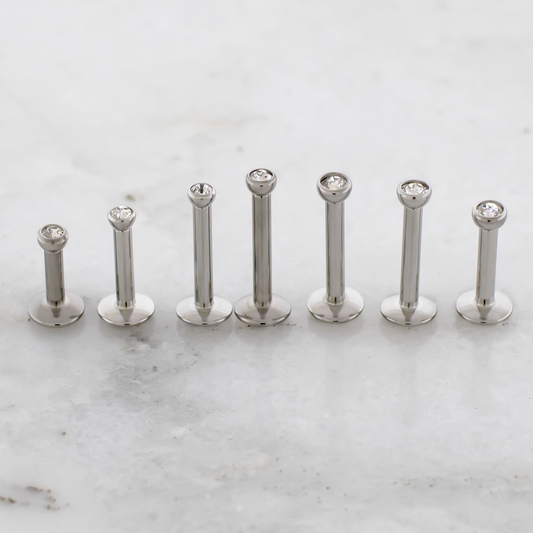
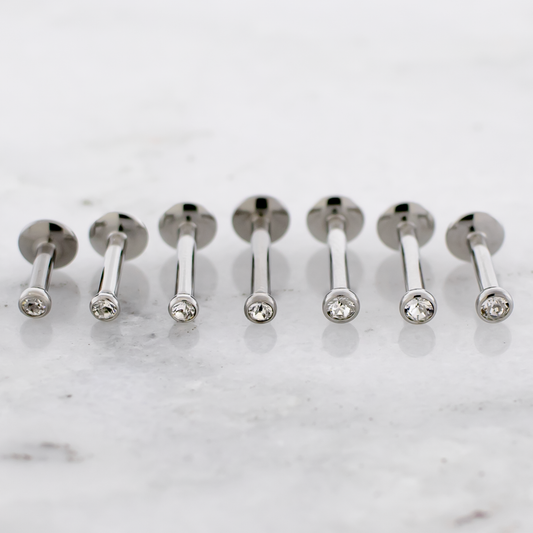
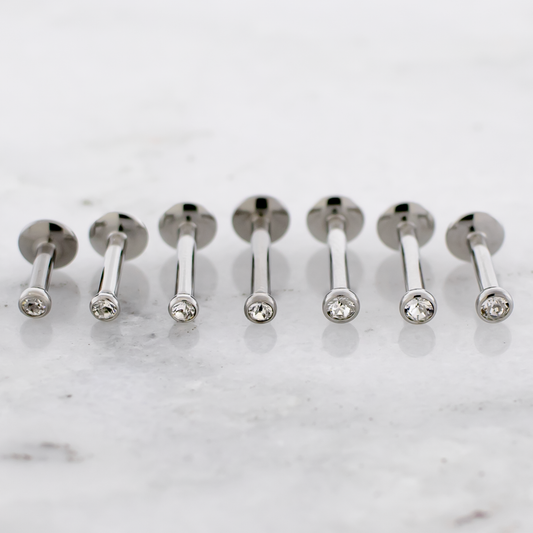
Single-stone ends in clear CZ, colored stones, or synthetic opal are the most popular decorative option across lip, nostril, and cartilage placements. Bezel-set and prong-set configurations both appear in this collection. Bezel settings hold the stone more securely for everyday wear, while prong settings maximize light reflection for a more prominent sparkle.
Spike and Cone Ends
Tapered spike and cone ends add an angular, deliberate edge to the piercing without requiring a larger jewelry piece. Spike-end labrets are consistently popular for tragus, helix, and labret placements where a sharper finish suits the overall aesthetic. They pair cleanly with other geometric jewelry in a curated ear setup.
Decorative and Novelty Ends
Some labret posts in this collection pair with specialty ends including stars, hearts, moons, and other shaped tops. These work best on placements where the end is fully visible and centered, such as a Medusa, Monroe, or conch. Novelty ends in larger sizes (4mm to 6mm) read clearly at scale and make a bolder visual statement than standard ball or gem options.
Why Choose Implant-Grade Steel for Labret Jewelry?
The labret post spends all of its time inside the piercing channel. Material quality at that level directly affects whether the piercing stays calm, heals cleanly, and remains comfortable over months and years of daily wear.
316L Implant-Grade Steel vs. Fashion-Grade Steel
Implant-grade 316L stainless steel is formulated to minimize nickel ion release into surrounding tissue, which is why it is the material specification used by professional piercing studios for healed piercing jewelry. Fashion-grade steel, common in mall kiosks and generic online marketplaces, may meet the visual profile of surgical steel without meeting the chemical composition standards. The difference is invisible to the eye but meaningful for anyone with skin sensitivity or a history of jewelry-related irritation.
When to Upgrade to Titanium
If you have a confirmed nickel allergy or are dealing with persistent irritation from steel jewelry despite proper aftercare, ASTM F136 implant-grade titanium is the correct next step. Titanium contains no nickel by composition, is lighter than steel, and is the most biocompatible metal available for body piercing. For the majority of people with healed piercings and no known metal sensitivities, implant-grade steel performs excellently and costs less than titanium. Browse the
Titanium by Khrysos Internally Threaded Labret collection if a nickel-free option is what you need.
Why Shop Steel Internally Threaded Labrets at Pierced Addiction?
Pierced Addiction sources steel internally threaded labrets through Metal Mafia, a supplier with a long track record of supplying professional piercing studios across the United States. Every steel internally threaded labret post in this collection is made from 316L implant-grade steel, precision-machined for consistent threading, and finished to a mirror polish that maintains its surface quality over extended wear.
The size range in this collection covers the post lengths and gauges that experienced piercers and regular jewelry wearers actually need, including the shorter downsize lengths that are often difficult to find at general retail. Fast domestic shipping, free on orders over $25, and knowledgeable customer support make the process straightforward from selection to delivery.
Frequently Asked Questions
Find quick answers to the most common questions about steel internally threaded labrets, sizing, compatibility, and material safety.
Can I use a labret post for tragus or helix piercings?
Yes. Steel internally threaded labret posts are among the most common jewelry choices for tragus and helix piercings. A 16G post at 6mm to 8mm fits most healed cartilage placements.
What post length should I use after downsizing?
Most people downsize to 6mm for thin cartilage piercings and 8mm for lip or deeper ear placements. Measure your current post to confirm your size before ordering.
Are the ends interchangeable with other internally threaded jewelry?
Yes. Internally threaded ends from this collection are compatible with any internally threaded post of the same gauge, including titanium posts, provided the thread pitch matches.
Is 316L steel safe for sensitive skin?
316L implant-grade steel is formulated to minimize nickel migration and is appropriate for most healed piercings on sensitive skin. If you have a confirmed nickel allergy, titanium is the recommended alternative.
What is the difference between 14G and 16G labrets?
16G (1.2mm) is thinner and more common for ear, nostril, and standard lip piercings. 14G (1.6mm) is thicker, used for lip placements with more tissue depth or for anyone originally pierced at 14G.
Can I use these for a new piercing?
Steel internally threaded labrets are appropriate for healed piercings. For initial piercings, consult your piercer for material and size guidance. Many professional piercers prefer implant-grade titanium for fresh piercing jewelry.
Steel internally threaded labrets work across more placements than any other single jewelry style in this collection. With the right gauge, post length, and end style confirmed, shop the full selection of steel internally threaded labrets above to find implant-grade 316L steel posts built to the standard that healed piercings deserve.