

Labret Piercing Jewelry | Flat-Back Studs, Threadless and Internally Threaded Labrets
This collection covers labret piercing jewelry across every threading system and material tier at Pierced Addiction. Threadless, internally threaded, and externally threaded labrets are available in implant-grade titanium by Khrysos, 316L surgical steel by Metal Mafia, and 14k gold. Suitable for lip, ear cartilage, nose, and multiple other placements in gauges from 20G to 14G across multiple post lengths. F
What Is Labret Piercing Jewelry?
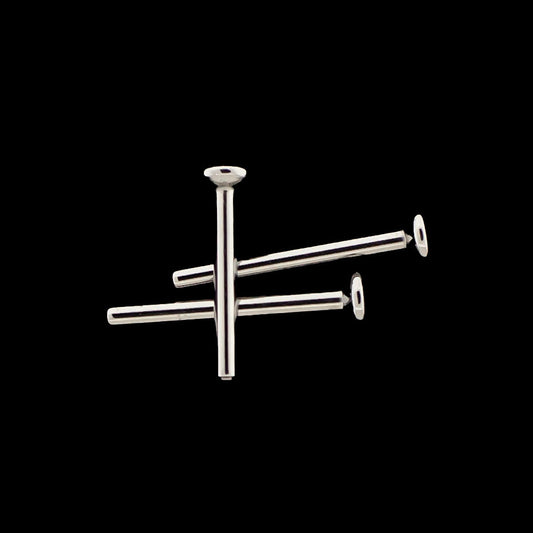
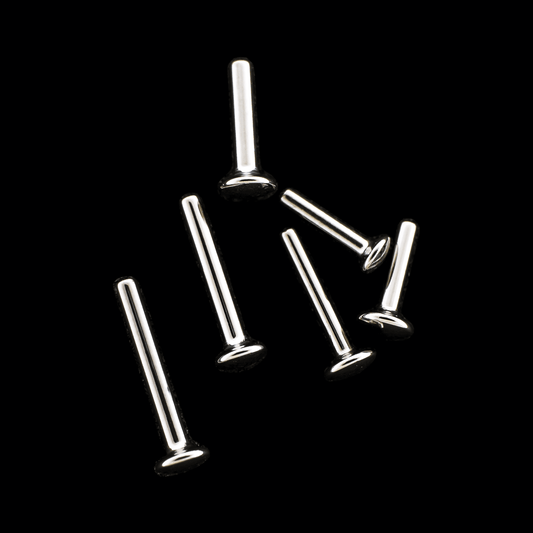
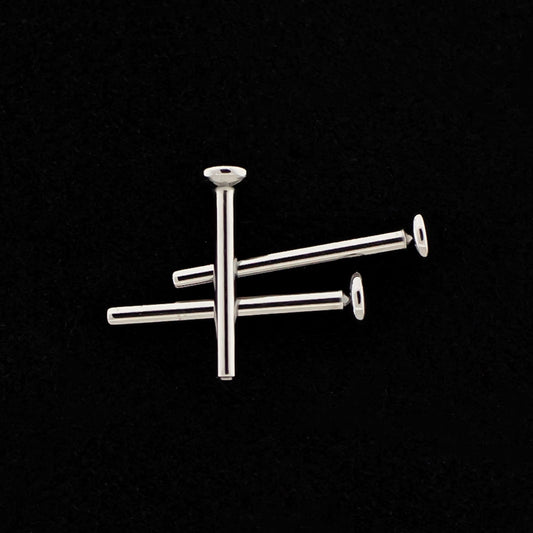
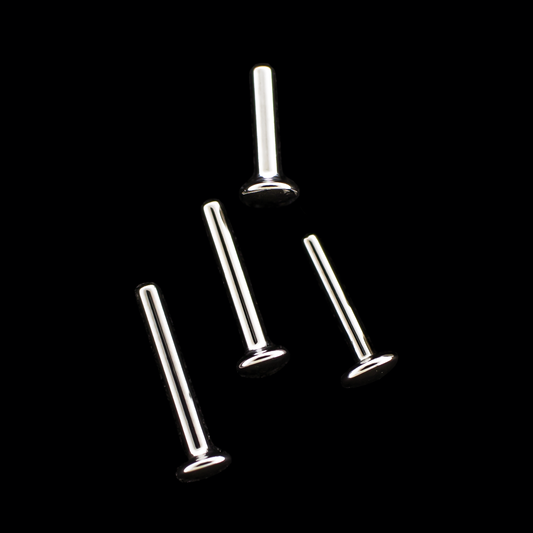
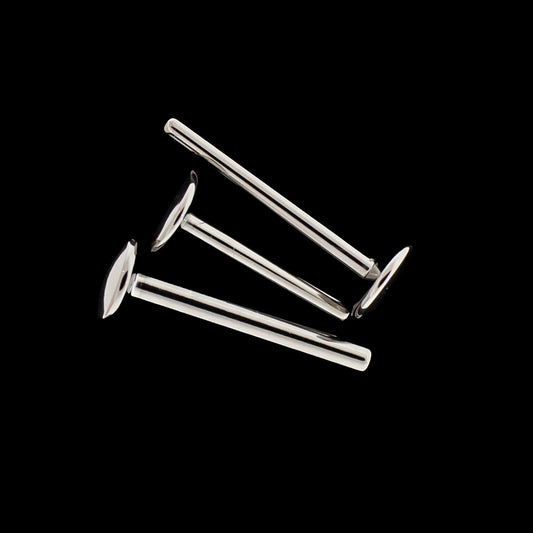
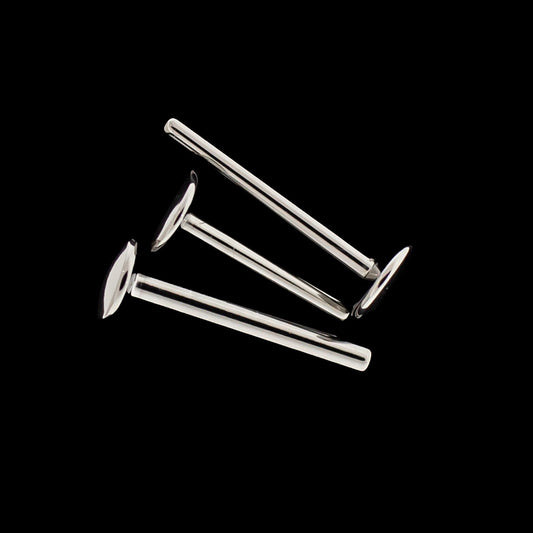
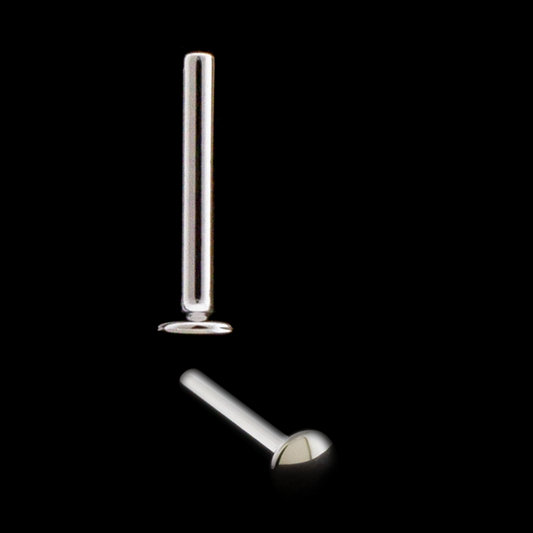
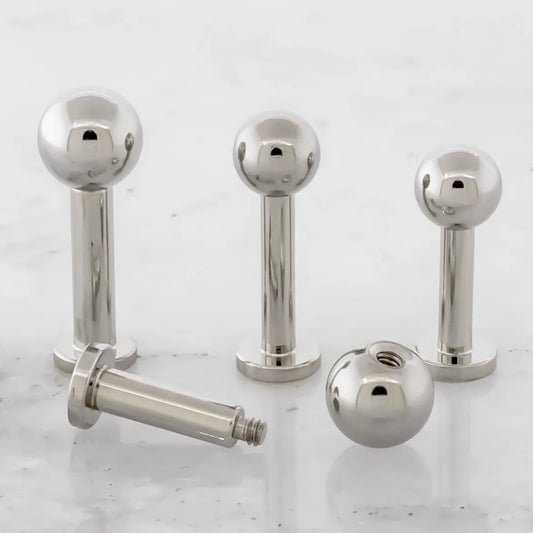
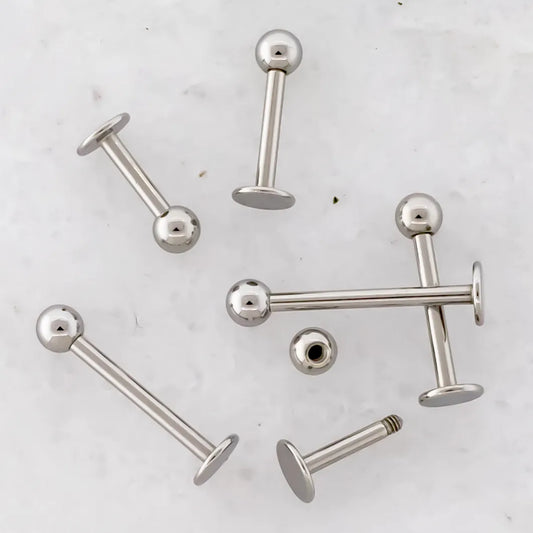
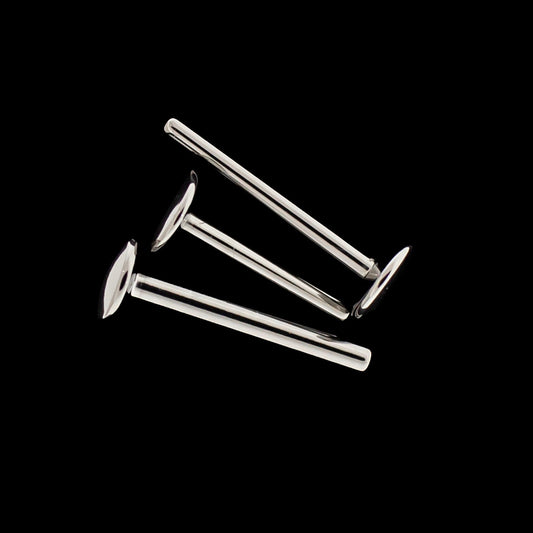
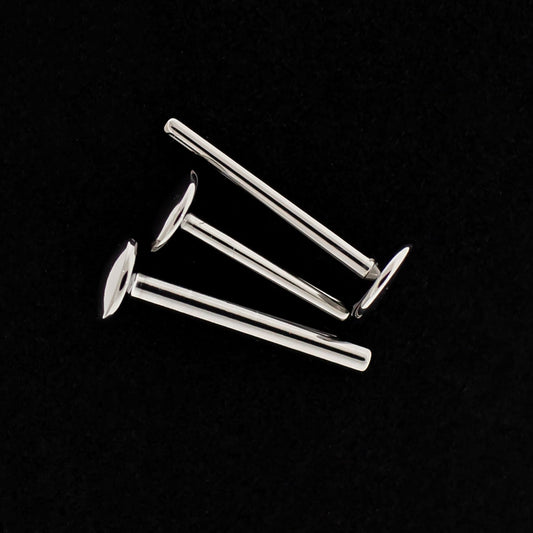
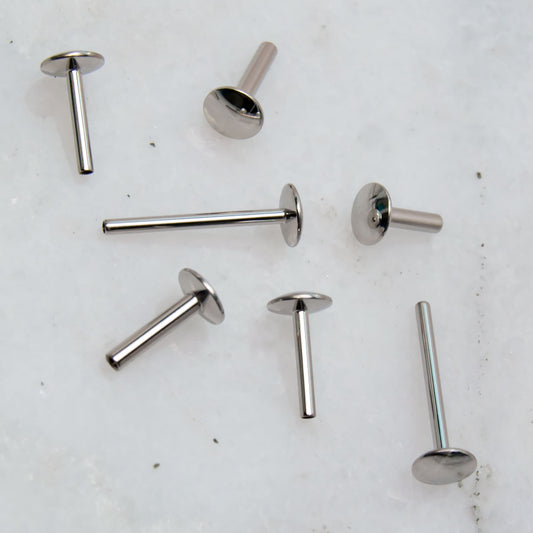
Labret piercing jewelry is a short stud with a decorative top at one end and a flat disc at the other. The flat disc base sits flush against the inside of the piercing, whether that is the inner lip tissue, the inside of the ear cartilage, or the inside of the nostril. That flat backing is what sets labret piercing jewelry apart from barbells and rings: it distributes pressure evenly against the tissue surface rather than creating a single point of contact, which makes it more comfortable for long-term wear and reduces the irritation that a threaded ball back can cause against tissue that the jewelry sits against continuously.
The labret stud form factor is one of the most versatile designs in professional piercing. A single post format serves a wide range of placements because the flat back works across tissue types and anatomies where a bulkier backing would not fit. Cartilage piercings in particular benefit from the low-profile back, which reduces snagging on hair, fabric, and headphones. The versatility of labret piercing jewelry is a key reason it has become the standard format across ear curations and multi-placement setups.
Labret Piercing Jewelry by Placement
The labret stud format applies across a broader range of placements than most jewelry types. Understanding which placements use labret piercing jewelry helps navigate the collection by what you actually need rather than by jewelry style alone.
- Lip piercings: traditional labret (center below lip), side labret, Ashley piercing (through lower lip exiting below), vertical labret (curved barbell variant)
- Ear cartilage: helix, tragus, flat, conch, forward helix, rook (with curved post), and lobe. The flat-back labret is the standard format for ear curation
- Nose piercings: flat-back threadless or internally threaded studs are one of the best nostril options for fresh piercings due to the smooth post
- Facial piercings: Monroe (above lip), Medusa (philtrum), Ashley, anti-eyebrow, and other surface-adjacent placements that suit a low-profile stud
Threadless vs Internally Threaded vs Externally Threaded Labrets
The threading system of a labret stud is the most important variable to understand before purchasing, and it is the most common source of confusion when buying labret piercing jewelry online. The three systems are not interchangeable. A threadless top will not hold in an internally threaded post, and an internally threaded end will not seat correctly in a threadless post. Identifying which system your current jewelry uses, or which system your piercer works with, is the correct starting point for any labret purchase.
Threadless Labrets: The Push-Fit System
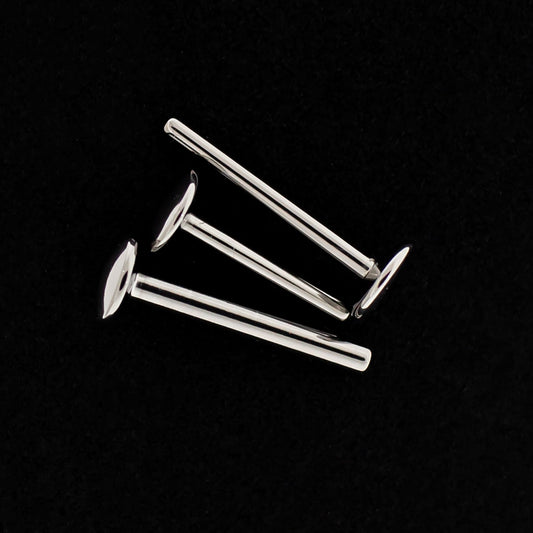
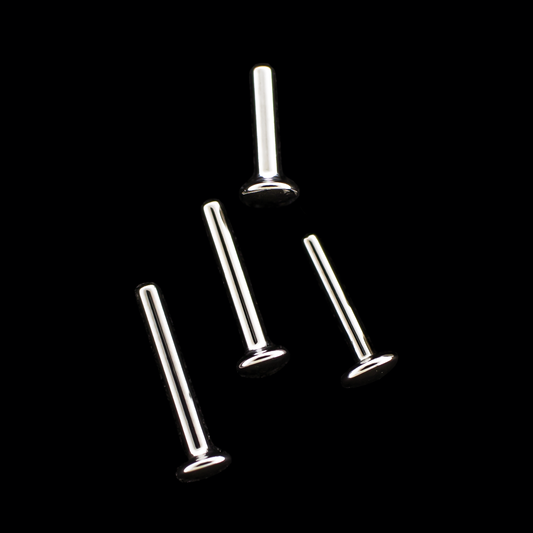
Threadless labret piercing jewelry uses a push-fit mechanism where the decorative top has a slightly bent pin that presses into the hollow post. The tension of that bent pin against the interior of the post is what holds the top in place. To insert a threadless top, you press it into the post until it is seated. To remove it, you pull it out with a gentle but deliberate tug. No twisting or screwing is involved at any stage.
The practical advantage of threadless labret piercing jewelry is speed in jewelry changes. Swapping an end takes seconds with no alignment or threading motion, which matters in tight placements like the tragus or forward helix. For anyone building an ear curation and rotating decorative ends regularly, threadless is the more practical system.
Browse all threadless options across titanium and steel in the Threadless Labrets collection.
Internally Threaded Labrets: The Screw-In System
Internally threaded labret piercing jewelry places the thread mechanism inside the post rather than on the shaft exterior. The decorative end has a small threaded pin that screws into the interior of the post, and the shaft of the post that passes through the piercing channel is smooth throughout. This smooth shaft is the key safety advantage of internally threaded over externally threaded construction: no thread ridges contact the tissue in the piercing channel during insertion or removal.
Internally threaded labret piercing jewelry is the preferred format for piercings that experience consistent physical contact and movement, because the screw closure holds more securely under sustained load than the push-fit tension of a threadless system. Nipple piercings, labret lip piercings worn during eating and speaking, and other placements where the jewelry is regularly in motion or under pressure benefit from the locked closure that internally threaded construction provides. To confirm whether your existing jewelry is internally threaded: if the top screws off, it is internally threaded. If it pops off, it is threadless.
For implant-grade titanium internally threaded labret posts in multiple lengths and gauges, see the Titanium Internally Threaded Labrets collection by Khrysos.
Externally Threaded Labrets: The Traditional System
Externally threaded labret piercing jewelry has the thread ridges on the outside of the post shaft. The decorative end screws onto the threaded post, and the thread ridges are the contact surface that engages the end. This construction is the oldest and most widely manufactured format, and it is available at the lowest price point of the three systems.
The limitation of externally threaded labret piercing jewelry is that the thread ridges on the post shaft contact the tissue in the piercing channel during every insertion and removal. For a fully healed and established piercing, this contact is typically minor. For a fresh or healing piercing, the thread ridges create micro-abrasion against the healing channel tissue that increases irritation and can slow recovery. Professional piercing studios typically use threadless or internally threaded jewelry for initial piercings for this reason. Externally threaded labrets are the practical choice for healed piercings where budget is the primary consideration and the piercing is stable enough to tolerate the thread contact.
Material Guide for Labret Piercing Jewelry
The material of a labret stud determines how the tissue in the piercing responds to continuous contact over months and years. For labret piercing jewelry that stays in place around the clock, material selection is more consequential than for jewelry worn briefly and removed.
Implant-Grade Titanium by Khrysos
ASTM F136 implant-grade titanium is the professional recommendation for both fresh and healed labret piercings. Titanium contains zero nickel by composition, making it the appropriate material for anyone with a history of metal sensitivity. It is approximately 60 percent lighter than steel at the same gauge and size, which reduces the mechanical load on the piercing channel during continuous wear. The Khrysos titanium labret range is anodizable, meaning color finishes in rose gold, gold, blue, purple, and other tones are applied to the titanium surface itself rather than as a coating. Every Khrysos piece carries a lifetime workmanship guarantee.
316L Surgical Steel by Metal Mafia
316L implant-grade surgical steel is the appropriate material for healed labret piercings in people without active nickel sensitivity. It is formulated for low nickel release, takes a mirror polish that holds through daily wear and cleaning, and is available at a lower price point than titanium. For anyone building a collection of labret piercing jewelry for healed placements, 316L steel provides reliable everyday performance. It should not be used as initial jewelry in a fresh labret piercing: implant-grade titanium is the stronger recommendation for the healing stage.
Post Length and Gauge Guide for Labret Piercing Jewelry
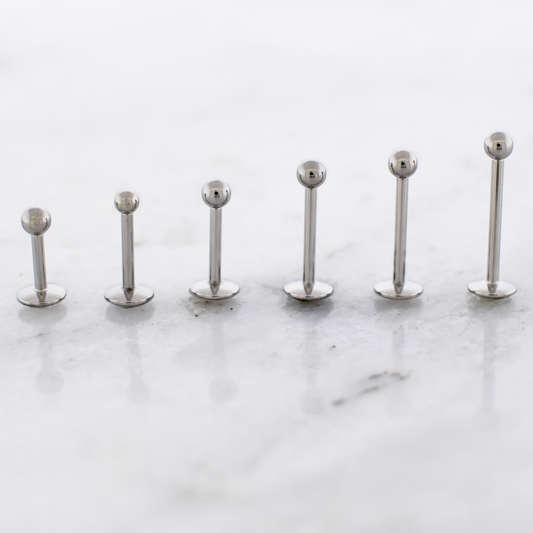
Post length and gauge together determine whether a labret stud fits your piercing correctly. A post that is too short creates pressure at both the disc and the top. A post that is too long sits loosely and moves excessively in the channel. Getting both measurements right is more important for labret piercing jewelry than for most other jewelry types because labrets are worn continuously and the fit affects both comfort and healing.
- 16G (1.2mm): standard for helix, tragus, flat cartilage, conch, and most facial placements
- 18G (1.0mm): for lobe piercings and some nostril placements
- 14G (1.6mm): used for some lip/labret placements and nipple piercings
- Post length for healed cartilage: 5mm to 6mm in most anatomies after downsizing
- Post length for initial or swollen tissue: 8mm to 10mm to allow room during the healing process
- Disc size: 2.5mm suits most cartilage placements; 4mm to 5mm for lip and larger tissue
Post length should be confirmed by your piercer at downsizing. The initial labret is fitted long to accommodate swelling, and the downsize to healed length is done at a studio where the fit can be visually confirmed.
Why Shop Labret Piercing Jewelry at Pierced Addiction?
Pierced Addiction stocks labret piercing jewelry across all three threading systems in implant-grade titanium by Khrysos, 316L steel by Metal Mafia, and 14k gold. Every piece is produced to specification: the material matches the listing, the gauge is accurate, and the disc geometry suits the stated placement.
- Threadless, internally threaded, and externally threaded: all three systems available across titanium and steel
- Implant-grade titanium by Khrysos: ASTM F136, zero nickel, anodized color options, lifetime guarantee
- 316L steel by Metal Mafia: implant-grade, solid steel throughout, mirror-polished
- 14k solid gold: available for premium healed labret piercings
- Gauges 14G to 20G: covering lip, ear cartilage, nose, and facial placements
- Free USPS economy shipping on all orders over $25, all orders fully insured
- Same-day processing for domestic orders received before 1PM
Browse all jewelry collections across titanium, steel, gold, and every placement category at Pierced Addiction.
Frequently Asked Questions
What is the difference between threadless and internally threaded labrets?
Threadless tops push in via a bent pin and pop out without twisting. Internally threaded tops screw into the post interior. Both keep the post shaft smooth in the piercing channel. The two systems are not interchangeable.
Can labret piercing jewelry be used for ear piercings?
Yes. Flat-back labret studs are the standard format for helix, tragus, flat, conch, forward helix, and lobe placements. The low-profile disc back reduces snagging on hair and fabric, making labrets ideal for cartilage everyday wear.
What post length do I need for a healed labret piercing?
5mm to 6mm for most healed cartilage placements. 8mm to 10mm for initial jewelry or placements with swelling. Lip and labret placements often use longer posts depending on tissue thickness. Confirm with your piercer at downsizing.
Is titanium or steel better for labret piercing jewelry?
Titanium is the stronger recommendation for fresh and healing piercings because it contains zero nickel and is lighter than steel. For fully healed piercings without nickel sensitivity, 316L surgical steel is a reliable and more affordable option.
What gauge is standard for labret piercings?
16G is standard for most ear cartilage and facial placements. 18G suits lobe and some nostril placements. Some lip and labret placements use 14G. Match the gauge of your existing jewelry before ordering any replacement.
Are threadless and internally threaded ends interchangeable?
No. Threadless tops will not hold in an internally threaded post, and internally threaded ends will not seat in a threadless post. The two systems are not compatible. Confirm which system your post uses before ordering ends.
Shop Labret Piercing Jewelry
Labret piercing jewelry at Pierced Addiction covers threadless, internally threaded, and externally threaded systems in implant-grade titanium by Khrysos, 316L surgical steel by Metal Mafia, and 14k solid gold. Gauges from 20G to 14G across multiple post lengths for lip, ear cartilage, nose, and facial placements. Browse the collection above.