



Titanium Stud Earrings: Implant-Grade Quality for Every Piercing
Titanium stud earrings are the material standard that professional piercers and dermatologists recommend above any other option for sensitive ears, healing piercings, and daily wear. Every titanium earring stud in the Titanium by Khrysos collection at Pierced Addiction is made from ASTM F136 implant-grade titanium: nickel-free, lightweight, and built to last. Whether you are piercing for the first time or expanding a curated ear, this collection has the style and sizing you need.
What is a titanium stud earring? A titanium stud earring is a piercing jewelry piece made from ASTM F136 implant-grade titanium, a nickel-free, biocompatible metal used in surgical implants. Available in flat-back labret, threadless, and butterfly-back styles, titanium earring studs are the safest option for sensitive ears, fresh piercings, and everyday wear recommended by the Association of Professional Piercers.
Why Titanium Stud Earrings Are the Safest Choice for Sensitive Ears
Earring reactions are almost always caused by nickel, and nickel is present in most fashion jewelry, plated pieces, and even some surgical steel alloys. ASTM F136 titanium is nickel-free not because nickel has been removed from the surface but because the material contains none by composition. That distinction matters because any surface treatment can wear through over time. A titanium earring stud made from solid ASTM F136 stock stays biocompatible at every layer of the metal, from the disc backing to the post tip to the decorative end.
ASTM F136 Titanium vs. Surgical Steel vs. Plated Jewelry
Not all metals marketed as safe for sensitive ears carry the same guarantees. Understanding what separates them helps you choose without uncertainty.
ASTM F136 Titanium is nickel-free by composition and approximately 45% lighter than surgical steel at the same gauge. That weight difference is noticeable in cartilage placements where heavier jewelry pulls on delicate tissue throughout the day. Titanium can be anodized across a full color spectrum by modifying its own oxide layer, with no dyes or coatings involved. The Association of Professional Piercers lists it as approved for both initial and healed piercings, making it the only material in this comparison that is safe to wear from the first day of a fresh piercing.
316L Surgical Steel may contain trace nickel within its alloy, which is the primary trigger for contact dermatitis. It is significantly heavier than titanium, and the only color options are plated finishes that wear through with regular cleaning. For healed piercings in people without metal sensitivity it is a functional material, but it is not what professional piercers recommend when someone asks for the safest option.
Plated or Fashion Metal has no place in any piercing, healed or not. The coating on plated jewelry wears away with cleaning and daily contact, exposing base metals directly against piercing tissue. Reactions can develop in piercings that were previously fine once the coating breaks down. No plated piece belongs on or inside a piercing site.
See more: Titanium Flat Back Labret: Where Safety Meets Style
Titanium Earring Stud Types: Which Style Fits Your Piercing
A stud earring is not a single product type. The backing mechanism, the threading system, and the post length all vary between styles, and the right choice depends on your placement, lifestyle, and how frequently you want to change your jewelry. Choosing the correct style from the start reduces healing complications and makes daily wear significantly more comfortable.
Flat-Back Labret Studs
The flat-back labret is the style professional piercers use for initial jewelry at almost every piercing placement, and the reason is straightforward. The post is smooth and the backing is a flat disc that sits flush against the inside of the ear without any protruding element. There are no pressure points against tissue and no parts to catch on hair, pillows, or clothing during sleep. The decorative end sits cleanly on the outside of the ear. For anyone who sleeps on their side, has a cartilage piercing, or wants to wear jewelry around the clock without adjustment, this style is the most practical choice available.
Threadless Titanium Studs
Threadless titanium studs use a push-fit tension system where the decorative top has a slightly bent pin that locks into the hollow post without any screwing. Changing the decorative end requires only pulling the two pieces apart, with no tools and no risk of stripped threads. For anyone building a curated ear look who wants to swap tops across placements or match different stones to different outfits, the threadless system offers the most flexibility. The post stays in the piercing and the decorative top changes in seconds.
Butterfly-Back Titanium Studs
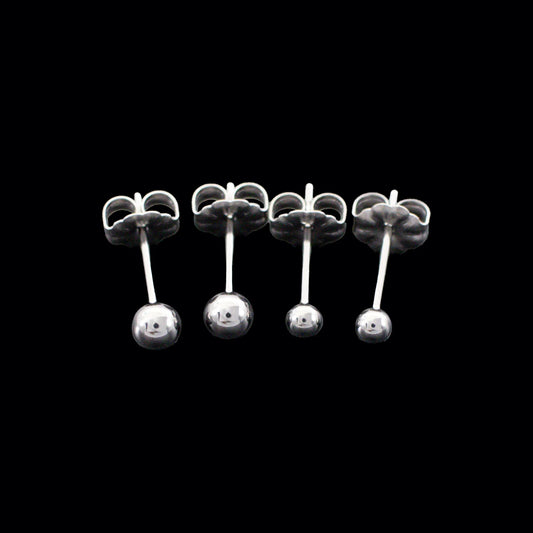
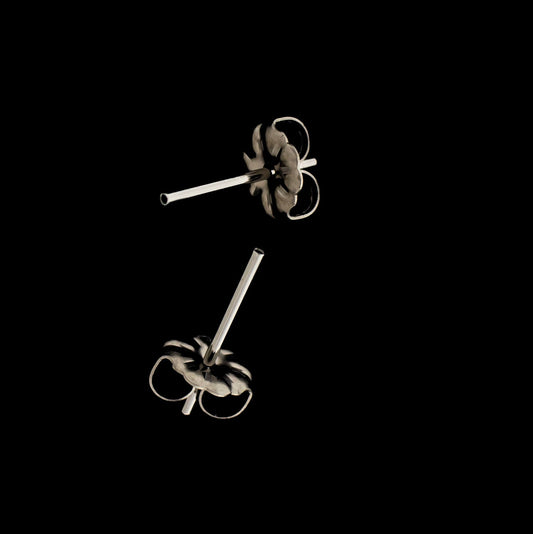
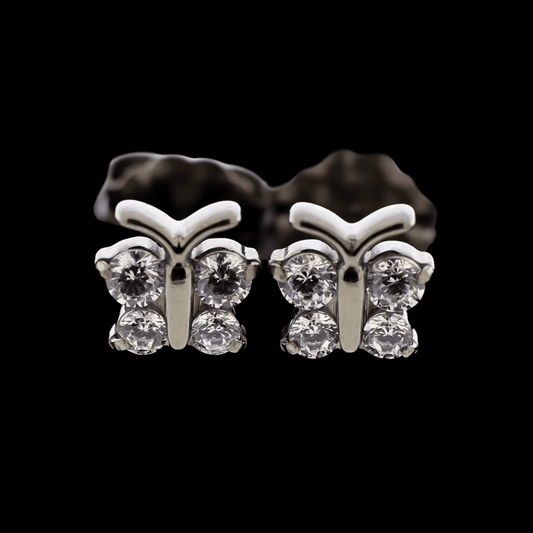
The butterfly-back, also called a push-back or clutch-back, is the classic stud backing familiar from traditional earrings. It clasps onto the post from the outside with a small hinged mechanism. This style is sold in pairs and works well for healed lobe piercings where the butterfly back does not press against cartilage or create pressure during sleep. For straightforward lobe wear in a design that is easy to put on and take off, butterfly-back styles in implant-grade titanium are a clean, comfortable option.
See more: Have You Heard of Threadless Earrings?
Titanium Earring Studs by Piercing Placement
The right titanium earring stud for a lobe piercing is not the same as the right stud for a helix or tragus. Placement determines gauge, post length, and which backing type will be comfortable for long-term wear. Getting these details right before purchasing eliminates the most common sizing mistakes.
Lobe Piercings
Standard gauge for lobe piercings is 18g or 20g, with post lengths typically falling between 6mm and 8mm depending on lobe thickness. Both butterfly-back and flat-back styles work for healed lobes. For fresh lobe piercings, a flat-back labret is the better starting choice because the smooth disc backing creates no pressure behind the ear and allows the piercing to settle without irritation. Flat-back studs are also the comfortable option for anyone who sleeps on their side and does not want jewelry pressing into the skin throughout the night.
Helix and Cartilage Piercings
Cartilage placements including helix, tragus, conch, and flat piercings require a different approach than lobe jewelry. Standard gauge is 16g or 18g, and post lengths need to be longer during healing, typically 8mm to 10mm, to accommodate swelling in the thicker tissue. The butterfly-back is not appropriate for cartilage piercings. The clasping mechanism sits behind the ear in an area where it creates pressure against cartilage, causes discomfort during sleep, and can catch on hair. A flat-back labret or threadless titanium stud is the only practical choice for any cartilage placement, both during healing and for long-term wear. The lightweight property of ASTM F136 titanium is particularly relevant here because heavier metals pull on cartilage more noticeably throughout the day.
For helix-specific styles including flat-back options designed for upper ear placements, the Helix Piercing Jewelry Collection covers the full range of sizes and designs that fit cartilage anatomy.
See more: 2nd and 3rd Lobe Piercing Ideas: Styling Your Ear Stack
Anodized Titanium Stud Earrings: Color Without the Risk
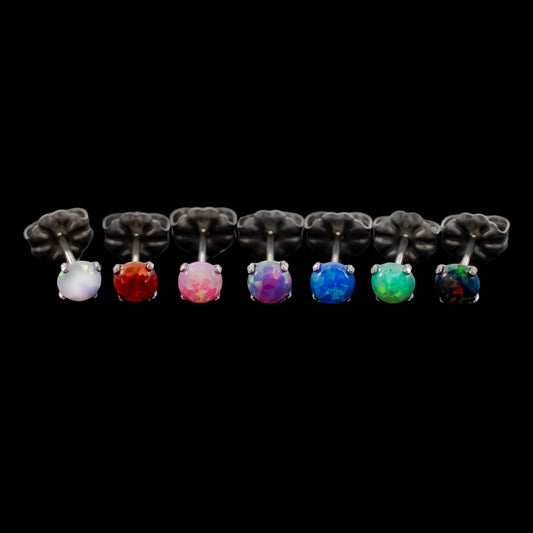
One of the most consistent questions about colored titanium stud earrings is whether they are as safe as plain silver. The answer depends entirely on how the color was produced. Anodized titanium is the only colored earring material where that answer is unambiguously yes, because anodization does not add anything to the metal surface. The process uses electrochemistry to thicken and modify the natural oxide layer already present on the titanium, and the color results from how that modified layer refracts light. There are no dyes, no paints, and no topcoats involved.
Because there is no surface layer to wear through, anodized pieces hold their color through years of daily cleaning, showering, and contact with skin. The color range achievable through anodization on ASTM F136 titanium includes silver, gold, rose gold, blue, purple, black, and rainbow finishes. Every anodized option is just as safe as plain polished titanium for both fresh and healed piercings. For anyone who has watched colored earrings from other materials lose their finish within months, switching to anodized titanium resolves that problem completely.
Shop Titanium Stud Earrings at Pierced Addiction
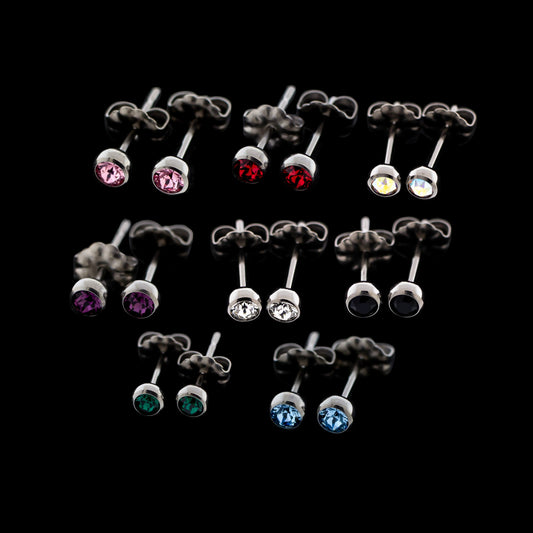
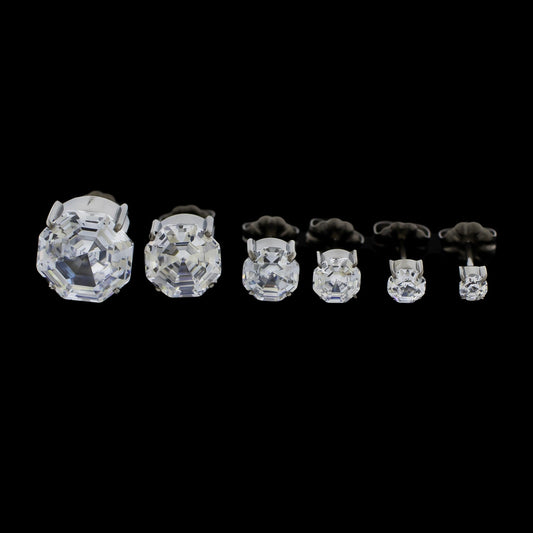
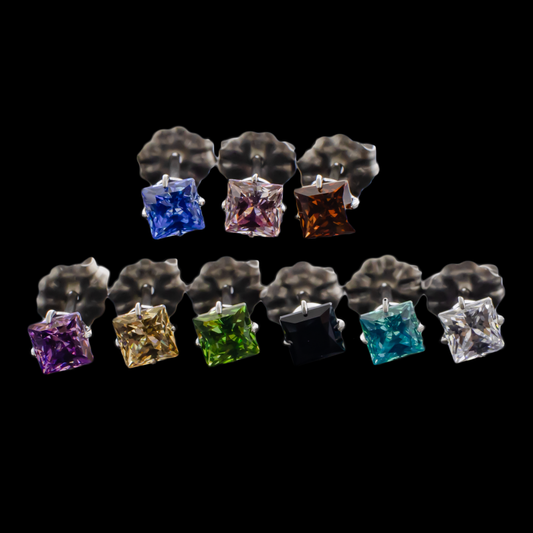
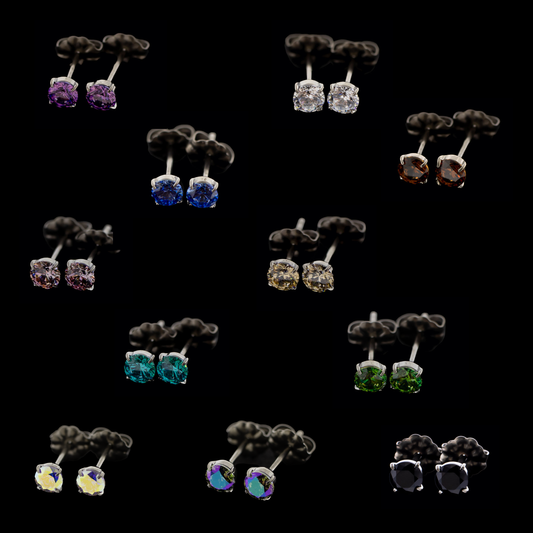
The collection at Pierced Addiction is sourced entirely from Titanium by Khrysos and covers every backing style, gauge, and finish covered in this guide. Butterfly-back pairs like the Romy offer the classic stud look in solid ASTM F136 titanium for healed lobe piercings. Flat-back labret studs in 16g through 20g provide the professional-grade option for fresh piercings, cartilage placements, and anyone who wants the most comfortable long-term wear possible. The threadless titanium end system pairs decorative tops with interchangeable posts so a single post can carry different looks as your collection evolves.
For buyers who want to expand beyond studs into a full threadless setup, the Titanium Threadless Ends Collection offers the full range of compatible decorative tops in the same ASTM F136 material standard. All orders over $25 ship free within the US, and every Titanium by Khrysos piece carries a lifetime guarantee against manufacturing defects.
Frequently Asked Questions
Are titanium stud earrings safe for sensitive ears?
Yes. ASTM F136 implant-grade titanium contains zero nickel, the primary cause of earring allergies. It is biocompatible and safe for both fresh piercings and long-term daily wear on even the most reactive ears.
What is the difference between a flat-back stud and a butterfly-back stud?
A flat-back stud has a smooth disc that sits flush inside the ear with no protruding parts. A butterfly-back uses a clasping mechanism on the outside. Flat-back studs are more comfortable for sleeping and are the correct choice for any cartilage piercing.
Can I sleep in titanium earring studs?
Yes, particularly flat-back labret styles. The flat disc distributes pressure evenly without poking into the skin, making them comfortable for all-night wear. Butterfly-back styles may cause discomfort during sleep on cartilage placements.
What gauge are titanium earring studs?
Standard lobe piercings use 20g or 18g studs. Cartilage placements like helix and tragus typically use 16g or 18g. Always match the gauge your piercer used for initial jewelry to avoid fit issues.
Do anodized colors fade on titanium stud earrings?
No. Anodized color on ASTM F136 titanium comes from the metal's own oxide layer, not from paint or coating. The finish does not chip, peel, or fade with regular wear or cleaning, making it safe for long-term wear.
Conclusion
Titanium stud earrings from Pierced Addiction combine the material safety of ASTM F136 with the style range your piercings actually need. From classic butterfly-back pairs for healed lobes to flat-back labrets and threadless studs for cartilage and fresh piercings, every titanium earring stud in the Titanium by Khrysos collection is built to the standard professional piercers require. Sensitive ears, new piercings, and curated ear builds all start here.