
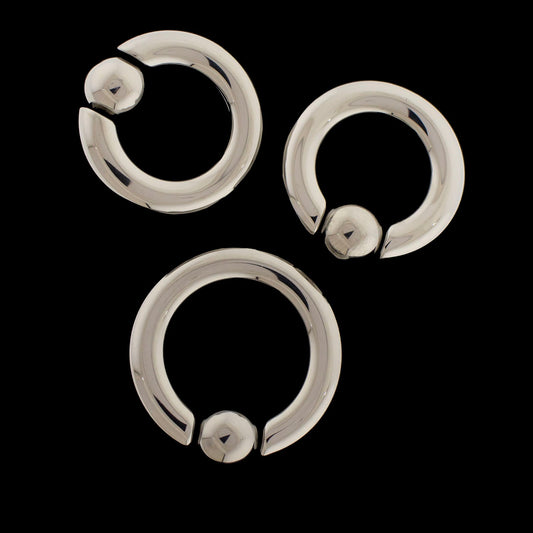
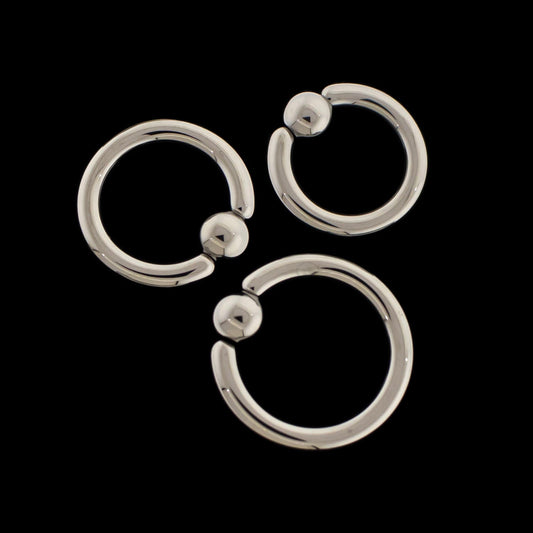
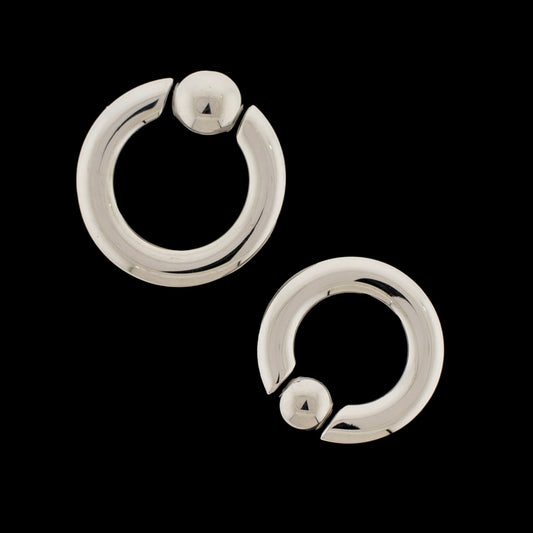
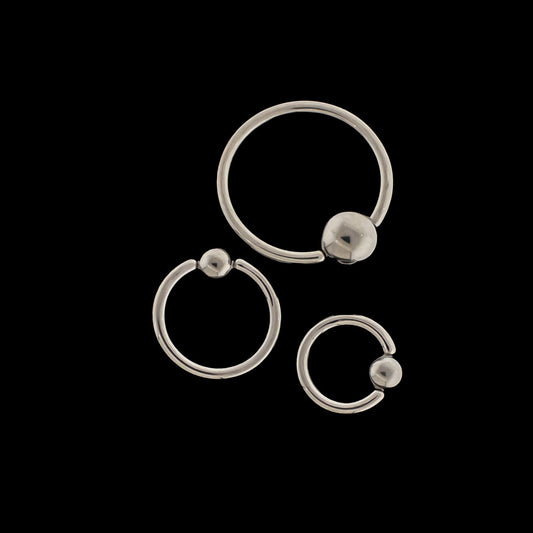
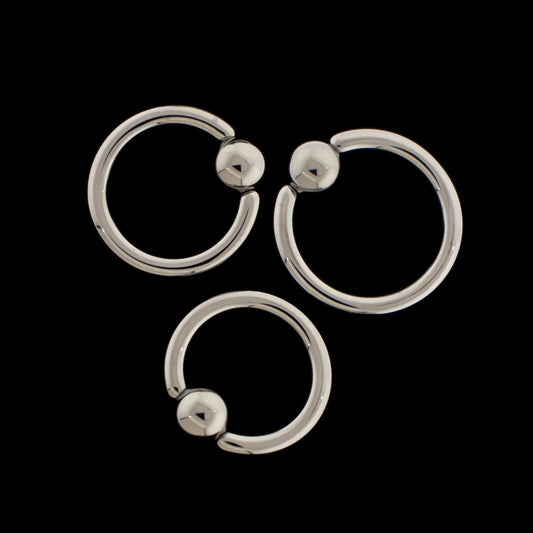
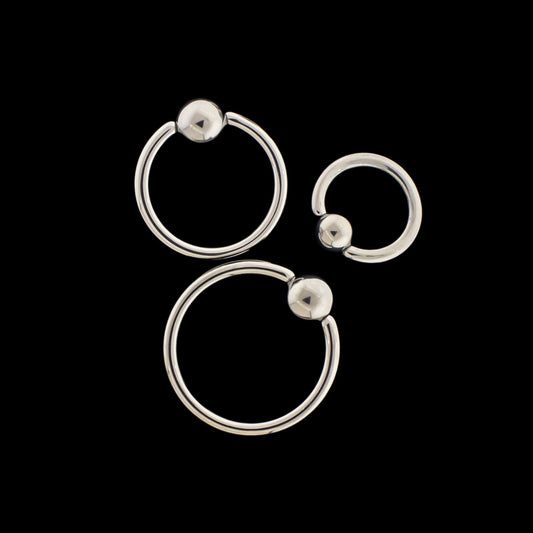
Titanium Captive Bead Rings: Implant-Grade ASTM F136 Titanium CBR Piercing Jewelry
Browse our collection of titanium captive bead rings crafted from solid ASTM F136 implant-grade titanium. Lightweight, nickel-free, and available in anodized color finishes across a wide gauge range, these CBRs are the upgrade from plated or mystery-alloy rings that professional piercers consistently recommend. Shop titanium CBRs for septum, cartilage, nipple, lip, eyebrow, and large-gauge piercings.
What Is a Titanium Captive Bead Ring?
Before comparing styles and sizing, it helps to understand exactly what makes a titanium captive bead ring different from both cheaper CBR alternatives and from other hoop-style piercing jewelry. The answer comes down to two things: the mechanism that holds the ring closed, and the material the ring is made from.
How a Captive Bead Ring Works
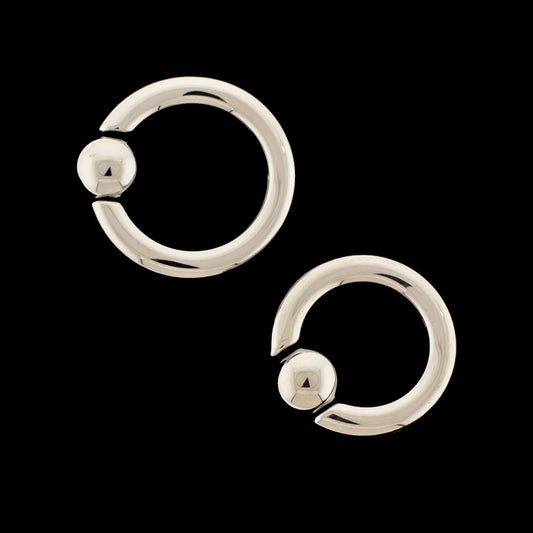
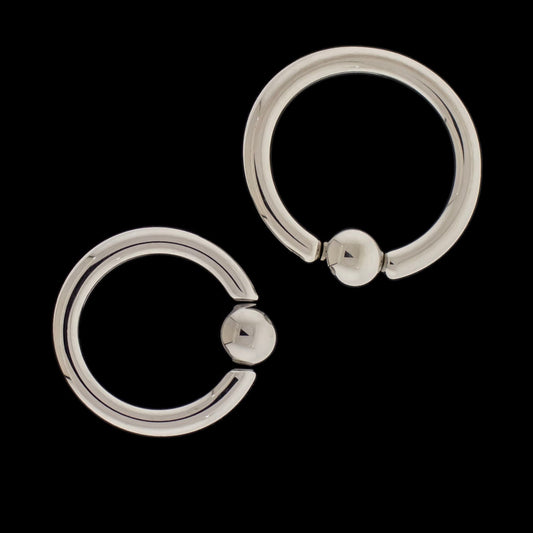
A captive bead ring consists of two parts: a circular ring with a small gap, and a bead slightly larger than that gap. The bead has two small dimples on opposite sides. When you position the bead over the opening and apply pressure, the ends of the ring press into those dimples and hold the bead in place through tension alone. No threading, no hinges, and no separate closure hardware. When you want to remove the bead, you spread the ring ends just enough to release it.
The practical implication of this is important: at smaller gauges, specifically 18g and 16g, many people can open and close a titanium captive bead ring by hand with a little practice. At 14g and above, the titanium wire is thick enough that opening it by hand risks distorting the ring shape. Ring-opening pliers are the correct tool for those gauges. If tool-free daily jewelry changes are a priority for you, our niobium rings are a useful alternative: niobium is flexible enough to be opened and closed by hand at most gauges without weakening the metal.
Solid ASTM F136 Titanium vs. Titanium-Plated: Why the Difference Matters
This is the distinction that most online body jewelry retailers obscure, and it is the one that matters most for anyone who has had a skin reaction to jewelry marketed as "titanium." Solid ASTM F136 titanium is the same implant-grade material throughout the entire piece, from surface to core. The specification, also called Grade 23 or Ti-6AL-4V ELI, is the same one used in orthopedic implants and surgical hardware. It contains no nickel.
Titanium-plated rings are a different product entirely. They have a base metal, typically a steel alloy, with a thin titanium or PVD layer applied to the surface. That surface layer wears fastest at exactly the points where the ring presses against skin: the gap where the bead sits, and the inner surface of the hoop inside the piercing channel. As the plating wears, the base metal underneath comes into contact with tissue. For anyone with a nickel sensitivity, that is when the reaction starts.
Every titanium captive bead ring in this collection is solid ASTM F136 implant-grade titanium. Not plated, not coated, not labeled "titanium finish." The material is verified, consistent, and appropriate for both healing and healed piercings.
Which Piercings Use a Titanium Captive Bead Ring?
The titanium captive bead ring is one of the most versatile hoop styles in body jewelry because the circular shape works at almost any placement where a ring is appropriate. It is most commonly associated with septum piercings, but its actual range is considerably broader. Here is how it performs across the most popular sites.
Septum Piercings
The septum is the highest-traffic placement for a titanium CBR. The circular profile sits naturally in the septum's columella, and the single bead at the front or bottom of the ring is the only visible element when worn. Most septum piercings are done at 16g. An inner diameter of 8mm gives a snug, close-to-the-nose fit; 10mm creates a slightly more relaxed drop below the nostrils. For anatomy that sits higher or wider, 10mm is the safer starting point because a ring that is too small creates pressure on the piercing channel from both sides.
Cartilage Piercings (Helix, Daith, Conch, Tragus)
Multiple cartilage placements on the ear suit the captive bead ring style well, though the mechanism matters more here than at soft tissue sites. Cartilage piercings are slower to heal than septum or lobe placements, and any repeated bead removal or reinsertion during healing can irritate the fistula and set back the process. For healed cartilage piercings, a titanium captive bead ring at 16g with an 8mm inner diameter is a clean, minimal option for helix and daith placements. Conch piercings often suit a slightly larger 10mm diameter for a better fit inside the conch bowl. If you prefer a ring style that allows effortless daily changes without touching the bead, the titanium hinged rings collection offers the click-lock hinge mechanism as a direct alternative.
Nipple Piercings
The titanium captive bead ring is one of the two classic nipple jewelry formats, alongside the straight barbell. For nipple placements, 14g is the standard gauge. A 14g titanium CBR at 12mm inner diameter gives enough room to accommodate nipple anatomy without putting pressure on the piercing channel at rest. One consideration specific to nipple piercings: the downward weight of a ring creates more sustained pressure on the lower entry point of the fistula than a barbell does, which is why many piercers recommend a barbell for the initial healing period before transitioning to a CBR once the piercing is fully established.
For a threadless and barbell-based nipple option during healing, our titanium nipple jewelry collection has implant-grade titanium barbells and threadless styles designed for that specific stage.
Lip, Eyebrow, and Large-Gauge Piercings
Lip piercings, particularly snake bites and labret-adjacent placements, can be worn with a small titanium CBR at 16g or 14g once healed. Eyebrow piercings more commonly use a curved barbell, but a CBR works on a fully healed eyebrow for a bolder, rounder look. The most significant application for large-gauge titanium captive bead rings is stretched septum piercings, Prince Albert piercings, and stretched nipple placements, where gauges from 12g through 00g are available. At these sizes, solid ASTM F136 titanium is especially important because the total metal mass in contact with tissue is significantly greater, and any reactive alloy content compounds over time.
Why ASTM F136 Titanium Is the Right Material for a Captive Bead Ring
The material specification of a titanium captive bead ring determines how it behaves not just at the moment of purchase, but across months and years of continuous wear. Two pieces of jewelry can look identical in a product photo and perform completely differently inside a piercing, depending entirely on what they are made of.
The Material Advantage for Long-Term Wear
ASTM F136 implant-grade titanium is nickel-free, which is the single most effective safeguard against contact dermatitis in body jewelry. It is also significantly lighter than surgical steel at the same gauge, which matters across placements where the ring is worn continuously for months. Less weight means less downward pull on the fistula, less migration risk, and less pressure on cartilage during the healing phase.
The surface of ASTM F136 titanium can be anodized through a heat-based process that changes the oxide layer of the metal itself to produce color. This produces rose gold, black, gold, purple, and rainbow finishes that are stable, skin-safe, and do not chip or flake at the bead-gap contact point during repeated use. The metal is also autoclave-compatible, meaning a professional piercer can sterilize your jewelry in a clinical autoclave before insertion if you prefer a pre-sterile piece.
Two things to avoid when shopping for a
- Plated or PVD-coated rings: the plating wears fastest at the gap where the bead contacts the ring ends, and at the inner surface of the hoop, both of which are in direct contact with piercing tissue
- Unspecified "titanium" or mystery alloy rings: if the listing does not explicitly state ASTM F136 or Grade 23, the metal composition is not verified
How to Choose the Right Titanium Captive Bead Ring
Selecting the correct titanium captive bead ring requires getting three variables right: gauge, inner diameter, and bead size. An error in any one of them means the ring either cannot be inserted, creates pressure inside the piercing, or loses its bead during wear. Here is how to work through each.
Gauge Guide for Titanium CBRs
Gauge is the thickness of the ring wire and must match the gauge of your existing piercing exactly. Using a thinner gauge in a larger fistula creates a loose, mobile ring that can migrate and irritate tissue. Using a thicker gauge than the piercing was made for is simply impossible to insert without force. The most common gauge reference points for a titanium CBR are as follows: 20g and 18g for fine placements including nostril and fine-gauge cartilage; 16g for septum, daith, helix, conch, lip, and rook, which is the single most-used gauge across all CBR placements; 14g for nipple piercings and thicker soft tissue placements; 12g through 00g for stretched and large-gauge piercings. When in doubt, ask your piercer to confirm the gauge before you order.
Inner Diameter Reference
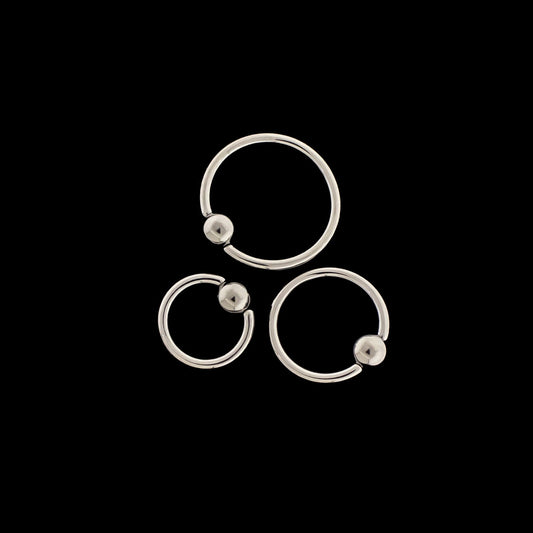
Inner diameter is the measurement of the space inside the ring from one interior wall to the opposite interior wall. Getting this right is just as important as gauge. A ring with too small an inner diameter presses on the tissue at both sides of the piercing simultaneously, creating pressure that the body reads as an irritant. A ring with too large an inner diameter moves freely during daily activity and can snag. The most practical reference points: 6mm for a snug nostril fit; 8mm for standard septum and most cartilage placements; 10mm for larger septum anatomy or a more relaxed drop; 12mm for nipple piercings and large-anatomy septum wear; 14mm and above for stretched placements. Measure the inner diameter of your current jewelry with a ruler before ordering. If you want a ring style with a fixed, snug fit that does not require bead management, our titanium seamless rings offer the same ASTM F136 material in a pull-apart format without a separate bead.
Bead Size and Dimple Depth
The bead on a titanium captive bead ring must be sized to match the ring gauge. A bead that is too small falls through the gap; a bead that is too large cannot seat into the dimples securely. Dimple depth determines how firmly the bead is held: deep dimples create a strong tension hold that resists accidental release during daily wear; shallow dimples allow easier hand-removal but carry more risk of the bead working loose during sleep or physical activity. Solid titanium beads are heavier than acrylic or silicone alternatives but provide the most reliable tension hold at the correct gauge. Anodized titanium beads are available in color-matched finishes to the ring or in contrasting tones for a two-color effect.
Shop Titanium Captive Bead Rings by Style
All titanium captive bead rings in this collection are solid ASTM F136 implant-grade titanium. The style categories below cover the main variations available, from the most basic high-polish hoop to gem-set and large-gauge options.
Plain Titanium Captive Bead Rings
The plain titanium CBR in high-polish natural silver is the most piercer-recommended starting configuration for any placement transitioning from a healer to a ring. The surface is smooth, reflective, and presents no edges or settings that could catch on clothing or bedding. Plain titanium is also the only style that typically remains eligible for return or exchange if sizing is incorrect, since custom anodized pieces are generally final sale. Anodized single-color finishes, rose gold, black, gold, and purple, are available across the plain CBR range and are produced by the same heat-treatment process as the rest of the collection.
Gem-Set and Decorated Bead CBRs
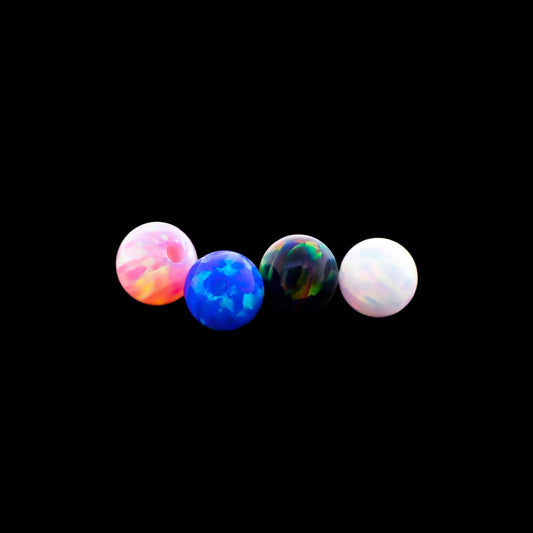
For fully healed piercings where the aesthetic of the bead is part of the look, gem-set beads replace the plain titanium ball. CZ, opal, and shaped options, including moon, star, and heart profiles, are the most popular. The ring itself remains unchanged; only the bead is decorative. This means the ring can be kept in the piercing while beads are swapped over time for different looks, though bead changes at 14g and above still require ring-opening pliers. Gem-set titanium captive bead rings are particularly popular for septum and helix placements where the bead faces outward and is visible from a conversational distance.
Large-Gauge Titanium Captive Bead Rings
Large-gauge titanium CBRs span 12g through 00g and are primarily used for stretched septum piercings, Prince Albert piercings, stretched nipple placements, and decorative ear stretching. At these sizes, solid ASTM F136 titanium is not just recommended, it is the correct material specification for the amount of metal in contact with tissue. Ring-opening pliers are required at 12g and above, and bead dimples at larger gauges are generally deeper to compensate for the increased wire stiffness. If you are considering a premium hoop style for a healed piercing and the aesthetic of a hinged ring appeals to you, our gold hinged segment rings offer the same secure closure in solid 14k and 18k gold for buyers upgrading from a standard titanium ring.
Why Shop Titanium Captive Bead Rings at Pierced Addiction
The difference between a titanium captive bead ring that works and one that causes a reaction is usually not visible in a product photo. It lives in the material specification, the sourcing, and the honesty of the product listing.
- Every titanium CBR is solid ASTM F136 implant-grade titanium, sourced from Khrysos Jewelry and verified to Grade 23 specification, not plated, not coated, not "titanium finish"
- Material meets the Association of Professional Piercers recommended standards for both healing and healed piercings
- Anodized color finishes are heat-treated into the titanium surface, not applied as a coating, ensuring color stability at the bead-contact points over time
- Gauge and inner diameter are listed explicitly per product, not buried in a dropdown or left to guesswork
- Free USPS shipping on all US orders of $25 or more
If your piercer has used the words "implant-grade only," "ASTM F136," or "Grade 23" in their aftercare conversation, every titanium captive bead ring in this collection meets that standard directly.
Frequently Asked Questions About Titanium Captive Bead Rings
Sizing, ring pliers, material differences, healing placement rules: these are the questions customers ask most before placing a first order.
What is a titanium captive bead ring?
A titanium captive bead ring is a circular hoop made from solid ASTM F136 implant-grade titanium with a tension-held bead that closes the small gap in the ring. The bead's dimples lock onto the ring ends under pressure, creating a secure closure without any threading, hinge, or separate hardware. It works across septum, cartilage, nipple, lip, and large-gauge piercings.
Do I need ring-opening pliers to use a titanium CBR?
At 18g and 16g, many people can open and close a titanium captive bead ring by hand with practice. At 14g and above, the wire is thick enough that hand-bending risks distorting the ring shape, making ring-opening pliers the correct tool. If tool-free daily wear is a priority, niobium captive rings are hand-bendable at most gauges without weakening the metal.
What gauge do I need for a titanium captive bead ring?
16g fits most septum, daith, helix, and lip piercings. 14g is standard for nipple piercings. 18g-20g suits fine cartilage and nostril placements. Always match your new titanium CBR gauge to the original piercing gauge. Using the wrong gauge creates poor fit or prevents insertion entirely. When in doubt, ask your piercer before ordering.
Is solid titanium different from titanium-plated captive bead rings?
Yes, significantly. Solid ASTM F136 titanium captive bead rings are the same material throughout. Titanium-plated rings have a steel base with a thin surface layer that wears off at the contact points inside the piercing channel. Once the plating wears, the base metal, often containing nickel, comes into contact with skin. This is the most common cause of delayed reactions to jewelry marketed as titanium.
Can I wear a titanium CBR in a healing piercing?
ASTM F136 titanium is safe for healing piercings from a material standpoint. However, many piercers prefer a labret or barbell for initial healing, particularly for nipple piercings where the ring's weight creates downward pressure on the fistula. A titanium captive bead ring is typically introduced once the initial healing phase is established. Follow your piercer's specific timeline and guidance.
What inner diameter should I choose for my titanium captive bead ring?
8mm fits most septum and cartilage placements. 6mm is best for a close nostril fit. 10mm suits larger septum anatomy or a more relaxed drop. 12mm is standard for nipple piercings. For large-gauge placements, 14mm and above are available. Measure the inner diameter of your current jewelry before ordering. If you are between sizes, size up: a slightly larger ring is more comfortable than one that presses the tissue.
From fine-gauge helix and septum styles to large-gauge nipple and PA piercings, every titanium captive bead ring in this collection is solid ASTM F136 implant-grade titanium with no plating, no mystery alloys, and no compromises on material safety. Browse the full range above and find the gauge, diameter, and finish that fits your piercing and your look.