
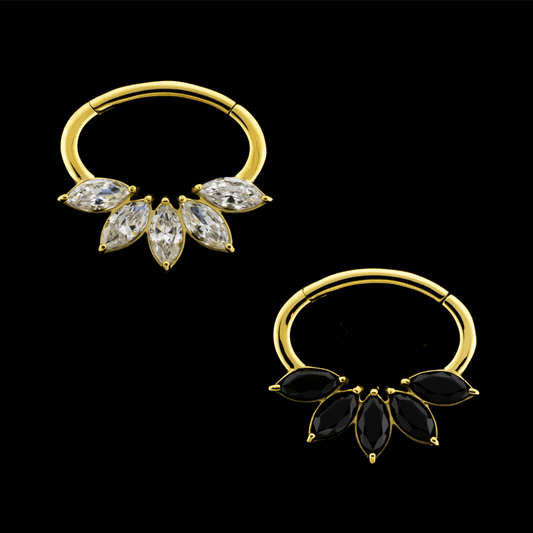
Daith Piercing Jewelry: Clickers, Hoops & Rings for the Inner Ear Fold
Daith piercing jewelry needs to fit a very specific anatomy: the innermost fold of cartilage above the ear canal, where the ring must hug a tight curve rather than sit flat against the ear. This collection covers hinged clickers, seamless rings, captive bead rings, and curved barbells in implant-grade steel and titanium at 16G, with multiple diameter options to match your individual ear anatomy.
What Is Daith Piercing Jewelry?
Daith piercing jewelry is designed specifically for the innermost cartilage fold of the ear, just above the ear canal opening. The piercing daith sits inside a curved fold that wraps around the jewelry from multiple sides, unlike a helix or tragus where flat studs or small hoops sit against an accessible surface. This means daith piercing jewelry must follow a circular or curved path through the placement, and the diameter of the ring must match the tight curve of each individual ear.
Why the Daith Needs a Ring
The anatomy of the daith fold does not accommodate flat-back studs or standard stud posts. The jewelry must be circular to pass through the fold and seat correctly on both entry and exit points. Hinged clicker rings, seamless rings, captive bead rings, and curved barbells are the four formats that work. A ring that is the wrong diameter for your anatomy will either press against the cartilage on one side or create excess space that causes the jewelry to shift.
The Migraine Connection
The daith sits near an acupressure point that some practitioners associate with migraine relief, which is why the daith piercing became widely popular beyond its aesthetic appeal. There is currently no peer-reviewed clinical evidence that a daith piercing reliably reduces migraine frequency or severity. If you are considering daith piercing jewelry for migraine reasons, choose the jewelry based on how it looks and fits rather than its claimed therapeutic effect.
Best Jewelry Types for Daith Piercings
The daith fold sits inside the ear in a position that is difficult to access with both hands simultaneously. This anatomical reality drives most experienced wearers toward specific daith piercing jewelry formats that can be opened and closed with limited access.
Hinged Clicker Rings (Most Popular for Daith)
Hinged clicker rings are the most widely chosen daith piercing jewelry format, and the anatomy of the daith is the primary reason. The clicker's snap-open latch can be engaged single-handedly once you understand the mechanism, which matters when you are working inside the ear fold where the second hand has limited room to maneuver. A clicker ring placed against the daith entry point can be pushed through and snapped closed in one motion, making it dramatically easier to change than a captive ring or seamless ring in the same position.
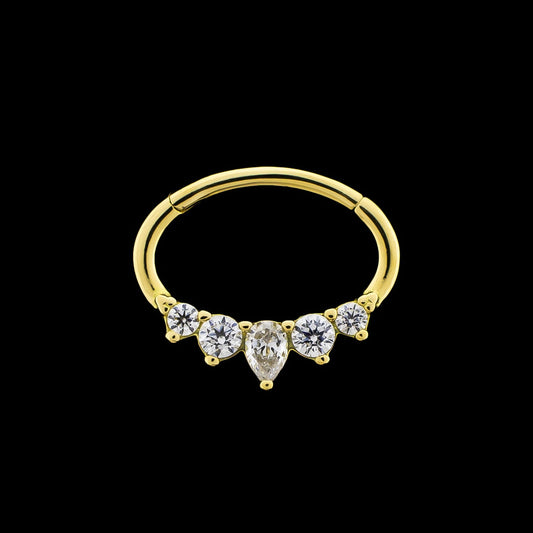
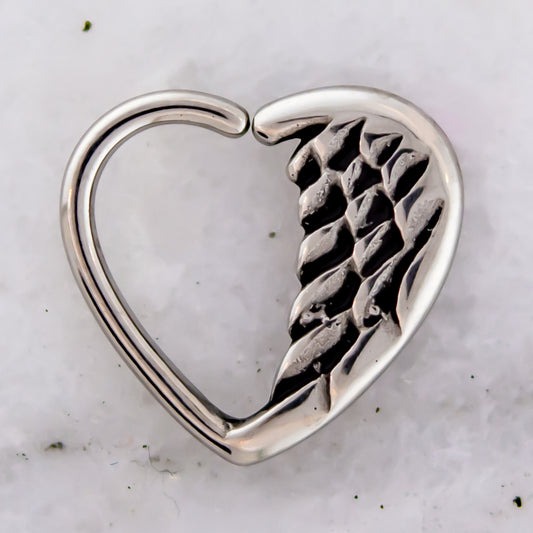
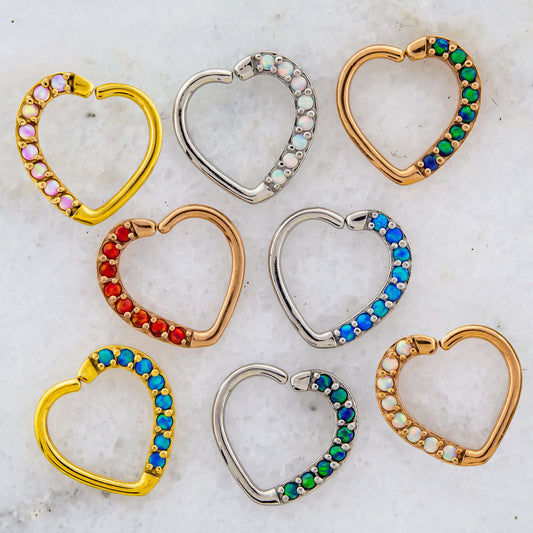
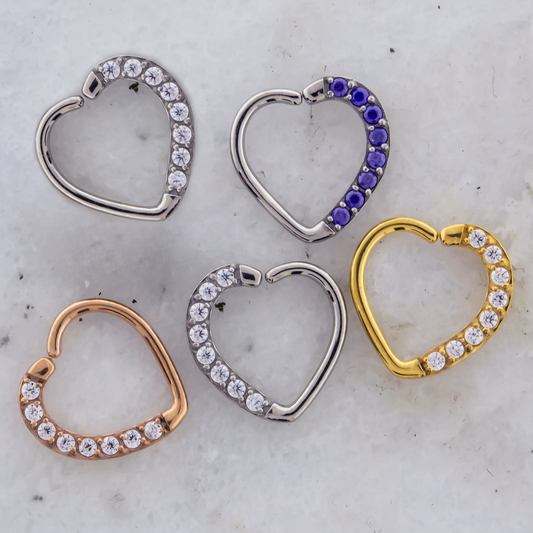
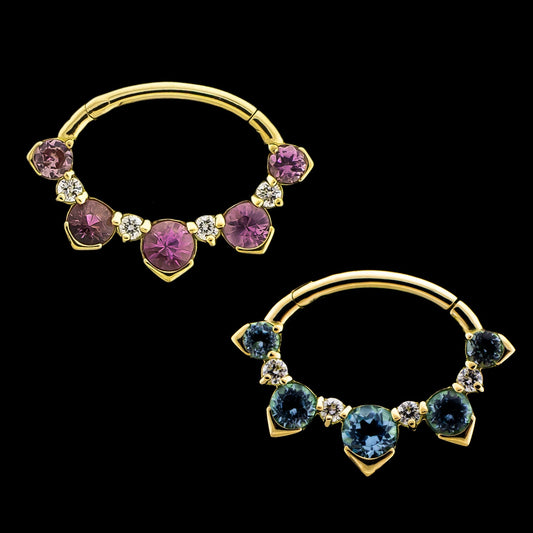
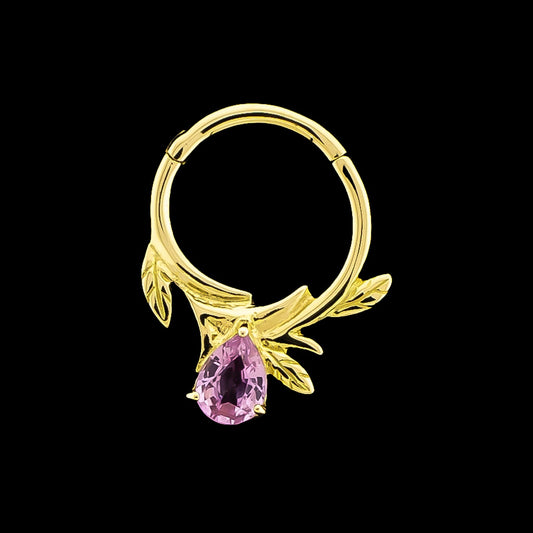
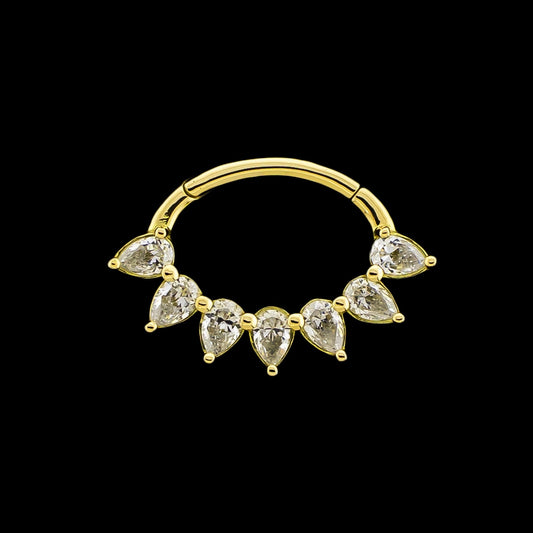
Beyond convenience, hinged clickers offer the widest variety of decorative front designs. Gem-set fronts, heart shapes, opal clusters, and engraved panels all appear on hinged daith clickers in a way that captive and seamless rings cannot match, because the front panel of the clicker is a separate design element from the ring body.
Seamless Rings and Captive Rings
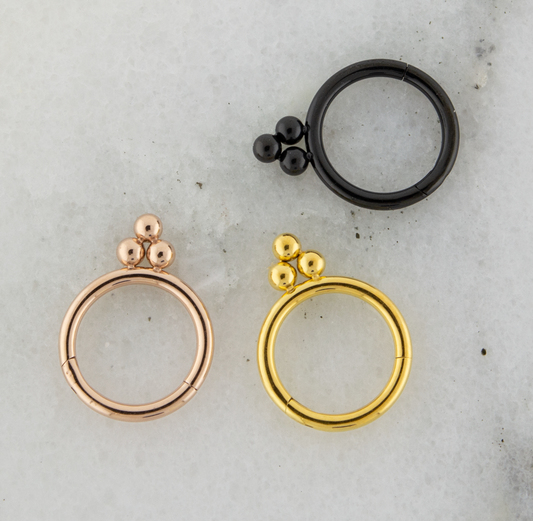
Seamless rings give the cleanest visual result in the daith because there is no visible hardware at any point around the circle. When the seam is properly aligned, the ring reads as a perfect unbroken hoop inside the daith fold. The trade-off is that seamless rings require two-handed twisting to open and close, which can be awkward at the daith position. Annealed steel seamless rings are easier to manage here than non-annealed versions because they require less twist force.
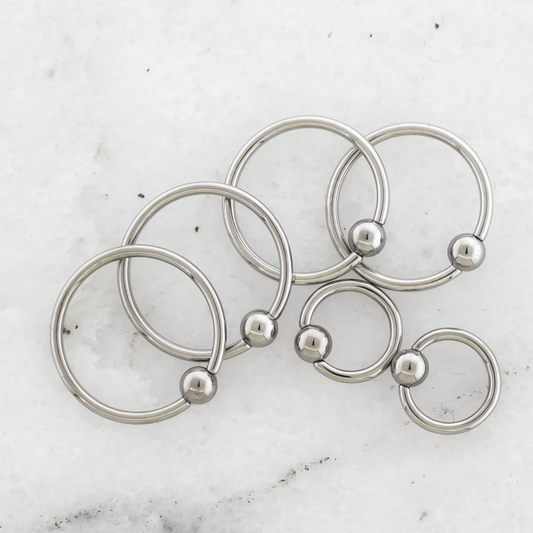
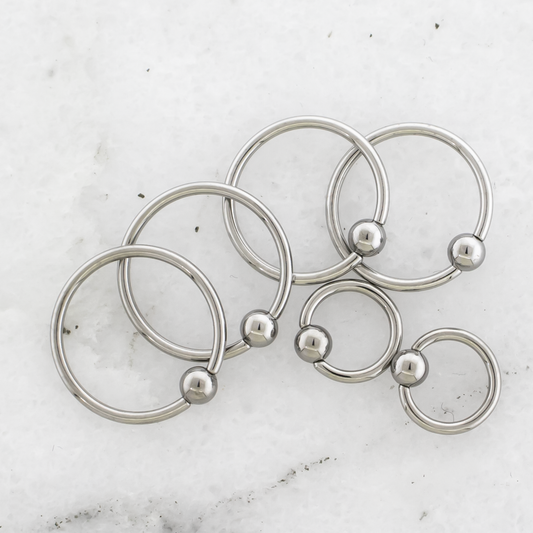
Captive bead rings are a versatile option for the daith and allow ball-size customization that seamless rings do not. The ball can be swapped for a larger or smaller one to adjust how the ring reads visually without replacing the ring itself. Captive rings require ring-opening pliers or two hands for changes, making them less practical for frequent jewelry changes in the daith position.
Curved Barbells for Daith
A curved barbell can be worn in a daith piercing and is sometimes the initial jewelry choice that piercers use for fresh daith piercings where swelling makes a ring impractical. The curved barbell sits across the fold rather than wrapping around it, with a ball end visible on each side. Once the daith has healed fully, most wearers transition to a ring format because rings follow the natural curve of the fold more naturally. If you prefer the barbell aesthetic or have a daith anatomy that is shallow or unusually shaped, a curved barbell remains a valid long-term option.
See more: 316L Steel Hinged Segment Rings
Daith Jewelry Styles: Plain, Gem & Heart-Shaped
The daith fold frames whatever jewelry sits inside it, and the ring is visible from the front of the ear in a way that makes the style choice highly visible. Choosing jewelry daith piercing wearers actually want to see every day means prioritizing both fit and aesthetics in equal measure.
Gem-Set and Decorative Clickers
Gem-set hinged clicker rings are the most versatile decorative format for daith piercing jewelry. The front panel of the clicker can carry a CZ stone cluster, a single prong-set gem, a synthetic opal, or an engraved surface without making the ring any harder to insert or remove. Opal-front daith clickers are consistently popular for the shifting color they display from different angles inside the ear fold. Clear CZ gem-front clickers work well for wearers who want sparkle without a colored stone. Both styles are available in implant-grade steel and titanium in this collection.
Plain Steel and Minimalist Options
Plain high-polish seamless rings and plain clicker rings with no decorative front are the right choice for daily wear when a lower visual profile is the goal. A plain 16G steel seamless ring at 8mm in the daith is nearly invisible from any angle beyond a close inspection of the inner ear, which suits workplaces, medical environments, or wearers who prefer an understated curated ear without one piece dominating the look.
See more: 316L Steel Seamless Rings
Sizing Guide: Gauge and Diameter for Daith Piercings
Sizing a daith ring incorrectly is the most common reason daith jewelry feels uncomfortable or looks wrong in the placement. The gauge is almost always 16G for daith piercings. The diameter is where individual anatomy creates significant variation.
Standard gauge:
- 16G (1.2mm) is the near-universal standard for daith piercings. A small number of piercers use 14G for clients with larger cartilage folds, but 16G is the correct assumption unless your piercer specified otherwise.
Inner diameter guide:
- 8mm: Fits tighter daith folds where the cartilage curve is compact. The most commonly purchased daith diameter and the best starting point if you are unsure.
- 9mm: A middle option that suits average daith anatomy and provides slightly more ring visibility than 8mm.
- 10mm: For deeper daith folds where 8mm creates pressure against the cartilage on either side of the placement.
The single most reliable sizing method is to measure the inner diameter of your existing daith jewelry before ordering a replacement. Measure from one inner edge to the directly opposite inner edge in a straight line; that millimeter figure is your inner diameter.
Initial Jewelry vs. Healed Jewelry
The daith piercing jewelry your piercer places at the time of piercing is typically a curved barbell or a larger-diameter ring to allow for swelling. This initial piece will not fit the healed placement correctly. Most daith piercings are ready for a fitted ring between six and nine months after piercing, once swelling has resolved and the channel has stabilized. Transitioning to a well-fitted hinged clicker or seamless ring at this point is the standard next step.
How to Know If Your Daith Has Healed
A healed daith piercing has no tenderness when the jewelry is moved, no discharge or crusting around the entry and exit points, and no redness or warmth in the surrounding tissue. Cartilage piercings heal more slowly than lobe piercings because cartilage has lower blood supply. Even when a daith looks healed on the outside, the internal channel may still be fragile. If you are uncertain whether your daith has healed enough to change jewelry, visit your piercer for an assessment before attempting a jewelry change at home.
Materials for Daith Piercing Jewelry
The daith sits against internal ear cartilage continuously. Material quality for a ring worn in this position affects both skin response and how long the jewelry holds its surface finish under daily contact with skin, hair, and cleaning products.
Implant-Grade Steel (316L)
316L implant-grade stainless steel is the most cost-effective material for daith piercing jewelry that meets the safety standard used by professional piercing studios. The steel is formulated to minimize nickel ion migration into surrounding tissue, is non-porous, and maintains a high-polish finish without tarnishing under normal wear conditions. Every steel piece in this daith collection is sourced from Metal Mafia and produced to the 316L implant-grade specification. Steel is the right choice for fully healed daith piercings with no known nickel sensitivity.
Implant-Grade Titanium (ASTM F136)
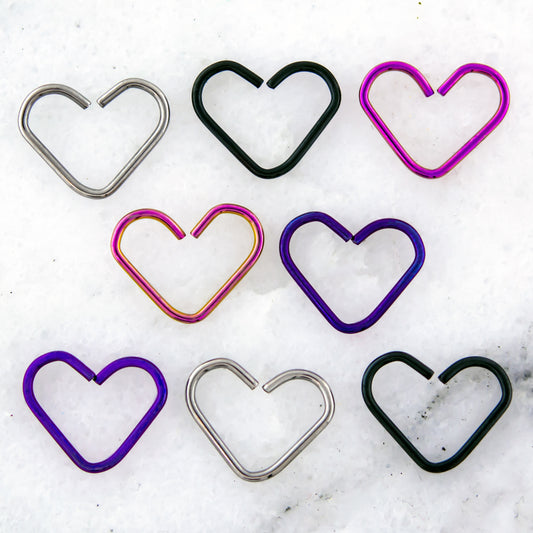
ASTM F136 implant-grade titanium is nickel-free by composition, lighter than steel, and the most biocompatible metal available for body jewelry. Titanium is the recommended material for daith piercings that are still in the healing phase, for wearers with confirmed nickel sensitivity, and for anyone who has experienced persistent irritation from steel jewelry in the same placement. The Titanium by Khrysos pieces in this collection meet the ASTM F136 standard and are available in multiple anodized colors in addition to natural titanium. The additional cost over steel reflects the superior biocompatibility for sensitive or healing tissue.
Solid Gold (14K)
14K solid gold daith jewelry is the premium material option for established piercings where aesthetics are the primary consideration. Solid gold is hypoallergenic for most wearers, maintains its surface indefinitely, and carries a warmth of tone that steel and titanium cannot replicate. Gold-plated jewelry is not an equivalent substitute; the plating wears away with regular removal and reinsertion, which exposes the base metal to the piercing channel. If gold is the goal, solid 14K is the only appropriate format for a ring worn in a piercing.
Why Shop Daith Jewelry at Pierced Addiction?
Pierced Addiction carries daith piercing jewelry across the full range of formats, materials, and styles that the placement requires, sourced to implant-grade standards for steel and titanium pieces.
Full jewelry type range. Hinged clickers, seamless rings, captive bead rings, and curved barbells are all available so you can choose the format that fits your anatomy and jewelry-change comfort level.
Implant-grade materials throughout. Steel pieces are sourced from Metal Mafia to the 316L implant-grade specification. Titanium pieces from the Titanium by Khrysos line meet ASTM F136 standard.
16G standard with multiple diameter options. This collection offers 8mm, 9mm, and 10mm inner diameter options at 16G, covering the realistic range of daith anatomies rather than stocking only the single most common size.
Heart, gem, and plain styles all in one place. Heart-shaped clickers, gem-front clickers, opal rings, and plain seamless rings are available without browsing multiple collections.
Free domestic shipping and same-day processing. Orders over $25 ship free via USPS economy. Domestic orders placed before 1pm are processed the same day.
Frequently Asked Questions
Find quick answers to the most common questions about daith piercing jewelry types, sizing, healing, and materials.
What jewelry type is best for a daith piercing?
Hinged clicker rings are the most practical for the daith because the inner fold position makes captive and seamless rings harder to change single-handedly. Clickers snap closed without needing two-handed access to the placement.
What size ring do I need for a daith piercing?
Most daith piercings use 16G at 8mm inner diameter. If your existing ring feels tight against the cartilage, 10mm is the next size up. Measure your current ring's inner diameter before ordering if you are replacing existing jewelry.
Can I wear a heart ring in my daith?
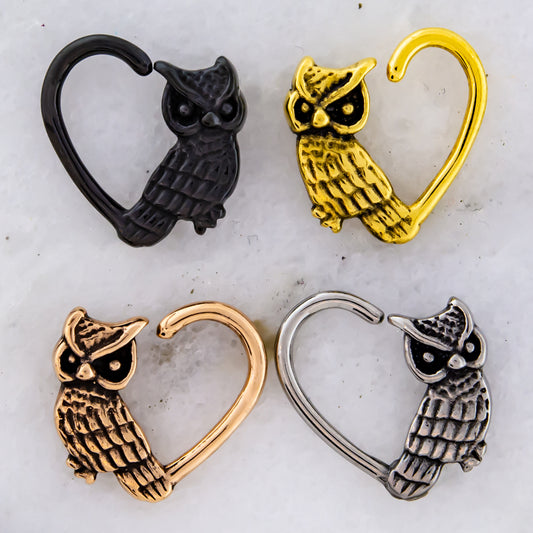
Yes. Heart-shaped daith rings are one of the most popular styles for this placement. The curve of the daith fold frames a heart ring naturally, with the point sitting at the base of the fold.
When can I change my daith piercing jewelry?
Most daith piercings are ready for a jewelry change between six and nine months after piercing, once swelling has fully resolved. Cartilage piercings heal slowly. If you are unsure, have your piercer assess the placement before attempting a change at home.
What material is safest for a daith piercing?
ASTM F136 implant-grade titanium is the safest choice for a healing daith piercing because it contains no nickel. For fully healed piercings with no known metal sensitivity, 316L implant-grade steel is a reliable and more affordable option.
Daith piercing jewelry works across more styles and formats than most ear piercings because the fold frames the ring from multiple angles. Shop the full daith piercing jewelry collection above to find your ring type, diameter, and finish.