


Steel Internally Threaded Jewelry: Smooth-Post Piercing Hardware in 316L Surgical Steel
Steel internally threaded jewelry is the practical upgrade from externally threaded hardware that most piercers recommend for healed placements. The post is smooth, the threads sit on the removable end, and nothing rough contacts piercing tissue during insertion or removal. This collection by Metal Mafia covers 316L surgical steel internally threaded labrets, barbells, curved barbells, and horseshoes in gauges from 2G to 18G, built for durability and a precise fit across every major piercing placement.
What is steel internally threaded jewelry? Steel internally threaded jewelry is body jewelry where the post shaft is smooth and hollow, with the screw threads located on the removable end piece. When inserted, no threading contacts the piercing channel. The end screws into the hollow interior of the post once it has cleared the tissue. This design is safer for insertion and removal than externally threaded jewelry, where threads cut into the post pass directly through the piercing.
What Makes Internally Threaded Jewelry Different
The threading position is a single structural difference with significant practical consequences. Most body jewelry problems during insertion and removal, snagging, micro-tears, and bacterial introduction, trace directly back to externally threaded posts dragging rough metal through the piercing channel. Internally threaded steel jewelry eliminates that contact point entirely.
Internally Threaded vs. Externally Threaded: The Core Difference
Understanding the distinction makes the choice straightforward.
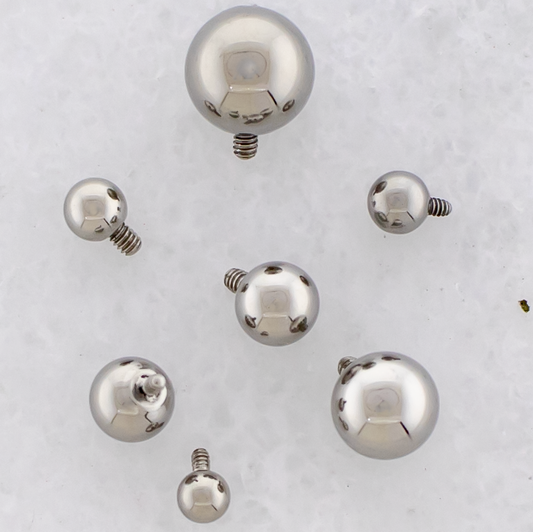
Internally threaded steel jewelry uses a smooth hollow post that passes through the piercing. The threads are machined into the interior of that post. The removable end, a ball, gem, flat disc, or decorative top, has a small threaded pin that screws into the hollow interior after the post has cleared the tissue. During insertion and removal, the piercing channel contacts only smooth metal.
Externally threaded jewelry has spiral threads cut directly into the post shaft. That threaded shaft is what passes through the piercing during every insertion and removal. The threads can catch on healing tissue, cause small tears in the piercing channel, and create surface texture that traps bacteria. For healed piercings, this creates unnecessary irritation. For healing piercings, the APP does not recommend it.
For healed piercings with no active sensitivity, both systems function. For healing piercings, for anyone changing jewelry frequently, or for anyone who has experienced irritation during jewelry changes, internally threaded steel jewelry is the correct choice.
See more: Internally Threaded Jewelry: All-In-One Guide
About 316L Surgical Steel for Internally Threaded Jewelry
Threading system and material work together. A smooth post made from substandard metal still carries the risks of that metal. Understanding what 316L surgical steel is, and where it sits relative to other materials, helps set the right expectations before purchasing.
316L Steel vs. Implant-Grade Steel vs. Titanium
Each material occupies a different position in the body jewelry quality hierarchy.
316L Surgical Steel is the most widely used steel alloy in body jewelry. The low carbon content reduces corrosion risk compared to standard stainless steel, and a mirror-polished surface minimizes irritation at the tissue contact point. It may contain trace amounts of nickel within the alloy. For fully healed piercings in individuals without nickel sensitivity, 316L performs reliably and is accessible at a lower price point than titanium or gold.
Implant-Grade Steel (ASTM F138) holds a higher standard than generic surgical steel. The nickel content is controlled more strictly, which means lower nickel migration and a better fit for individuals who are mildly sensitive but not reactive to the base alloy. It sits between 316L and titanium in terms of biocompatibility and cost.
ASTM F136 Titanium contains zero nickel by composition, not by surface treatment or coating. It is roughly half the weight of steel at the same gauge and can be anodized to produce a full spectrum of colors. The Association of Professional Piercers lists it as the preferred material for initial piercings. It is the premium option for reactive skin and fresh piercings.
The practical summary: 316L surgical steel with internally threaded construction is the right choice for healed piercings at an accessible price. For fresh piercings or any history of nickel sensitivity, titanium is the better fit regardless of threading system.
Steel Internally Threaded Jewelry Styles at Pierced Addiction
The Metal Mafia steel internally threaded collection at Pierced Addiction spans five jewelry types, each engineered for specific piercing placements. Choosing the right style for your placement determines both comfort and how the piece sits against the tissue long-term.
Internally Threaded Labrets
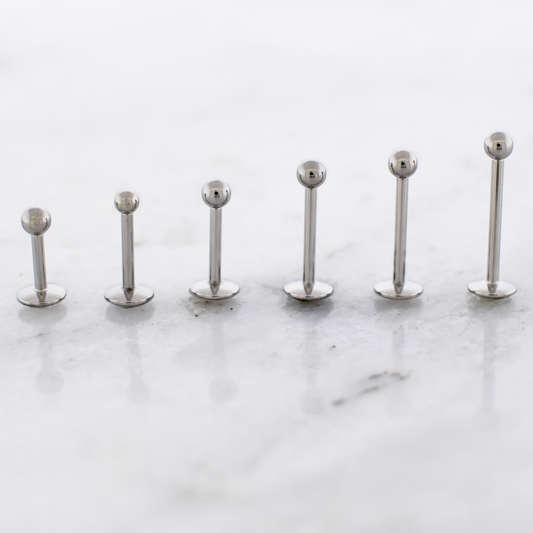
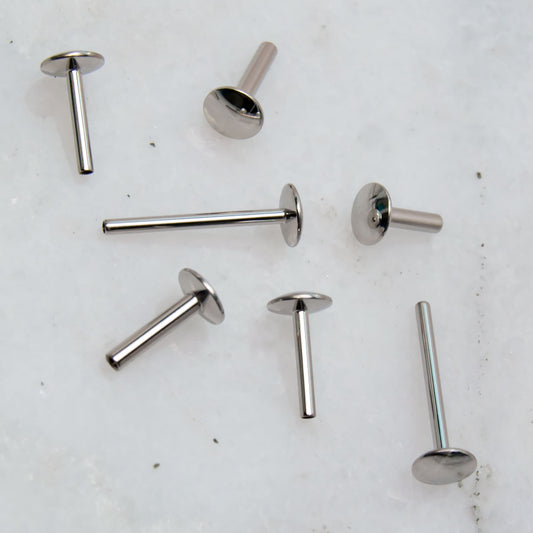
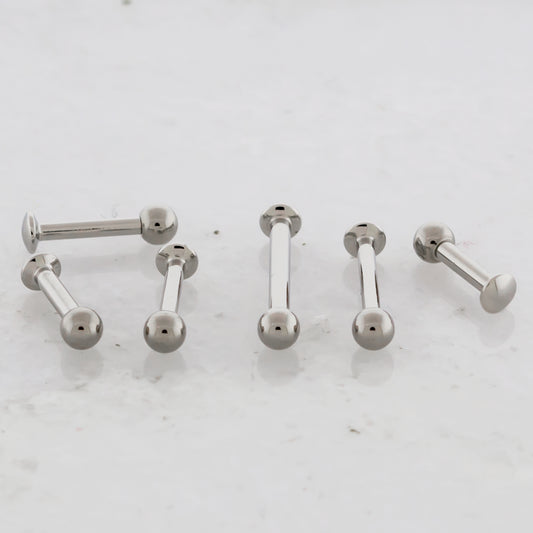
The internally threaded labret is a straight post with a flat disc on one end and a hollow threaded interior for the decorative end. The flat disc sits flush against the inside of the piercing, creating no pressure points or protrusions against inner lip, cheek, or cartilage tissue. This style is standard for lip, labret, Monroe, medusa, philtrum, and cartilage placements including tragus and helix. The smooth post and flat back combination makes it one of the most comfortable styles for daily wear. Available from 14G to 18G in multiple post lengths.
Internally Threaded Straight Barbells
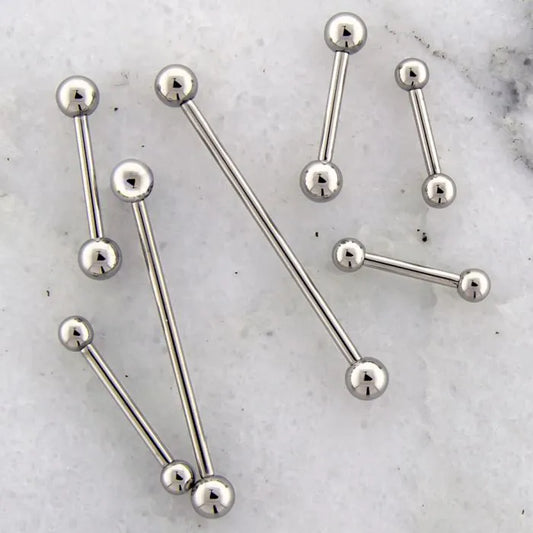
The internally threaded straight barbell has a smooth post with hollow threaded interiors at both ends, accepting removable ends at each side. This bilateral design allows different decorative elements at each end of the same piece. It is the standard style for tongue, nipple, and industrial piercings. Tongue and nipple piercings generate more movement than most placements, making the quality of the threading mechanism especially important over the lifetime of the piece. Available from 2G to 18G, covering both fine gauge cartilage applications and large gauge body jewelry.
Internally Threaded Curved Barbells
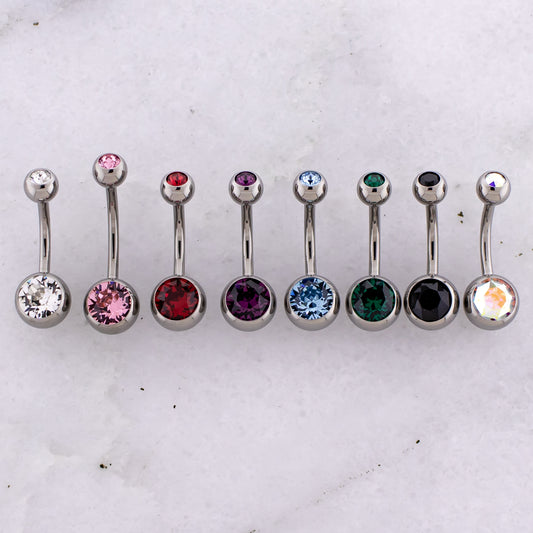
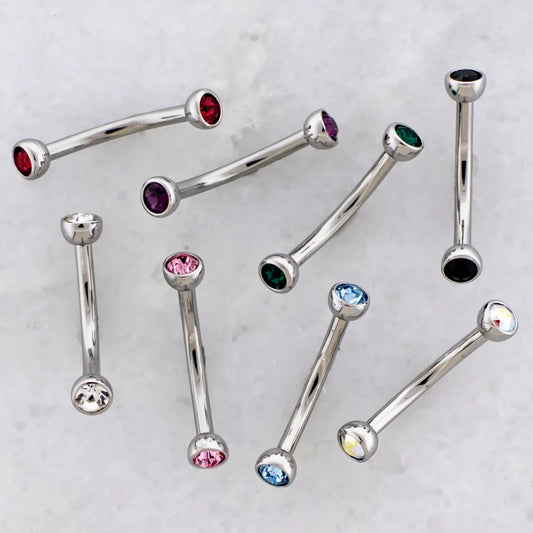
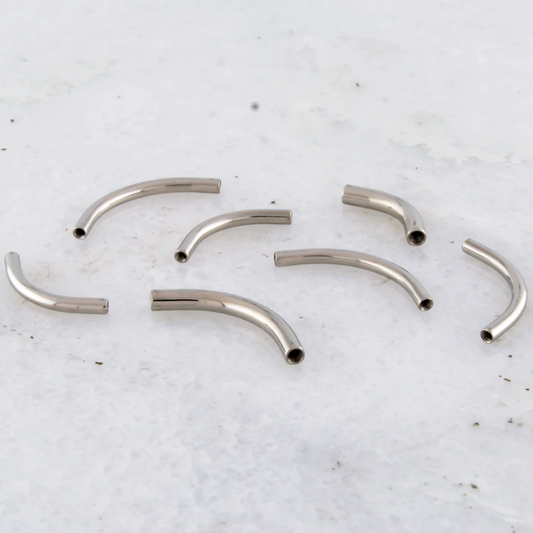
The internally threaded curved barbell follows a gentle arc rather than a straight line, designed to align with the natural curve of specific piercing placements. The curved geometry reduces pressure against the tissue walls that a straight post would create in curved anatomy. This style is standard for navel, eyebrow, rook, and vertical labret piercings. The internally threaded construction reduces snag risk at the navel in particular, where clothing contact during dressing and undressing creates the most frequent irritation for externally threaded jewelry. Available from 14G to 16G.
Internally Threaded Horseshoe Barbells
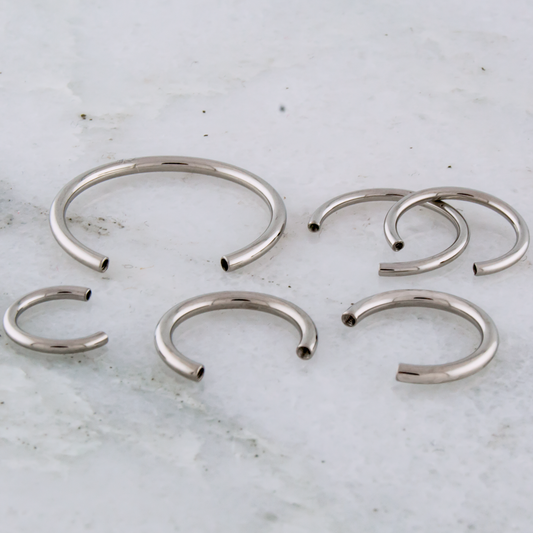
The internally threaded horseshoe is a circular open-ended post with both ends accepting removable decorative pieces. The open-circle geometry makes this style standard for septum, daith, orbital, and some tragus configurations. The flip-up position of a horseshoe septum piece makes it a practical choice for workplaces that require discretion: the jewelry stays in the piercing and rotates inside the nostrils when needed. Available in a wide gauge range from 2G to 16G. Compatible with any steel 14G internally threaded ends at the matching gauge.
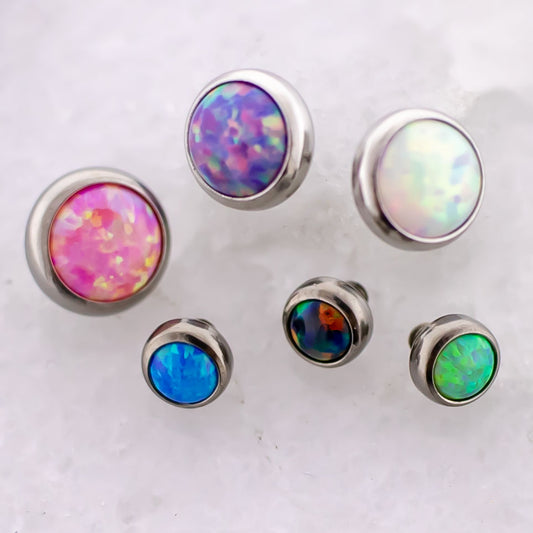
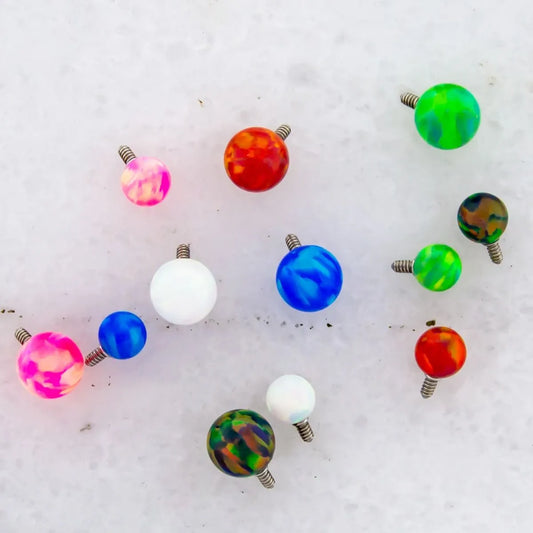
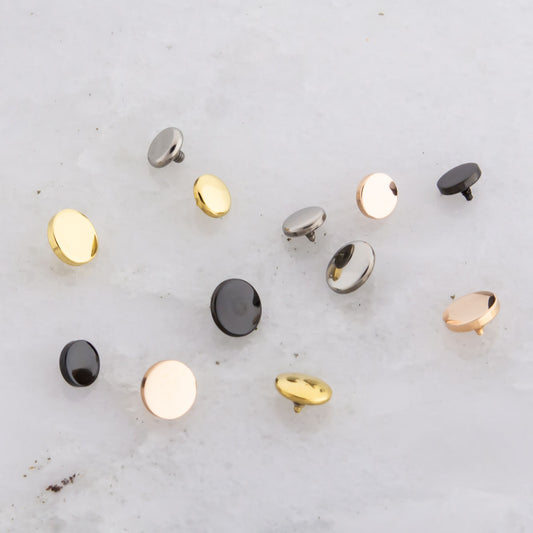
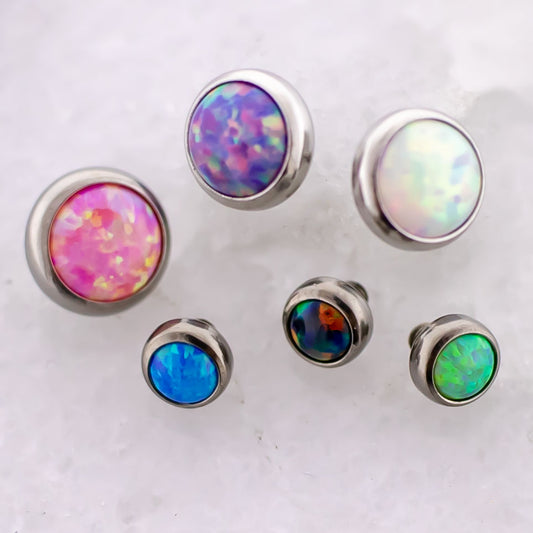
For decorative end options compatible with this hardware, the Internally Threaded Ends Collection covers gems, opals, flat discs, and sculptural designs in matching gauges.
Steel Internally Threaded Jewelry by Placement
Matching the right steel internally threaded style to each placement eliminates the most common fit and comfort problems before they occur. The variables that matter are jewelry type, gauge, and post length.
Lip and labret piercings use a 16G internally threaded labret with a 6mm to 8mm post. The flat disc backing sits smoothly against the inner lip tissue. Post length should match the thickness of the tissue at the placement site: longer for initial jewelry during healing, shorter for downsized healed jewelry. Browse the full size range in the Steel Internally Threaded Labrets collection.
Tongue piercings use a 14G internally threaded straight barbell with a 12mm to 16mm post. The longer post accommodates tongue swelling during the healing period. Downsizing to a shorter post once healed reduces the risk of the barbell catching on teeth. Full gauge and length options are available in the Steel Internally Threaded Barbells collection.
Navel piercings use a 14G internally threaded curved barbell with a 10mm to 12mm post. The curved geometry follows the navel anatomy. The internally threaded system reduces snag risk when clothing or waistbands contact the jewelry during dressing. The full curved barbell range is in the Steel Internally Threaded Curved Barbells collection.
Nipple piercings use a 14G internally threaded straight barbell with a 14mm to 16mm post for initial jewelry. Because nipple jewelry is changed more frequently than most placements, the smooth post of an internally threaded design reduces tissue irritation with each change.
Septum piercings use a 16G internally threaded horseshoe with an 8mm to 10mm inner diameter. The horseshoe can be rotated inside the nostrils when discretion is needed. All horseshoe sizes are available in the Steel Internally Threaded Horseshoes collection.
Eyebrow piercings use a 16G internally threaded curved barbell with an 8mm to 10mm post. The curved geometry follows the brow line and reduces migration pressure on surface piercings.
Cartilage placements including helix, tragus, and daith use a 16G internally threaded labret or curved barbell with a 6mm to 8mm post. Post length should account for cartilage thickness, which varies by individual.
When to Choose Steel vs. When to Upgrade to Titanium
This collection and titanium internally threaded jewelry serve different points in the same person's piercing journey. Understanding which situation calls for which material makes the choice straightforward rather than a debate.
Steel with an internally threaded post is the right choice when the piercing is fully healed, there is no personal history of nickel sensitivity, budget is a primary consideration, or you need a gauge larger than 14G where titanium options are more limited. The 316L construction by Metal Mafia delivers reliable performance for healed placements at an accessible price point across the full 2G to 18G gauge range.
Titanium becomes the better material when the piercing is fresh or still healing, when there is any history of metal sensitivity or reactions to steel jewelry, when the placement is cartilage where the lighter weight reduces daily pull, or when anodized color options are a priority. The Internally Threaded Titanium Collection at Pierced Addiction covers the same jewelry styles at ASTM F136 standard for buyers who need the premium material upgrade.
About Metal Mafia: Quality and Gauge Range
Every piece in this collection is manufactured by Metal Mafia using 316L surgical steel with a hand-polished mirror finish. The machining tolerances are held to ensure ends thread cleanly and hold securely without cross-threading or loosening during normal wear. The gauge range from 2G to 18G is broader than most competitors carry, making this collection a practical source for large gauge body jewelry that is difficult to find in internally threaded construction elsewhere. Orders over $25 ship free within the US. If any piece arrives incorrect or defective, Pierced Addiction replaces it within the terms of the product quality guarantee.
Frequently Asked Questions
Is steel internally threaded jewelry safe for a new piercing?
316L surgical steel with internally threaded construction is safer than externally threaded steel due to the smooth post, but ASTM F136 titanium is the APP recommendation for initial piercings. For fresh piercings, titanium is the better starting material. Steel performs well once the piercing is fully healed.
What is the difference between internally and externally threaded jewelry?
Internally threaded jewelry has a smooth hollow post with the threads located on the removable end piece. Externally threaded jewelry has spiral threads cut into the post shaft itself, which contacts the piercing tissue during insertion and removal. The smooth post of internally threaded hardware causes less tissue disruption.
Can steel internally threaded ends fit titanium posts?
Threading compatibility depends on gauge, not material. A 16G steel end will thread into a 16G titanium post if the thread pitch is standard. However, mixing metals is generally not recommended for healing piercings where consistency matters.
What gauge do I need for steel internally threaded jewelry?
Match the gauge your piercer used for the original jewelry. Common gauges are 16G for cartilage, lip, and septum; 14G for navel, nipple, and tongue; and 18G for fine cartilage placements. Never size down without confirming with your piercer first.
How do I know if my current jewelry is internally or externally threaded?
Unscrew one end and examine the post shaft. If the post is smooth with no visible spiral texture, the jewelry is internally threaded. If you see threads cut into the surface of the shaft itself, it is externally threaded.
Conclusion
Steel internally threaded jewelry from Metal Mafia at Pierced Addiction combines smooth-post construction with durable 316L surgical steel for healed piercings at every placement. From fine gauge labrets for cartilage to large gauge barbells for nipple and tongue piercings, the 2G to 18G range covers setups that most collections do not. Shop by style or placement, and find the right internally threaded steel piece for your piercing today.