

Internally Threaded Ends - Titanium by Khrysos
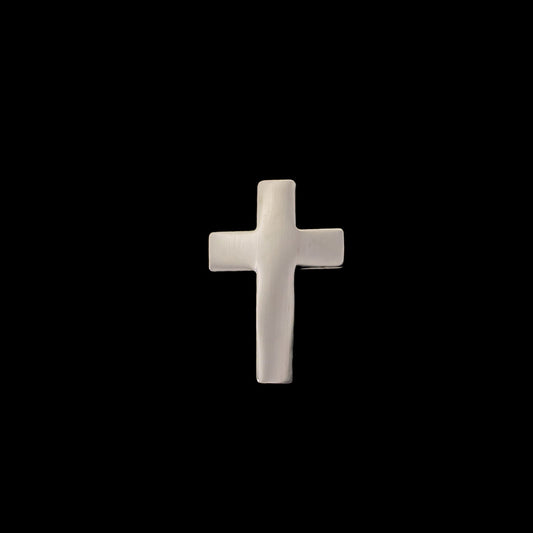
Titanium by Khrysos internally threaded ends are the decorative screw-in tops for your internally threaded posts and barbells. Crafted from ASTM F-136 implant-grade titanium, each end fits any major brand of internally threaded jewelry at the matching gauge. Need a replacement or a style upgrade without changing the post? Browse gems, opals, flat discs, spikes, and sculptural designs in 14G through 18G.
What Are Internally Threaded Ends and How Do They Work?
Not everyone searching for ends is starting from scratch. Many buyers already have internally threaded posts and are here specifically for the decorative top. This section covers how the system works and where the most common confusion happens before purchasing.
The Two-Piece System Explained
Internally threaded jewelry is a two-part system: the post or barbell, which passes through the piercing and stays in place, and the end, which is the decorative piece visible at the front. The internally threaded end has a small screw pin at its base. That pin threads into the hollow interior of the post to create a secure fit. When you want to change the look, you unscrew the end, swap in a new one, and the post stays in the piercing throughout the process. Nothing rough or threaded contacts the piercing tissue during a swap. The end rotates on jewelry-to-jewelry contact only.
Internally Threaded Ends vs. Threadless Tops, Know the Difference
This is the most common source of purchasing confusion. Internally threaded ends and threadless tops are not interchangeable, and the system your post uses determines which type of end you need.
Internally threaded ends have a screw pin that turns into the hollow post. A threadless top has a bent pin that presses into the post using tension, with no screwing involved. If you try to screw a threadless top into an internally threaded post, it will not fit. If you push an internally threaded end into a threadless post, it will not hold. To confirm which system your post uses: an internally threaded post has a small hollow opening at the tip with visible thread grooves inside. A threadless post has a smooth hollow opening with no thread pattern.
If your post is threadless, the titanium threadless ends collection is where you need to be.
Compatibility, Will These Ends Fit Your Existing Jewelry?
Before choosing a style, compatibility is the one question that determines whether the purchase works. The rule is straightforward, and once you know it, buying with confidence is easy.
Gauge Must Match
The single compatibility requirement for internally threaded ends is gauge. The gauge of the end must match the gauge of the post exactly. A 16G end threads into a 16G post. An 18G end fits an 18G post. A 14G end fits a 14G post. Thread pitch changes with gauge, so a 16G end will not thread correctly into an 18G post even though the size difference seems small. If you are not certain of your current gauge, check the original packaging from your jewelry or ask your piercer, they can confirm your size in under a minute.
Cross-Brand Compatibility
Khrysos internally threaded ends are machined to fit with any major brand of internally threaded jewelry at the same gauge. You do not need to be using a Khrysos post to use these ends. If your labret, barbell, or curved barbell is internally threaded at 16G from another brand, a 16G Khrysos end will fit it. One caveat worth noting: manufacturing tolerances vary between brands, and occasionally a threading tolerance mismatch between two different brands can cause a slightly stiff or loose fit. This is a cross-manufacturer tolerance issue, not a defect. Within the Khrysos line, post and end tolerances are matched for consistent, reliable engagement.
End Styles Available in the Khrysos Collection
With the compatibility question answered, the rest of the decision is about style. The Khrysos internally threaded ends collection spans four broad aesthetic categories, covering everything from minimal daily wear to bold statement pieces.
Gem and Opal Ends
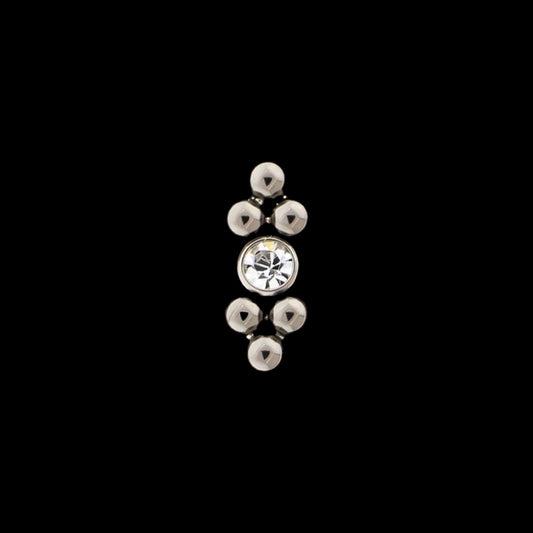
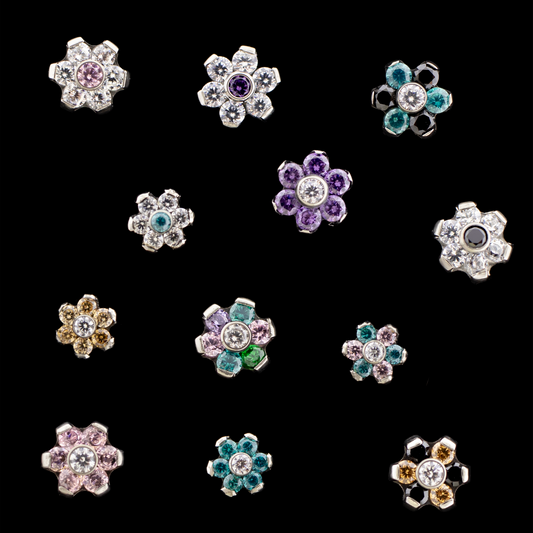
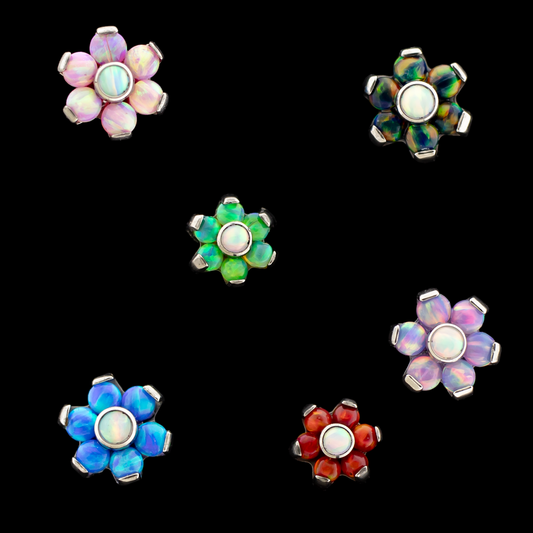
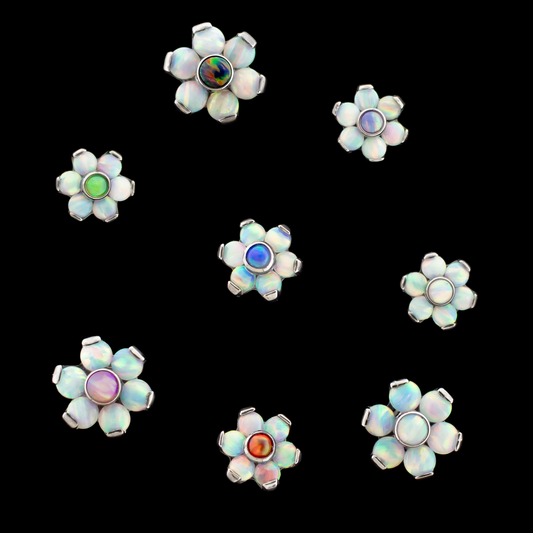
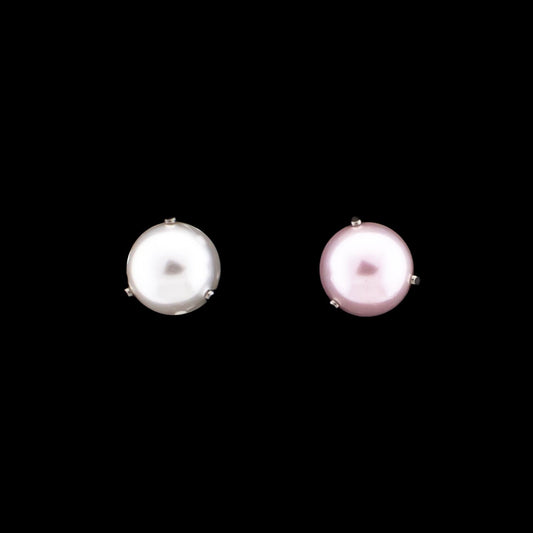
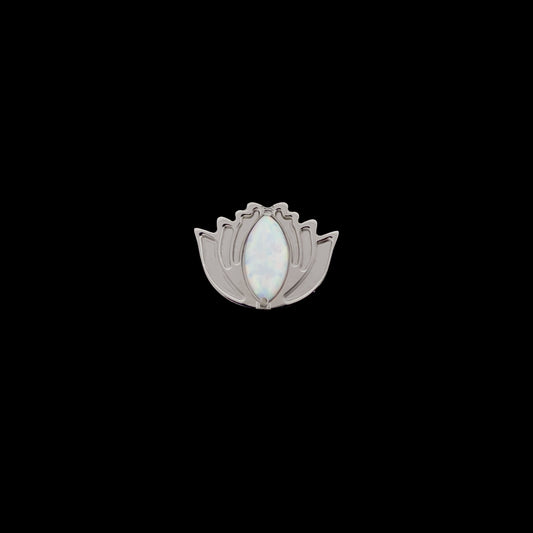
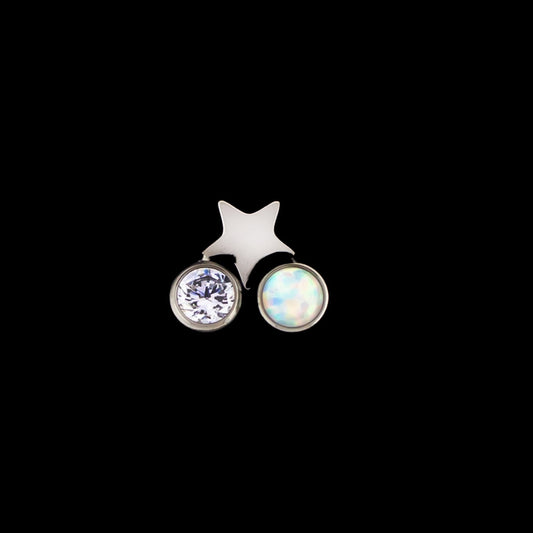
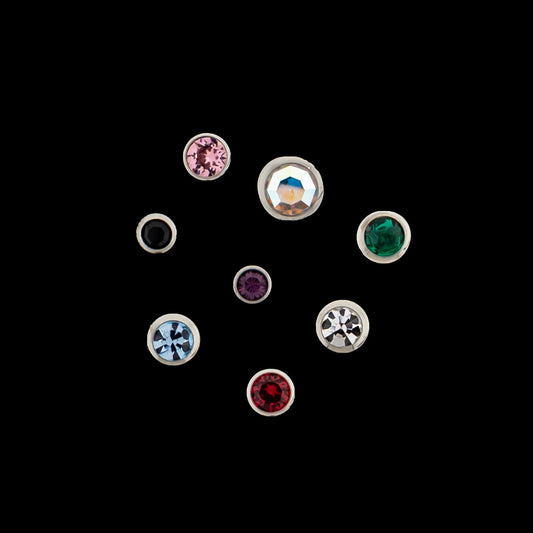
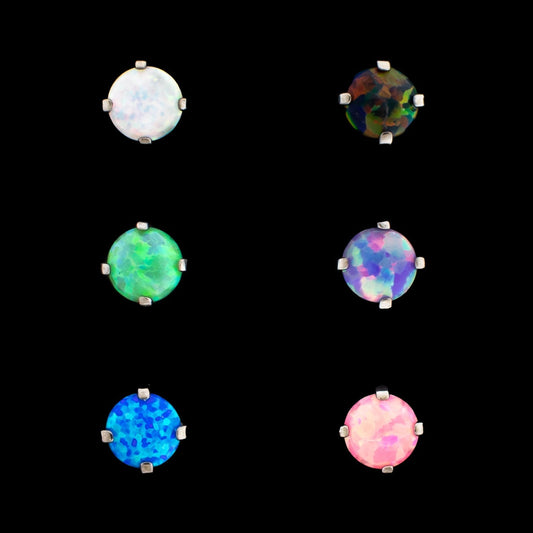
Gem and opal ends are the most versatile category and the best starting point for most placements. Prong-set CZ gems are available in clear, AB, and a range of colors. Bezel-set gems offer a lower profile than prong settings, sitting closer to the skin for placements where snag-free wear matters. Opal ends come in multiple sizes and body colors and are a popular choice for helix, tragus, nostril, and conch. For placements where the end needs to do the visual work alone, no chains, no dangle, a single quality gem or opal end is the most refined option.
Flat Disc and Minimalist Ends
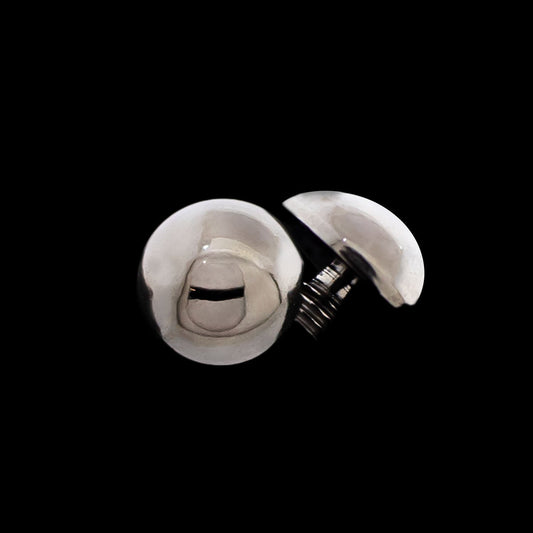
Flat disc ends provide the lowest profile of any end type, sitting nearly flush against the skin when installed. They are the preferred option for placements with frequent contact: conch, helix, and any ear piercing you sleep on. Simple dome and ball ends fall into this category as well and are often the right choice for fresh or healing piercings, professional settings, or anyone who wants to let the placement itself carry the look without a prominent top.
Statement and Nature-Inspired Ends
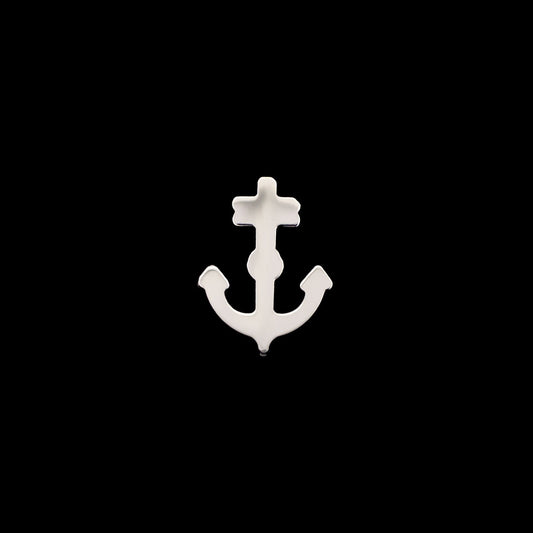
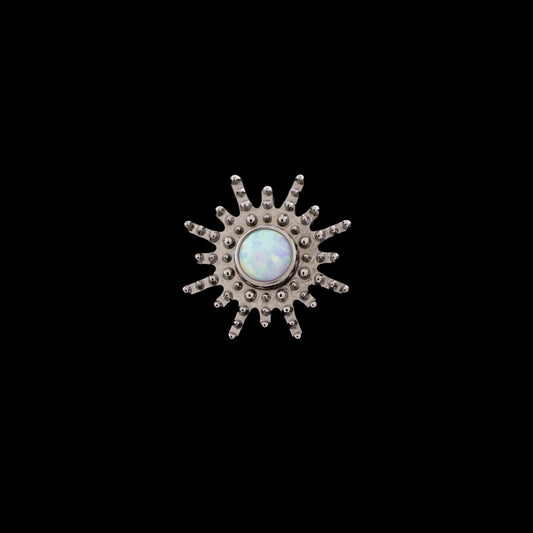
The collection includes ends with significant design detail: lotus and hibiscus flower motifs, celestial pieces (moon phase, star, sun burst), animal motifs (butterfly, dragon, serpent), blade and spike tops, and sculptural geometric shapes. These are the ends chosen as the focal point of a look rather than background detail. They work best in healed placements with enough anatomy clearance for the design to sit flat, such as conch, lobe, and labret piercings.
Cluster and Dangling Ends
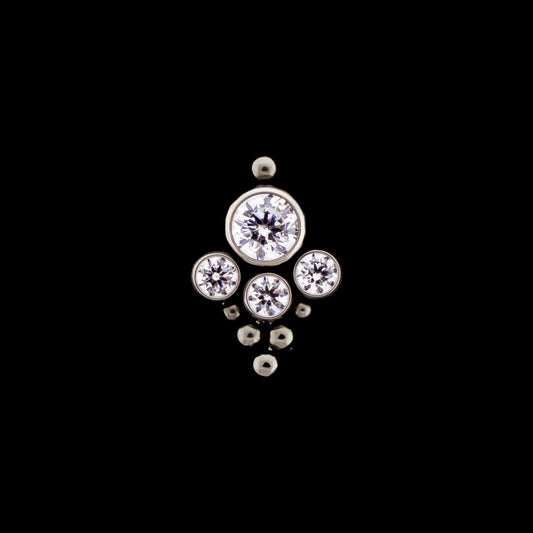
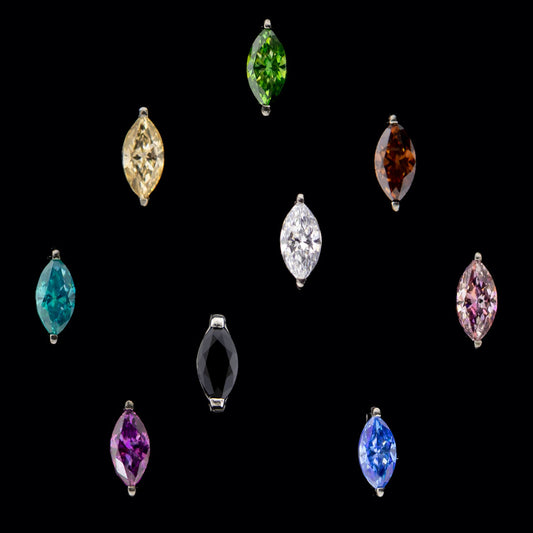
Multi-gem cluster ends, marquise-cut arrangements, and dangle designs create visual impact beyond what a single gem or shape can offer. Dangling ends have moving parts, which means they are better suited for healed piercings in lower-movement placements. Lobe, conch, and labret piercings work well with dangle ends. High-movement placements like helix and tragus may experience more wear on dangle mechanisms over time.
Choosing the Right End Size for Your Placement
Getting the gauge right confirms the end will thread in. Getting the head size right determines whether it looks and feels correct once installed. Head size is the dimension most buyers overlook.
Head Size by Placement
The head of the end is the part that sits visible at the piercing entry point. Size this too large and it will overlap adjacent cartilage, create pressure, or look visually oversized. Size it too small and it can sink slightly or appear lost against the anatomy. General guidance by placement:
- Helix, flat, and forward helix: 3 - 4mm. Larger heads create pressure on thin cartilage.
- Tragus: 3 - 4mm. Profile matters more here than surface area.
- Conch: 3 - 5mm depending on anatomy and desired presence.
- Lobe: 4 - 6mm. More flexibility given tissue thickness.
- Nostril: 2 - 3mm. Larger ends look out of proportion on the nostril.
- Labret and lip: 4 - 6mm. Range is wide because aesthetic preference varies.
- Navel (curved barbell top): 5 - 8mm for visible presence at the rim.
- Nipple (barbell ends): Minimum 5mm to avoid sinking into tissue.
When a specific product lists a head size in millimeters, use the above as your reference point to confirm it suits your placement.
Low-Profile vs. Statement Sizing
Low-profile ends (flat disc, single bezel, small dome) minimize contact with clothing and hair, reduce snag risk, and tend to be more comfortable for sleeping. Statement ends (large clusters, dangles, sculptural pieces) are chosen for visual impact and work best in placements where the jewelry will not be disturbed by frequent contact. Both are valid choices, and the right one depends entirely on the placement and the role you want that piercing to play in your overall look.
Building a Curated Look with Internally Threaded Ends
Individually, each end is a way to refresh one piercing. Across multiple piercings, a curated selection of ends becomes the basis for a cohesive multi-piercing look without the cost of replacing every piece of jewelry.
Because internally threaded ends swap without touching the post, a person with three or four internally threaded piercings can unify them visually through consistent end styling. Choosing ends with the same gem type in graduated sizes, a 3mm CZ at the tragus, a 4mm CZ at the helix, a 5mm CZ at the lobe, creates a scaled look that reads as intentional. Coordinating by finish (all high-polish titanium, or all anodized gold tone) rather than matching shapes exactly gives flexibility while maintaining cohesion. Nature-themed collections, all celestial, all florals, also work as a unifying theme across multiple placements.
For the post side of any internally threaded setup, the titanium labrets collection covers the full range of internally threaded flat back posts in ASTM F-136 titanium across 14G through 20G.
Why Choose Khrysos Internally Threaded Ends
What makes one set of ends worth buying over another comes down to three things: material standard, threading precision, and what happens if something goes wrong.
On material, every Khrysos internally threaded end is solid ASTM F-136 titanium throughout. Gem and opal settings are machined directly into the titanium rather than plated or coated. The surface that contacts your piercing is the same material as the rest of the piece, not a base metal underneath a finish layer.
On precision, Khrysos ends are manufactured to the threading tolerances that professional piercing hardware demands. The screw pin engages cleanly and seats fully without overtightening. This matters both for security during wear and for ease of removal when changing ends. A tolerance mismatch in threading is the reason cheap ends strip over time or fail to hold, the Khrysos line avoids this by maintaining consistent pitch across the range.
On the guarantee, Khrysos offers a lifetime workmanship guarantee on all ASTM F-136 titanium pieces. If a manufacturing defect appears, a replacement is provided once the original piece is returned. For retail piercing jewelry, this level of backing is uncommon. For the full internally threaded titanium range beyond ends, the titanium internally threaded collection covers posts, barbells, curved barbells, and more. On the practical side, free USPS economy shipping applies to all orders over $25, and domestic orders placed before 1pm are processed the same day.
Frequently Asked Questions About Internally Threaded Ends
Here are the questions buyers most commonly ask before purchasing Khrysos internally threaded ends.
What are internally threaded ends?
Decorative end pieces with a screw pin that threads into an internally threaded post or barbell. They attach by screwing into the hollow tip of the post, keeping the end secure while allowing easy style changes.
Will these ends fit my existing internally threaded jewelry?
Yes, provided the gauge matches. A 16G Khrysos end fits any 16G internally threaded post, regardless of brand. Confirm your post gauge before ordering. Cross-brand compatibility works reliably at the same gauge in most cases.
Can I use internally threaded ends on a threadless post?
No. The two systems are not compatible. Internally threaded ends use a screw pin; threadless posts use a bent-pin push-fit system. Check which system your post uses before purchasing.
What gauge do I need?
The same gauge as your existing post or barbell. If unsure, check your original jewelry packaging or ask your piercer. 16G is the most common gauge for cartilage and labret piercings. 14G is standard for navel and nipple piercings.
How do I choose the right head size?
Match head size to placement and desired profile. 3 - 4mm for most cartilage placements, 2 - 3mm for nostril, 4 - 6mm for lobe and labret. When in doubt, smaller heads look more refined in cartilage placements where tissue clearance is limited.
Are these ends safe for healing piercings?
Yes. ASTM F-136 titanium is nickel-free and biocompatible. The screw-in mechanism means only smooth titanium contacts the post interior during a swap. Always confirm with your piercer before changing any jewelry in a healing piercing.
Khrysos internally threaded ends give you the range to refresh any internally threaded piercing without changing what already works. ASTM F-136 titanium, precision threading, cross-brand gauge compatibility, and a lifetime workmanship guarantee. Whether you need a single replacement end or enough variety to unify a full curated ear, confirm your gauge and browse the collection above.